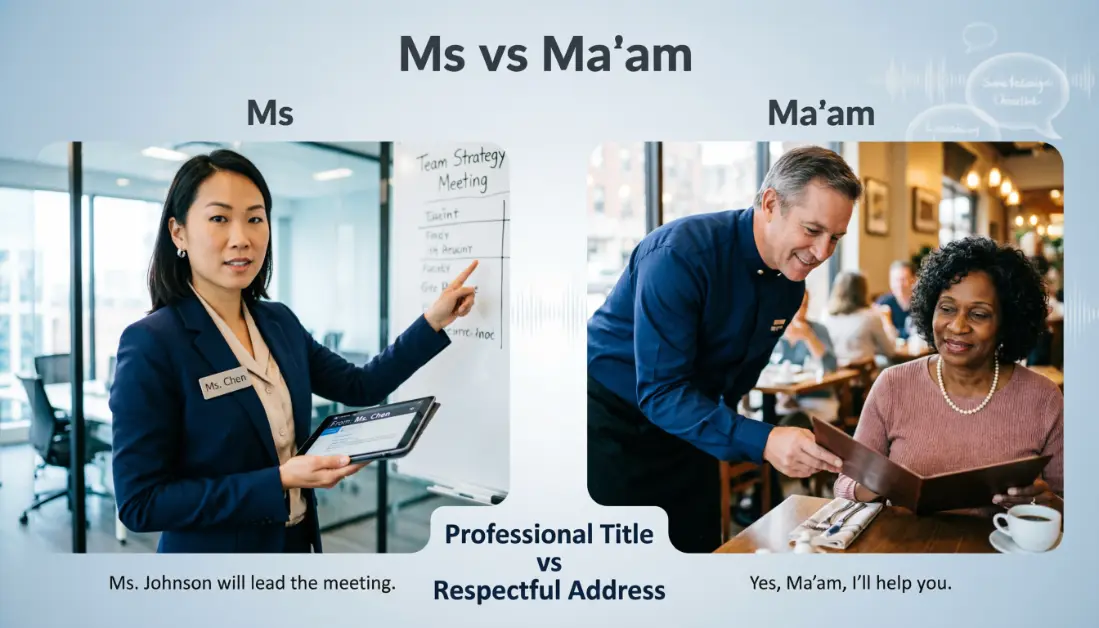
“Ms.” and “ma’am” are both correct forms of address, but they are used in different situations. “Ms.” is a title placed before a woman’s surname (e.g., Ms. Smith) without indicating her marital status, while “ma’am” is a polite form of direct address used when speaking to a woman (e.g., Yes, ma’am).
Many people wonder about Ms vs Ma’am because both terms are used to address women respectfully. At first glance, they may seem similar, but they serve very different purposes. Using the wrong term can make an email, conversation, or formal document sound awkward or even impolite.
The confusion often happens because both words appear in professional settings, customer service interactions, schools, and formal communication. Some people also wonder if one term is more appropriate in American English or British English. Others want to know if one is considered more respectful than the other.
The simple answer is that Ms. is a title placed before a woman’s surname or full name, while ma’am is a polite form of direct address used when speaking to a woman. Understanding this distinction helps you communicate clearly and respectfully.
In this guide, you’ll learn the meaning of each term, their origins, differences in usage, common mistakes, regional preferences, and practical examples. By the end, you’ll know exactly when to use Ms. and when to use ma’am in everyday and professional situations.
Ms vs Ma’am – Quick Answer
Ms. is a title used before a woman’s name.
Examples:
- Ms. Johnson will lead the meeting.
- Please contact Ms. Smith for assistance.
Ma’am is a polite word used when speaking directly to a woman.
Examples:
- Yes, ma’am.
- Excuse me, ma’am, you dropped your wallet.
Key Difference
| Term | Usage | Example |
| Ms. | Title before a name | Ms. Davis |
| Ma’am | Direct form of address | Thank you, ma’am |
In short, Ms. identifies a person in writing or formal reference, while ma’am is used when talking to someone directly.
The Origin of Ms vs Ma’am
Origin of Ms.
The title Ms. became popular during the twentieth century. It was created as a neutral alternative to Miss and Mrs. Instead of revealing a woman’s marital status, Ms. could be used for any adult woman.
The term gained widespread acceptance during the 1970s as workplaces and institutions sought more gender-neutral forms of address.
Origin of Ma’am
Ma’am is a shortened form of madam. The word comes from French and was traditionally used to show respect toward women of high status.
Over time, ma’am became a common polite expression in English-speaking countries, especially in customer service, military settings, schools, and formal conversations.
Why the Difference Exists
The two words evolved for different purposes:
- Ms. became a written title.
- Ma’am became a spoken form of respectful address.
Because they serve different functions, they are not interchangeable.
British English vs American English Spelling
Unlike many spelling debates, Ms. vs Ma’am is mainly a difference in usage rather than spelling.
American English
- Uses Ms. with a period.
- Frequently uses ma’am in speech.
- Common in customer service and professional interactions.
Examples:
- Ms. Carter is our manager.
- Yes, ma’am, I’ll help you.
British English
- Often writes Ms without a period.
- Uses madam more often in formal writing.
- Uses ma’am in specific formal settings.
Examples:
- Ms Jones will attend the meeting.
- Dear Madam,
Comparison Table
| Feature | American English | British English |
| Ms title | Ms. | Ms |
| Formal letter greeting | Dear Ms. Brown | Dear Ms Brown |
| Spoken respectful address | Ma’am | Ma’am or Madam |
| Period after title | Usually yes | Usually no |
Which Spelling Should You Use?
The best choice depends on your audience and situation.
For American Audiences
Use:
- Ms. before names
- Ma’am when speaking respectfully
Examples:
- Ms. Wilson will call you.
- Thank you, ma’am.
For British Audiences
Use:
- Ms without a period
- Madam in very formal writing
- Ma’am in some spoken settings
Examples:
- Ms Wilson will attend.
- Dear Madam,
For Global Audiences
Use Ms. or Ms before names depending on local style guides.
Use ma’am only when directly addressing someone in conversation.
Professional Recommendation
If you do not know a woman’s marital status, Ms. is usually the safest and most widely accepted title.
Common Mistakes with Ms vs Ma’am
Many writers and speakers confuse these terms.
Mistake 1: Using Ma’am Before a Name
❌ Ma’am Johnson will arrive soon.
✅ Ms. Johnson will arrive soon.
Mistake 2: Using Ms. While Speaking Directly
❌ Thank you, Ms.
✅ Thank you, ma’am.
Mistake 3: Assuming Ms. Means Married
❌ Ms. always means married.
✅ Ms. does not indicate marital status.
Mistake 4: Replacing Every Madam with Ms.
❌ Dear Ms,
✅ Dear Madam,
Mistake 5: Using Ma’am in Casual Online Writing
While not incorrect, it may sound overly formal depending on the audience.
Ms vs Ma’am in Everyday Examples
In Emails
Ms.
- Dear Ms. Roberts,
- Thank you for your message, Ms. Roberts.
In Customer Service
Ma’am
- How may I help you, ma’am?
- Your order is ready, ma’am.
In News Reports
Ms.
- Ms. Taylor announced the new policy.
- Ms. Green received the award.
On Social Media
- Thank you, ma’am!
- Congratulations, Ms. Lopez!
In Formal Writing
- Ms. Walker submitted the proposal.
- Ms. Chen was elected chairperson.
In Everyday Conversation
- Excuse me, ma’am.
- Yes, ma’am.
Ms vs Ma’am – Google Trends & Usage Data
Search interest in Ms vs Ma’am remains steady because people frequently write professional emails and formal correspondence.
Popular Regions for “Ms”
- United States
- Canada
- United Kingdom
- Australia
- New Zealand
The title is especially common in workplaces, schools, government offices, and business communication.
Popular Regions for “Ma’am”
- United States
- Southern United States
- Military environments
- Customer service industries
Typical Search Intent
People usually search for:
- What is the difference between Ms and ma’am?
- Is ma’am respectful?
- Should I use Ms or Mrs?
- How do I address a woman professionally?
- Is Ms the same as ma’am?
Comparison Table: Ms vs Ma’am
| Feature | Ms. | Ma’am |
| Part of speech | Title | Form of address |
| Used before a name | Yes | No |
| Used in conversation | Rarely | Yes |
| Used in formal writing | Yes | Sometimes |
| Indicates marital status | No | No |
| Professional use | Very common | Situational |
| Example | Ms. Johnson | Yes, ma’am |
FAQs
Is Ms the same as ma’am?
No. Ms. is a title before a name, while ma’am is a respectful way to address a woman directly.
Is it polite to call someone ma’am?
Yes. In many English-speaking regions, ma’am is considered respectful and polite.
Does Ms mean married?
No. Ms. does not indicate whether a woman is married or unmarried.
When should I use Ms?
Use Ms. before a woman’s surname in professional, academic, or formal situations.
When should I use ma’am?
Use ma’am when speaking directly to a woman respectfully.
Is ma’am old-fashioned?
Some people view it as traditional, but it remains common in customer service, education, and formal interactions.
Should I use Ms or Mrs?
If you do not know a woman’s preference or marital status, Ms. is usually the safest option.
Why is Ms considered neutral?
Because it does not reveal marital status, making it suitable for all adult women.
Can I use ma’am in an email?
It is possible, but using a person’s name or title is usually more common in professional emails.
Conclusion
Understanding Ms vs Ma’am is simple once you know their roles. Although both terms show respect toward women, they are used in different ways. Ms. is a title that appears before a woman’s name in formal and professional writing. It does not indicate marital status and has become the preferred choice in many workplaces, schools, and official documents. Ma’am, on the other hand, is a polite form of direct address used when speaking to a woman.
The distinction is important because using the wrong term can make communication sound unnatural. You would write Ms. Johnson in a business email, but you would say Yes, ma’am during a conversation. Neither term is better than the other; each serves a different purpose.
For most professional situations, Ms. is the safest and most widely accepted title. When speaking respectfully to someone face-to-face, ma’am remains a polite option, especially in formal settings. By understanding when and how to use each term, you can communicate clearly, professionally, and respectfully in any situation.
Discover More Article:
- Present or Gift – Which One Is Correct?
- Hierarchical vs Hierarchal – What’s the Difference and Which Spelling Is Correct?
- Compair vs Compare – Which Spelling Is Correct?
- Remediated vs Remedied – What’s the Difference and Which Word Should You Use?

I am an Emily Carter Brooks U.S.A based linguistics writer known for my clear, reader-friendly explanations of English grammar and vocabulary differences. I have contributed to multiple online language resources and specializes in spelling variations, pronunciation confusion, and British vs American English comparisons. I’m passionate about helping learners improve their English through practical, everyday communication. engaging, and stress-free.