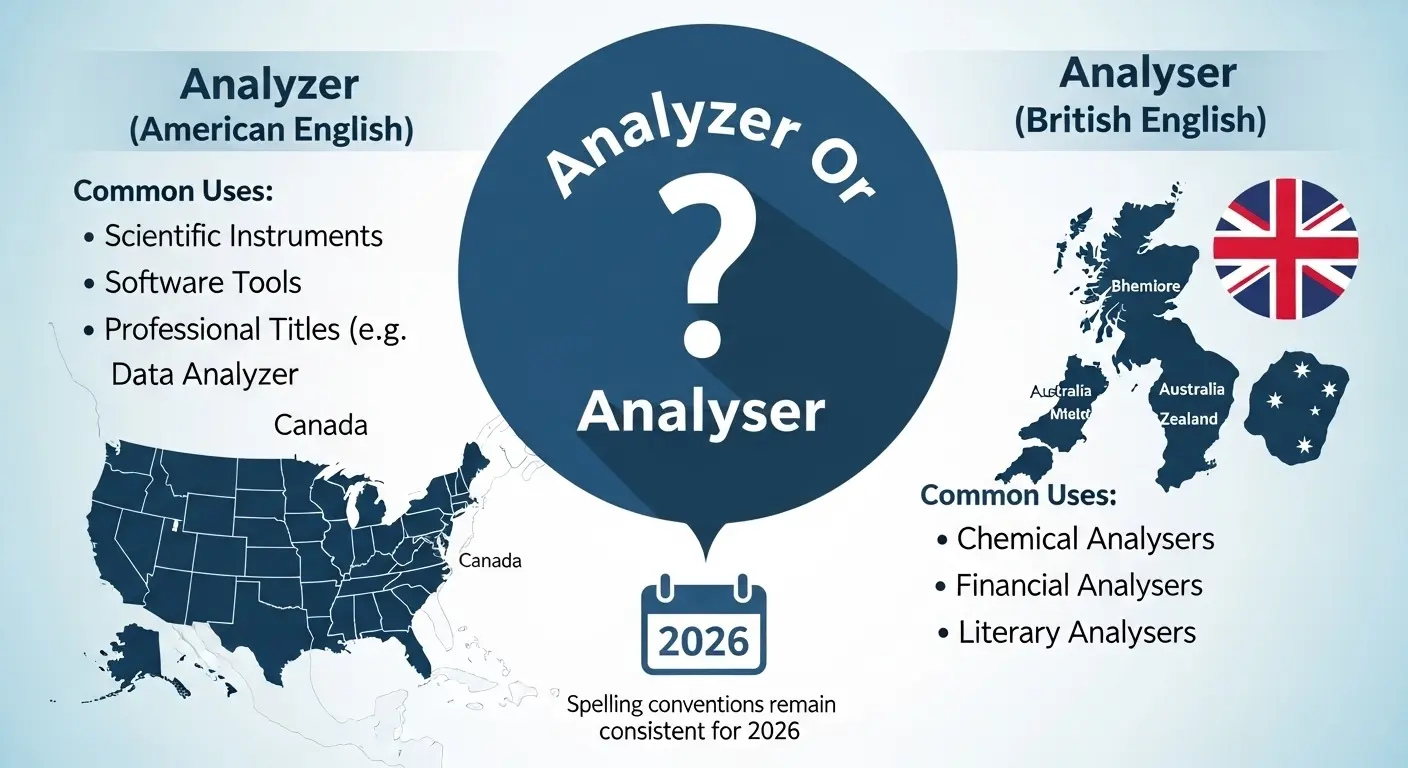
“Analyzer” is the American English spelling, while “analyser” is the British English spelling, and both refer to a person or tool that examines something carefully.
Have you ever typed “analyzer” and wondered if it should be spelled “analyser” instead? You are not alone. Many people get confused because both spellings look correct and they actually are. The confusion usually comes from differences between American and British English.
People search for “analyzer or analyser” to know which spelling is right for school, business writing, content, or exams. Using the wrong version in the wrong place can look unprofessional or inconsistent. This is especially important for students, bloggers, and writers who want to follow correct language rules.
In this guide, you will learn the simple difference between “analyzer” and “analyser.” We will explain their origin, show when to use each one, and give real-life examples.
By the end, you will clearly understand which spelling fits your audience and writing style.
Analyzer or Analyser – Quick Answer
Both “analyzer” and “analyser” are correct.
- “Analyzer” is used in American English
- “Analyser” is used in British English
Examples:
- US: The software analyzer checks data fast.
- UK: The data analyser gives clear results.
The meaning is the same. Only the spelling changes based on region.
The Origin of Analyzer or Analyser
The word comes from the verb “analyze” / “analyse.”
This verb has roots in the Greek word analysis, which means “to break apart” or “to examine closely.”
Over time:
- American English simplified many spellings → analyze, analyzer
- British English kept older forms → analyse, analyser
This pattern is common in English:
- organize / organise
- color / colour
- center / centre
So, the difference is not about meaning it is about spelling style.
British English vs American English Spelling
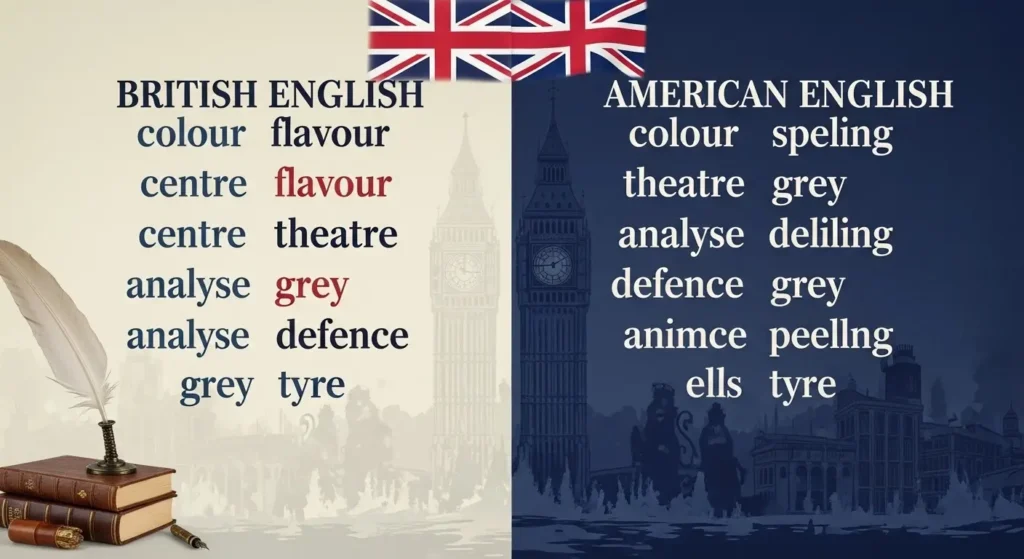
The main difference is the “-yze” vs “-yse” pattern and “-yzer” vs “-yser.”
Key Rule:
- American English → -yze / -yzer
- British English → -yse / -yser
Comparison Table
| American English | British English |
| analyzer | analyser |
| analyze | analyse |
| organization | organisation |
| color | colour |
Both systems are correct. You just need to stay consistent.
Which Spelling Should You Use?
Choosing the right spelling depends on your audience.
Use “Analyzer” if:
- You write for US readers
- You create content for US traffic
- You follow American English style guides
Use “Analyser” if:
- You write for UK or Commonwealth countries (Pakistan, UK, Australia)
- Your school or company follows British English
For Global Writing:
- Pick one style and stay consistent
- Many global brands choose American English for wider reach
Tip: In Pakistan, both are accepted, but “analyser” is more common in formal education.
Common Mistakes with Analyzer or Analyser
Here are common errors people make:
❌ Mixing both spellings
- Wrong: The analyzer tool is the best analyser.
- ✔ Correct: Choose one style and stick to it.
❌ Using the wrong audience style
- Writing for US but using “analyser”
Analyzer or Analyser in Everyday Examples
1. Emails
- US: Please check the analyzer report.
- UK: Please review the analyser report.
2. News
- US: The gas analyzer showed high levels.
- UK: The gas analyser detected pollution.
3. Social Media
- Just tried a new content analyzer tool!
- This analyser app is very helpful.
4. Formal Writing
- The analyzer provides accurate results.
- The analyser improves data quality.
Same meaning, different spelling style.
Analyzer or Analyser / Google Trends & Usage Data
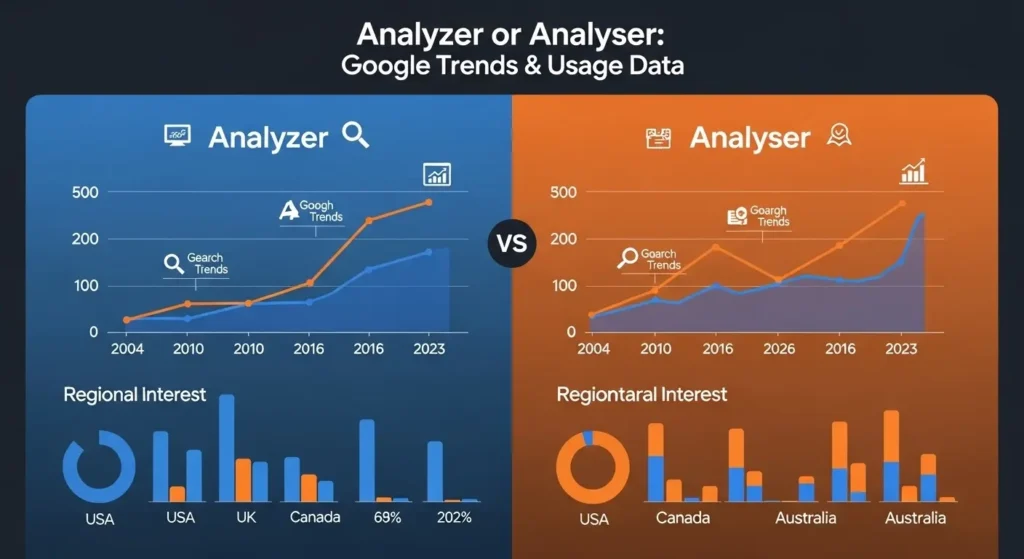
Search trends show a clear pattern:
- “Analyzer” is popular in the United States
- “Analyser” is more common in the UK, Pakistan, India, and Australia
Key Insight:
- Tech tools and software often use “analyzer” (US style)
- Academic and formal writing often use “analyser” (UK style)
For content optimization:
- Target US audience → use analyzer
- Target global/UK audience → use analyser
Keyword Comparison Table
| Feature | Analyzer | Analyser |
| Meaning | Same | Same |
| Region | USA | UK/Commonwealth |
| Usage Style | Modern/Tech | Formal/Academic |
| content Popularity | High (US) | High (UK/Asia) |
| Correct? | Yes | Yes |
FAQs About Analyzer or Analyser
1. Is analyzer or analyser correct?
Both are correct. The difference is based on region.
2. Which spelling is used in Pakistan?
“Analyser” is more common in education and formal writing.
3. Is analyzer wrong in British English?
Not wrong, but less preferred. “Analyser” is better in UK style.
4. Do both words have the same meaning?
Yes, they mean the same thing.
5. Which spelling is better for content optimization?
Use “analyzer” for US traffic and “analyser” for UK/global traffic.
6. Can I use both in one article?
No. Always stay consistent with one spelling.
7. Why are there two spellings?
Because of differences between American and British English.
8. Is “analyse” related to analyser?
Yes. “Analyse” is the verb, and “analyser” is the noun.
Conclusion
The confusion between “analyzer” and “analyser” is very common, but the answer is simple. Both spellings are correct, and both have the same meaning. The only difference is the type of English you use.
If your audience is in the United States, “analyzer” is the better choice. If you are writing for the UK, Pakistan, or other Commonwealth countries, “analyser” fits better. The key is not which one is right but which one is right for your audience.
In modern writing, especially online content, consistency matters more than anything. Switching between both spellings can confuse readers and reduce trust. So, pick one style and use it throughout your content.
For students, writers, and content experts, understanding this small difference can improve clarity, professionalism, and search ranking. Now you can confidently choose the correct spelling every time.

I am an Emily Carter Brooks U.S.A based linguistics writer known for my clear, reader-friendly explanations of English grammar and vocabulary differences. I have contributed to multiple online language resources and specializes in spelling variations, pronunciation confusion, and British vs American English comparisons. I’m passionate about helping learners improve their English through practical, everyday communication. engaging, and stress-free.