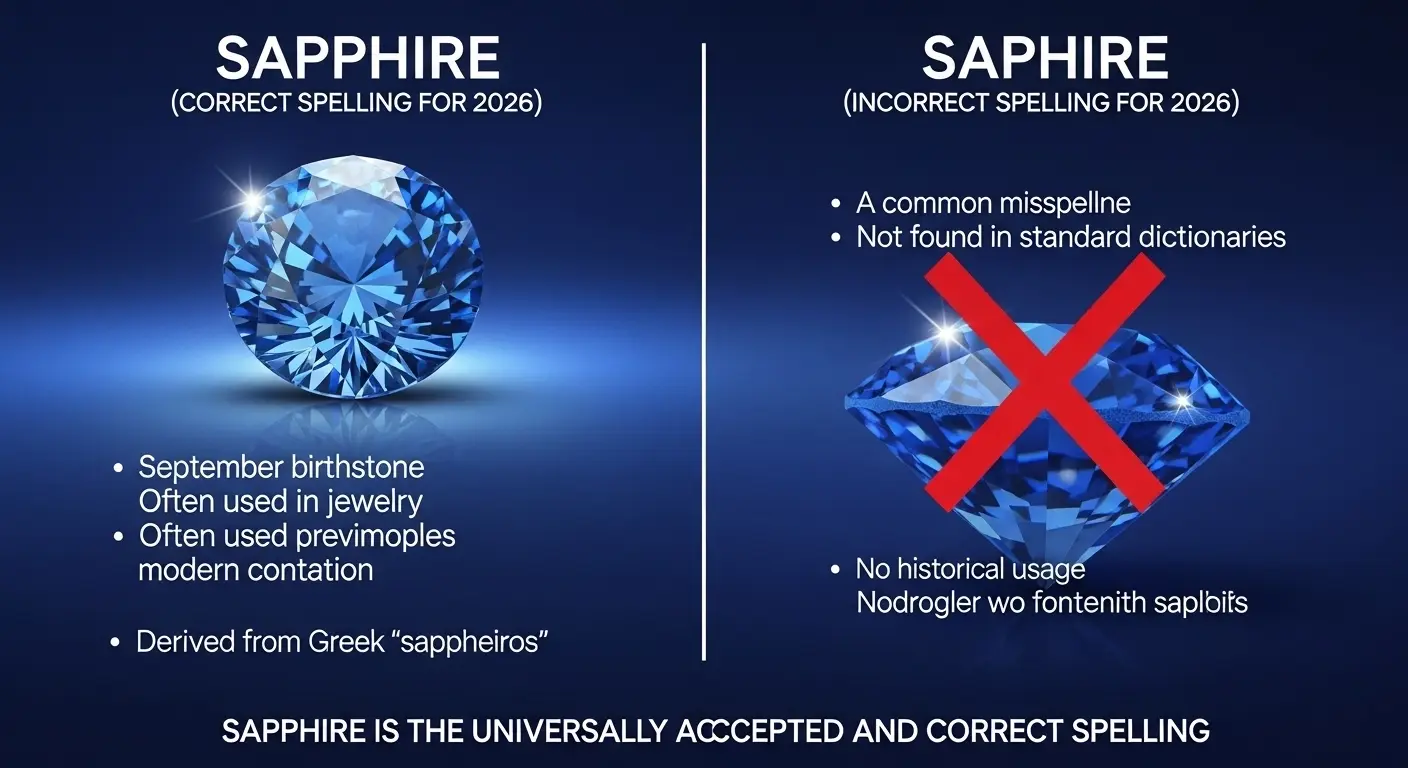
“Sapphire” is a noun referring to a precious blue gemstone, whereas “saphire” has no accepted meaning in English.
Have you ever typed “saphire” and wondered if it looks right? You are not alone. Many people get confused between “sapphire” and “saphire” because the word has a tricky spelling with double letters. It is easy to miss one “p” or think the simpler version is correct.
People usually search for this keyword when writing about jewelry, gemstones, or even names. A small spelling mistake can make your writing look less professional, especially in emails, blogs, or online stores. That is why it is important to know the correct form.
This article will clear your confusion in a very simple way. You will learn the correct spelling, where the word comes from, and how to use it in real life. We will also look at common mistakes and give easy examples you can follow.
By the end, you will feel confident using the right word every time if you are writing casually or professionally.
Sapphire or Saphire – Quick Answer
The correct spelling is “sapphire.”
❌ Saphire is incorrect and not accepted in standard English.
Examples:
- ✅ She wore a beautiful sapphire ring.
- ❌ She wore a beautiful saphire ring.
- ✅ The necklace has a blue sapphire stone.
- ❌ The necklace has a blue saphire stone.
Always remember: “sapphire” has double “p” (pp).
The Origin of Sapphire or Saphire
The word “sapphire” comes from old languages. It started from the Greek word “sappheiros” and the Latin word “sapphirus.” Both words were used for blue gemstones.
Over time, the spelling changed as English developed. Many English words kept double letters from their original forms. That is why “sapphire” has double “p.”
The incorrect spelling “saphire” likely comes from people trying to simplify the word. But English often keeps traditional spellings, even if they look complex.
So, the correct spelling stayed “sapphire,” and it is now used worldwide.
British English vs American English Spelling
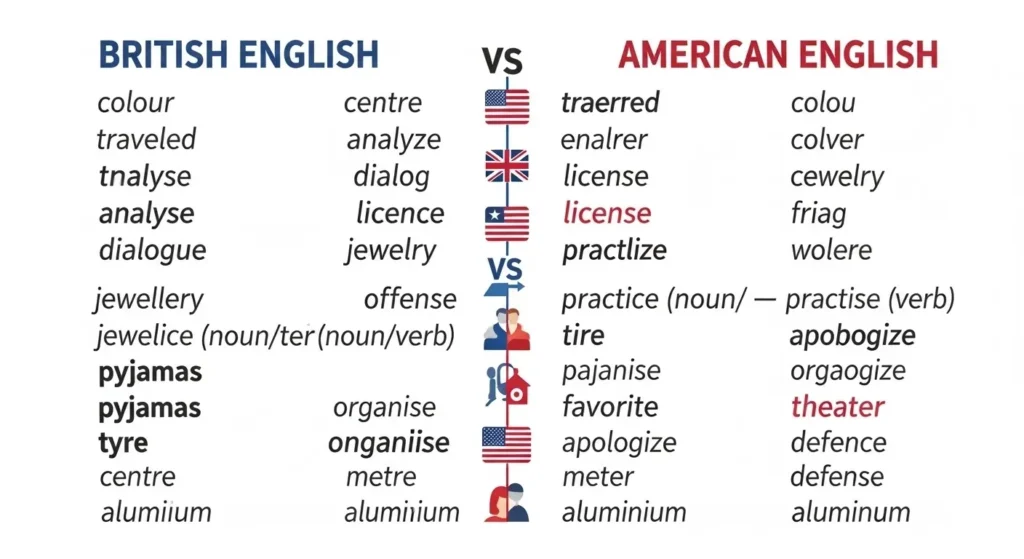
Good news! There is no difference between British and American English for this word.
Both use:
✅ Sapphire
Comparison Table:
| Version | Correct Spelling | Example Sentence |
| American English | Sapphire | She bought a sapphire ring in the US. |
| British English | Sapphire | He gifted a sapphire necklace in the UK. |
| Incorrect Form | Saphire | ❌ This spelling is wrong everywhere. |
Unlike words like “color/colour,” this word stays the same.
Which Spelling Should You Use?
You should always use “sapphire.” There is no situation where “saphire” is correct.
Simple Advice:
- 🇺🇸 US audience → Use sapphire
- 🇬🇧 UK audience → Use sapphire
- Global writing → Use sapphire
If you are writing for:
- Blogs → Use sapphire
- Online stores → Use sapphire
- School work → Use sapphire
Using the wrong spelling can hurt trust, especially in business or content.
Common Mistakes with Sapphire or Saphire
Here are common errors people make:
1. Missing a “P”
❌ Saphire
✅ Sapphire
2. Typing Too Fast
People often type quickly and forget one letter.
3. Auto-Correct Issues
Some tools may not fix the mistake properly.
4. Confusing with Similar Words
Words like “fire” or “hire” make people think “saphire” is correct.
Quick Fix Tip:
Remember: “Sapphire = Sapp + hire” (double p)
Sapphire or Saphire in Everyday Examples
Emails
- ✅ Please send details of the sapphire ring.
- ❌ Please send details of the saphire ring.
Social Media
- ✅ Loving my new sapphire necklace!
- ❌ Loving my new saphire necklace!
News
- ✅ The museum displayed a rare sapphire gem.
Formal Writing
- ✅ The crown features a large blue sapphire.
In every case, only “sapphire” is correct.
Sapphire or Saphire / Google Trends & Usage Data
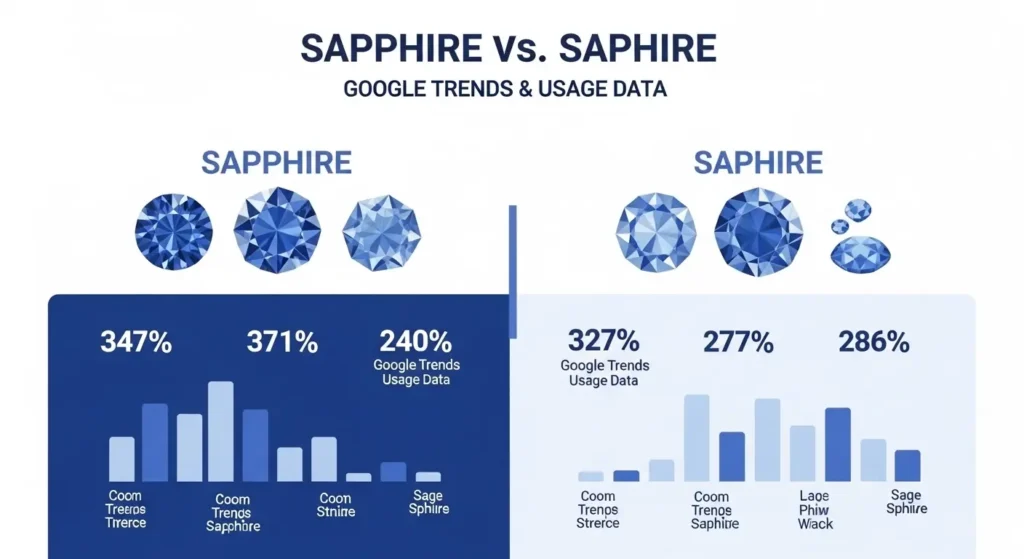
Search data shows that “sapphire” is the dominant and correct keyword used worldwide. It appears in:
- Jewelry websites
- Fashion blogs
- Online stores
- Educational content
On the other hand, “saphire” appears mainly as a misspelling. People often search it by mistake, then correct it.
Popularity by Region:
- 🌍 Global → “Sapphire” is standard
- 🇺🇸 USA → Only “sapphire” used
- 🇬🇧 UK → Only “sapphire” used
- 🇵🇰 Pakistan & others → Both searched, but “saphire” is incorrect
Always target “sapphire”, but you can mention “saphire” as a common error.
Comparison Table: Sapphire vs Saphire
| Feature | Sapphire ✅ | Saphire ❌ |
| Correct Spelling | Yes | No |
| Used in English | Yes | No |
| Found in Dictionary | Yes | No |
| SEO Friendly | Yes | No |
| Professional Use | Yes | No |
FAQs
1. Is “saphire” ever correct?
No, “saphire” is always incorrect.
2. Why does “sapphire” have double “p”?
It comes from its Greek and Latin origin, which used double letters.
3. Is there a British spelling of sapphire?
No, both British and American English use the same spelling.
4. How can I remember the correct spelling?
Think: Sapphire = double “p.”
5. Is sapphire only blue?
Most sapphires are blue, but they can come in other colors too.
6. Is sapphire a gemstone?
Yes, it is a precious gemstone used in jewelry.
7. Why do people search “saphire”?
It is a common typing mistake.
8. Which spelling is better for content?
Always use “sapphire.”
Conclusion
The confusion between “sapphire” and “saphire” is very common, but the answer is simple. The correct spelling is always “sapphire,” with double “p.” The shorter version, “saphire,” is just a mistake and should not be used in any type of writing.
We also saw that this word has a rich history from Greek and Latin, which explains its unique spelling. Unlike many English words, there is no difference between British and American usage. This makes things easier no matter where you are writing, the correct form stays the same.
Using the right spelling is important for clear communication, especially in professional work, online content. A small mistake like this can affect your credibility. By remembering the simple rule double “p” in sapphire you can avoid errors easily.

I hold a degree in English Literature and Linguistics and have worked extensively on educational blogs, comparison websites, and digital learning platforms. My writing focuses on simplifying complex language rules, highlighting British vs American English differences, and providing practical examples for everyday usage.