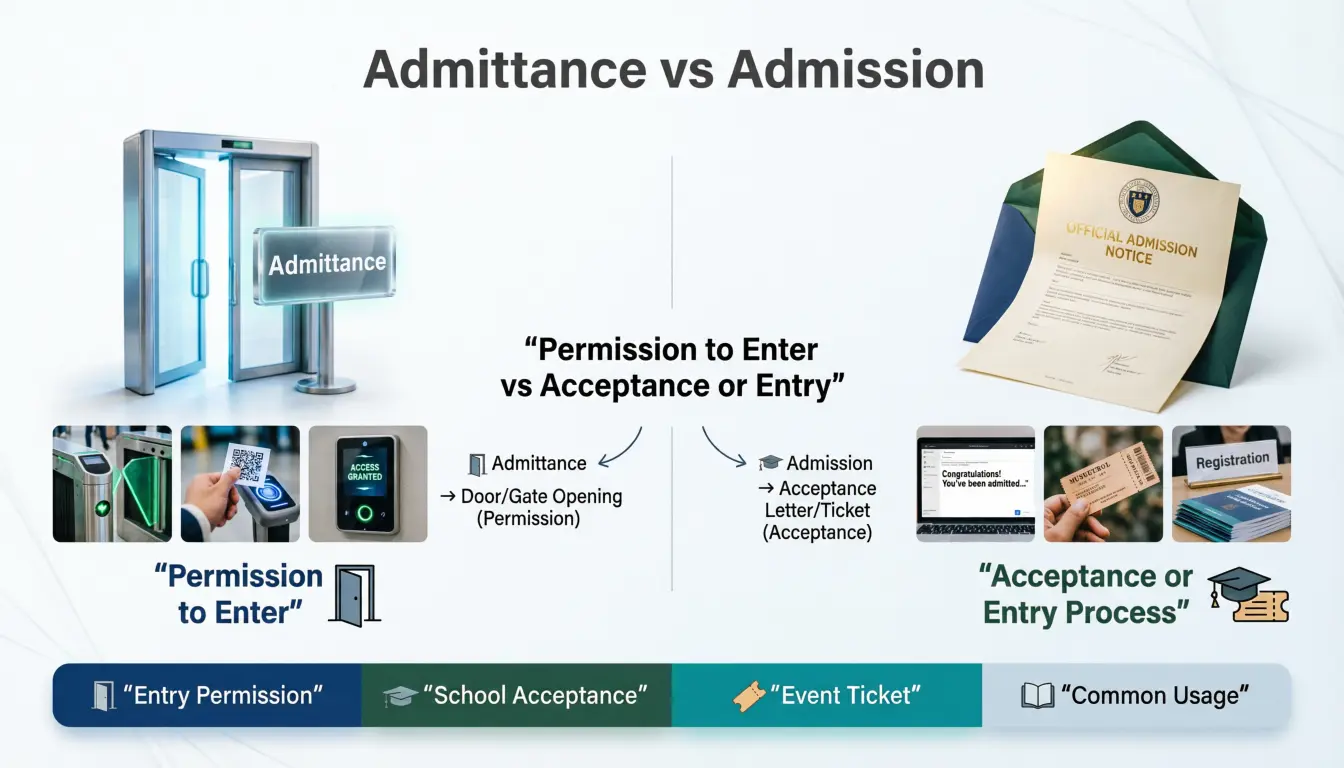
“Admittance” and “admission” are both correct words, but they are used in different contexts. “Admittance” refers to the right or permission to enter a place, while “admission” is a broader term that can mean the act of entering, the process of being accepted, a statement acknowledging something, or the fee required for entry
Many English learners and native speakers get confused by admittance vs admission. At first glance, these words seem to mean the same thing because both relate to the idea of entering a place, group, or situation. However, they are not always interchangeable.
People often search for this topic when writing essays, business documents, college applications, signs, or formal letters. The confusion comes from the fact that both words come from the same root word, admit, but they are used in different contexts.
Understanding the difference between admittance and admission can help you communicate more clearly and avoid common grammar mistakes. In some situations, using the wrong word may make your writing sound awkward or less professional.
This guide explains the meaning, history, usage, examples, trends, and common mistakes related to admittance vs admission. By the end, you will know exactly which word to use and when to use it.
Admittance vs Admission – Quick Answer
Admission is the more common word and usually refers to the act of entering, being accepted, or confessing something.
Admittance mainly refers to permission or the right to enter a place.
Examples
- Admission to the university was competitive.
- She gained admission to the event.
- No admittance without a ticket.
- Employees only beyond this point. No admittance.
Quick Rule
| Word | Meaning | Example |
| Admittance | Permission to enter | No admittance beyond this door. |
| Admission | Entry, acceptance, or confession | Admission to college is difficult. |
The Origin of Admittance vs Admission
Both words come from the Latin word admittere, which means “to allow entry” or “to let in.”
Admittance
The word admittance appeared in English as a noun describing permission to enter a place. Over time, its use became limited mainly to signs, notices, and formal access situations.
Admission
The word admission developed a broader meaning. It came to describe:
- Entry into a place
- Acceptance into an institution
- A statement or confession
- The price paid to enter an event
Because it has more meanings, admission became much more common in modern English.
British English vs American English Spelling
Unlike words such as analysed and analyzed, admittance and admission are not British and American spelling variations. They are different words with different meanings.
Comparison Table
| Feature | Admittance | Admission |
| British English | Used | Used |
| American English | Used | Used |
| Means permission to enter | Yes | Sometimes |
| Means acceptance into school | No | Yes |
| Means confession | No | Yes |
| Common in signs | Yes | Rarely |
| Common in daily writing | Less common | Very common |
Examples
British English:
- No admittance except for staff.
- Admission to the museum is free.
American English:
- No admittance without authorization.
- Admission to Harvard is highly competitive.
Which Spelling Should You Use?
Your choice depends on what you want to say.
Use Admittance When:
- Talking about permission to enter
- Writing signs and notices
- Referring to restricted access
Examples
- No admittance beyond this point.
- Admittance is limited to authorized personnel.
Use Admission When:
- Discussing schools or universities
- Talking about event entry
- Referring to a confession
- Discussing acceptance into a group
Examples
- Admission requirements have changed.
- His admission surprised everyone.
Audience-Based Advice
| Audience | Recommended Word |
| US readers | Admission for most situations |
| UK readers | Admission for most situations |
| Commonwealth countries | Admission for most situations |
| Signs and notices | Admittance |
| Academic writing | Admission |
Common Mistakes with Admittance vs Admission
Mistake 1
❌ I received admittance to the university.
✅ I received admission to the university.
Mistake 2
❌ Admission beyond this gate is prohibited.
✅ Admittance beyond this gate is prohibited.
Mistake 3
❌ His admittance shocked the court.
✅ His admission shocked the court.
Mistake 4
❌ College admittance standards increased.
✅ College admission standards increased.
Admittance vs Admission in Everyday Examples
In Emails
- Your admission application has been approved.
- Admittance is limited to invited guests.
In News Reports
- University admission rates declined this year.
- Admittance to the restricted area was denied.
On Social Media
- Finally got admission to my dream college!
- No admittance unless you have a pass.
In Formal Writing
- Admission policies were updated.
- Admittance shall be granted only to authorized personnel.
Admittance vs Admission – Google Trends & Usage Data
Search and language usage patterns show that admission is significantly more popular than admittance.
Why Admission Is More Common
- Used in education
- Used in healthcare
- Used in law
- Used in business
- Used in everyday conversation
Where Admittance Appears Most
- Warning signs
- Security notices
- Restricted-access locations
- Official building regulations
Popularity by Context
| Context | Preferred Word |
| Universities | Admission |
| Hospitals | Admission |
| Events | Admission |
| Confessions | Admission |
| Security signs | Admittance |
| Restricted areas | Admittance |
Admittance vs Admission Comparison Table
| Category | Admittance | Admission |
| Permission to enter | Yes | Yes |
| Entry fee | No | Yes |
| University acceptance | No | Yes |
| Confession | No | Yes |
| Common usage | Less common | Very common |
| Signage | Common | Uncommon |
| Formal documents | Sometimes | Very common |
Admittance vs Admission in Academic Writing
In academic writing, admission is almost always the preferred term.
Examples:
- Admission criteria vary by institution.
- Admission decisions will be released in June.
- Admission rates increased this year.
Using admittance in academic papers often sounds unusual unless discussing access rights or entry permissions.
Admittance vs Admission in Business English
Business communication also favors admission in most cases.
Examples
- Admission to the conference requires registration.
- Admission policies were updated.
Use admittance when discussing physical access.
Examples
- Admittance to secure areas requires identification.
- Employee admittance is controlled electronically.
Common Style Guide Recommendations
Most major style guides and dictionaries recommend:
- Admission for acceptance, entry, and confession.
- Admittance for permission to enter a restricted location.
Professional writers generally choose admission unless discussing physical access control.
Real Examples from Published Sources
Admission
- Admission to universities remains highly competitive.
- Hospital admission rates increased during winter.
- The admission of guilt changed the case.
Admittance
- No admittance except on official business.
- Admittance restricted to authorized personnel.
- Admittance by invitation only.
Quiz: Admittance vs Admission
Choose the correct word.
1.
She received ______ to medical school.
A. Admittance
B. Admission
Answer: B
2.
No ______ beyond this gate.
A. Admittance
B. Admission
Answer: A
3.
His ______ of responsibility surprised everyone.
A. Admittance
B. Admission
Answer: B
4.
Conference ______ requires registration.
A. Admittance
B. Admission
Answer: B
5.
Employee ______ is limited after hours.
A. Admittance
B. Admission
Answer: A
Fill in the Blanks Exercise
Fill in the correct word.
- She earned ______ to the university.
- No ______ without a valid pass.
- His ______ of guilt was recorded.
- Event ______ costs $20.
- Visitor ______ is restricted today.
Answers
- Admission
- Admittance
- Admission
- Admission
- Admittance
FAQs
1. Are admittance and admission the same?
No. They are related but used differently. Admission is broader, while admittance mainly means permission to enter.
2. Which word is more common?
Admission is much more common in modern English.
3. Can I use admittance for college acceptance?
No. Admission is the correct word for college acceptance.
4. Why do signs say “No Admittance”?
Because admittance specifically refers to permission to enter a location.
5. Can admission mean confession?
Yes. Admission can mean acknowledging a fact or guilt.
6. Is admittance old-fashioned?
Not exactly. It is still used, but mostly in signs and access-control situations.
7. Which word should I use in business writing?
Usually admission, unless discussing physical access to a building or restricted area.
8. Is admission used in both British and American English?
Yes. It is standard in both varieties.
9. Can admission and admittance ever be interchangeable?
Sometimes when discussing entry, but admission is usually preferred in modern usage.
Conclusion
Understanding admittance vs admission is easier once you know their specific roles. Both words come from the verb admit, but they serve different purposes in modern English. Admission is the broader and more commonly used term. It refers to entry, acceptance into schools or organizations, event access, and even confessions. Because of its wide range of meanings, it appears frequently in academic, business, legal, and everyday writing.
Admittance, on the other hand, has a narrower meaning. It mainly refers to permission to enter a physical place. This is why it often appears on signs such as “No Admittance” or in discussions about access control and security.
For most writing situations, especially when discussing universities, events, hospitals, or formal acceptance, admission is the correct choice. Use admittance when emphasizing permission to enter a restricted area.
Remember this simple rule: admission is for acceptance and entry in general, while admittance is mainly for access permission. Following this guideline will help you write more clearly, professionally, and accurately.

I am an Emily Carter Brooks U.S.A based linguistics writer known for my clear, reader-friendly explanations of English grammar and vocabulary differences. I have contributed to multiple online language resources and specializes in spelling variations, pronunciation confusion, and British vs American English comparisons. I’m passionate about helping learners improve their English through practical, everyday communication. engaging, and stress-free.