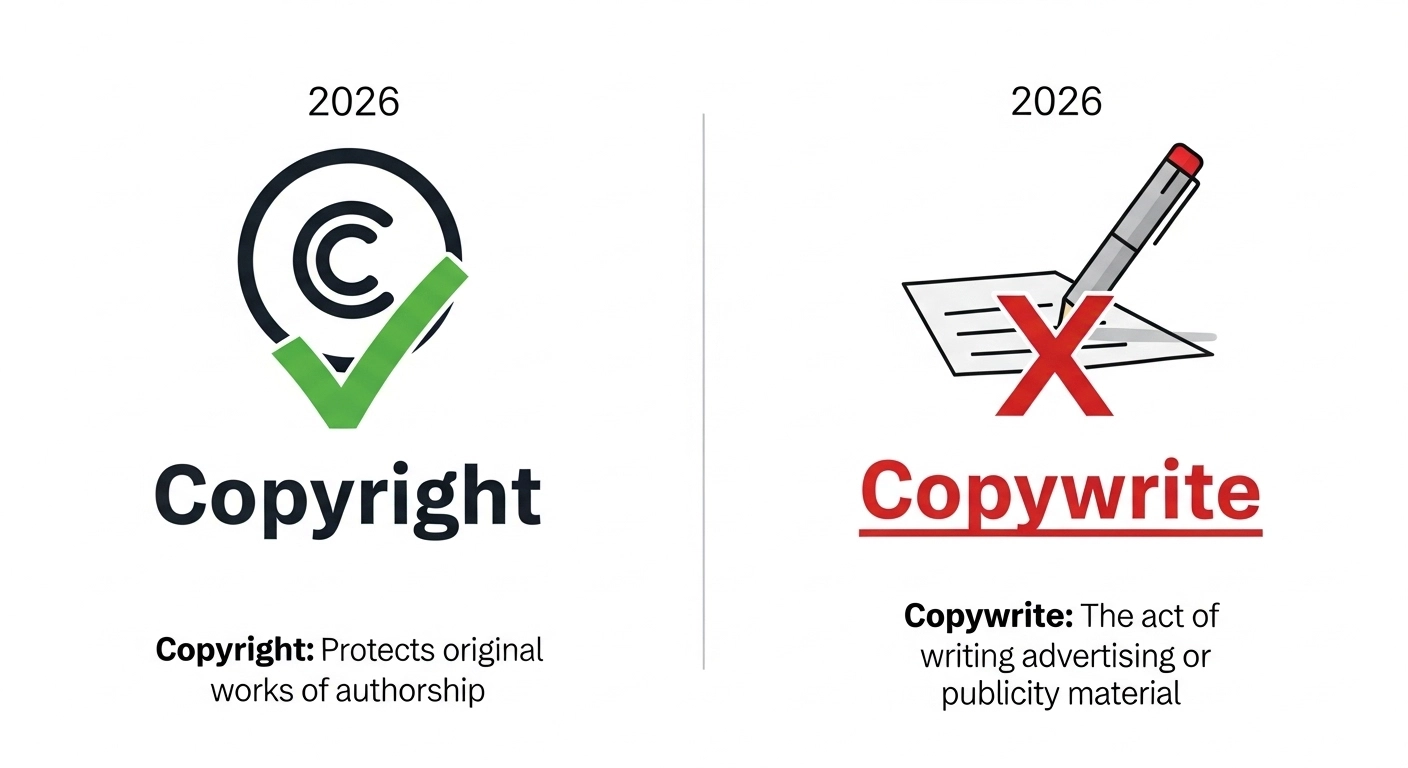
“Copyright” is a noun (and sometimes a verb) referring to the legal right that protects original work, whereas “copywrite” has no accepted meaning in English.
Have you ever typed “copywrite” and felt unsure if it’s correct? You’re not alone. Many people confuse copyright and copywrite because they sound the same. This confusion is common among students, bloggers, freelancers, and even business owners.
The problem comes from how the words are pronounced. “Copyright” is often spoken quickly, making it sound like “copywrite.” As a result, people assume both spellings are valid. But here’s the truth: only one is correct in standard English.
Understanding the difference is important, especially if you create content, run a website, or work online. Using the wrong word can make your writing look unprofessional or confusing.
In this guide, you’ll learn the correct spelling, why the confusion exists, and how to use the word properly in real life.
If you’re writing emails, blog posts, or legal content, this article will clear things up quickly and simply.
Copyright or Copywrite – Quick Answer
Copyright is the correct spelling.
Copywrite is incorrect and not a real word.
Copyright means legal protection for original work like writing, music, or images.
Examples:
- ✅ This photo is protected by copyright.
- ✅ The author owns the copyright to this book.
- ❌ This article has a copywrite claim.
Always use copyright when talking about ownership of creative work.
The Origin of Copyright or Copywrite
The word copyright comes from two words:
- “copy” (meaning written or printed text)
- “right” (meaning legal ownership)
It first appeared in the 16th century, when printing became popular. Publishers needed a way to protect their work from being copied without permission.
Over time, copyright became a legal term used worldwide. It now covers books, music, videos, software, and more.
So why do people write “copywrite”?
Because of confusion between:
- “right” (legal ownership)
- “write” (to create text)
They sound the same, but they mean very different things. That’s why “copywrite” is a spelling mistake.
British English vs American English Spelling
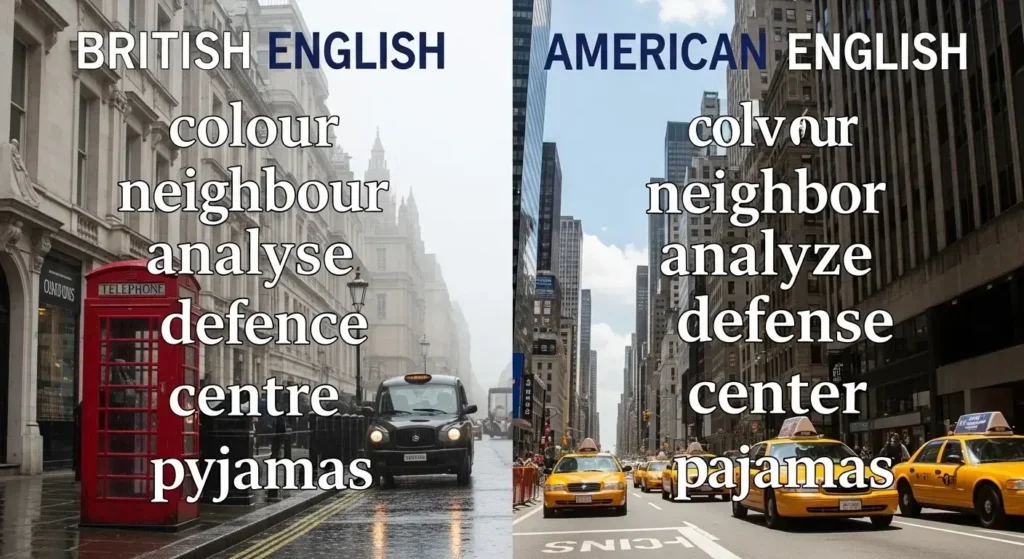
Unlike many English words, copyright has the same spelling in both British and American English.
Key Point:
There is no variation between UK and US spelling.
Comparison Table
| Version | Spelling | Correct? | Usage Region |
| British English | copyright | ✅ Yes | UK, Pakistan, India |
| American English | copyright | ✅ Yes | USA |
| Common Mistake | copywrite | ❌ No | Incorrect everywhere |
No matter where you are, always use copyright.
Which Spelling Should You Use?
The answer is simple: always use copyright.
Based on your audience:
- USA audience → Use copyright
- UK/Commonwealth (Pakistan, India, etc.) → Use copyright
- Global audience → Use copyright
There is no situation where “copywrite” is correct.
If you are:
- A blogger → Use copyright in disclaimers
- A freelancer → Use copyright in contracts
- A student → Use copyright in assignments
Using the correct spelling builds trust and professionalism.
Common Mistakes with Copyright or Copywrite
Here are some frequent errors people make:
1. Using “copywrite” instead of “copyright”
❌ This image has copywrite protection
✅ This image has copyright protection
2. Confusing “copyright” with “copywriting”
- Copyright = legal protection
- Copywriting = writing for marketing
❌ I do copyright for ads
✅ I do copywriting for ads
3. Using it as a verb incorrectly
❌ I will copyright this sentence (informal misuse)
✅ This work is protected by copyright
4. Spelling errors in legal pages
Many websites write:
❌ Copywrite © 2026
✅ Copyright © 2026
5. Mixing meanings in business writing
❌ Our company provides copyright services (when meaning writing ads)
✅ Our company provides copywriting services
Always double-check context and spelling.
Copyright or Copywrite in Everyday Examples
1. Emails
- ✅ Please respect copyright laws when sharing files.
- ❌ Please respect copywrite laws.
2. News
- ✅ The artist filed a copyright claim.
- ❌ The artist filed a copywrite claim.
3. Social Media
- ✅ This video is under copyright protection.
- ❌ This video has copywrite protection.
4. Websites
- ✅ Copyright © 2026 All rights reserved
- ❌ Copywrite © 2026
5. Formal Writing
- ✅ Copyright ensures creators are protected
- ❌ Copywrite ensures creators are protected
You’ll see copyright everywhere in real-world usage.
Copyright or Copywrite – Google Trends & Usage Data
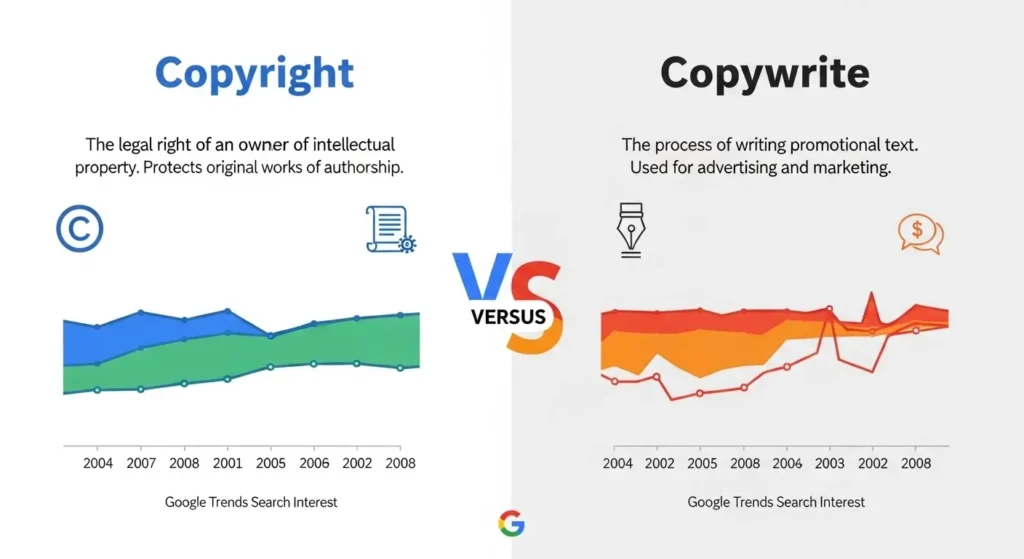
Search data shows a clear pattern:
- “Copyright” is searched millions of times globally
- “Copywrite” is searched less and mostly as a mistake
Popularity by region:
- USA & UK → High usage of “copyright”
- Pakistan & India → Many searches for “copywrite” due to confusion
- Global → “Copyright” dominates official and legal content
Context usage:
- Legal documents → copyright
- Websites → copyright
- Education → copyright
- Search errors → copywrite
Conclusion: “Copywrite” appears in searches, but it’s not correct usage.
Keyword Comparison Table
| Term | Meaning | Correct Spelling | Example Use |
| Copyright | Legal ownership of content | ✅ Yes | Copyright protects this article |
| Copywrite | Misspelling | ❌ No | Not used in correct English |
| Copywriting | Writing for marketing/ads | ✅ Yes | She works in copywriting |
FAQs
1. Is “copywrite” ever correct?
No, “copywrite” is always incorrect.
2. Why do people confuse copyright and copywrite?
Because “right” and “write” sound the same.
3. What does copyright mean?
It means legal ownership of creative work.
4. Is copyright the same in UK and US?
Yes, the spelling is the same everywhere.
5. What is copywriting?
Copywriting means writing ads or marketing content.
6. Can I use copyright in emails?
Yes, especially for legal or professional messages.
7. How do I write a copyright notice?
Use: Copyright © Year Name
8. Is copyright automatic?
In many countries, yes. It applies when you create original work.
9. Why does Google show “copywrite”?
Because many users search with the wrong spelling.
Conclusion
The difference between copyright and copywrite is simple but important. Only copyright is correct, and it refers to legal protection for creative work. “Copywrite” is just a spelling mistake caused by similar pronunciation.
This confusion happens often because English has many words that sound alike but have different meanings. In this case, “right” means legal ownership, while “write” means creating text. Mixing them up can lead to errors in writing, especially in professional or legal contexts.
No matter where you live if in the US, UK, or Pakistan the correct spelling remains the same: copyright. Using the right word helps you communicate clearly and appear more credible.
If you create content, run a website, or work online, this is especially important. A simple spelling mistake in something like a copyright notice can make your work look less trustworthy.
The best approach is to remember one rule:
Copyright protects your work. Copywrite is always wrong.

I hold a degree in English Literature and Linguistics and have worked extensively on educational blogs, comparison websites, and digital learning platforms. My writing focuses on simplifying complex language rules, highlighting British vs American English differences, and providing practical examples for everyday usage.