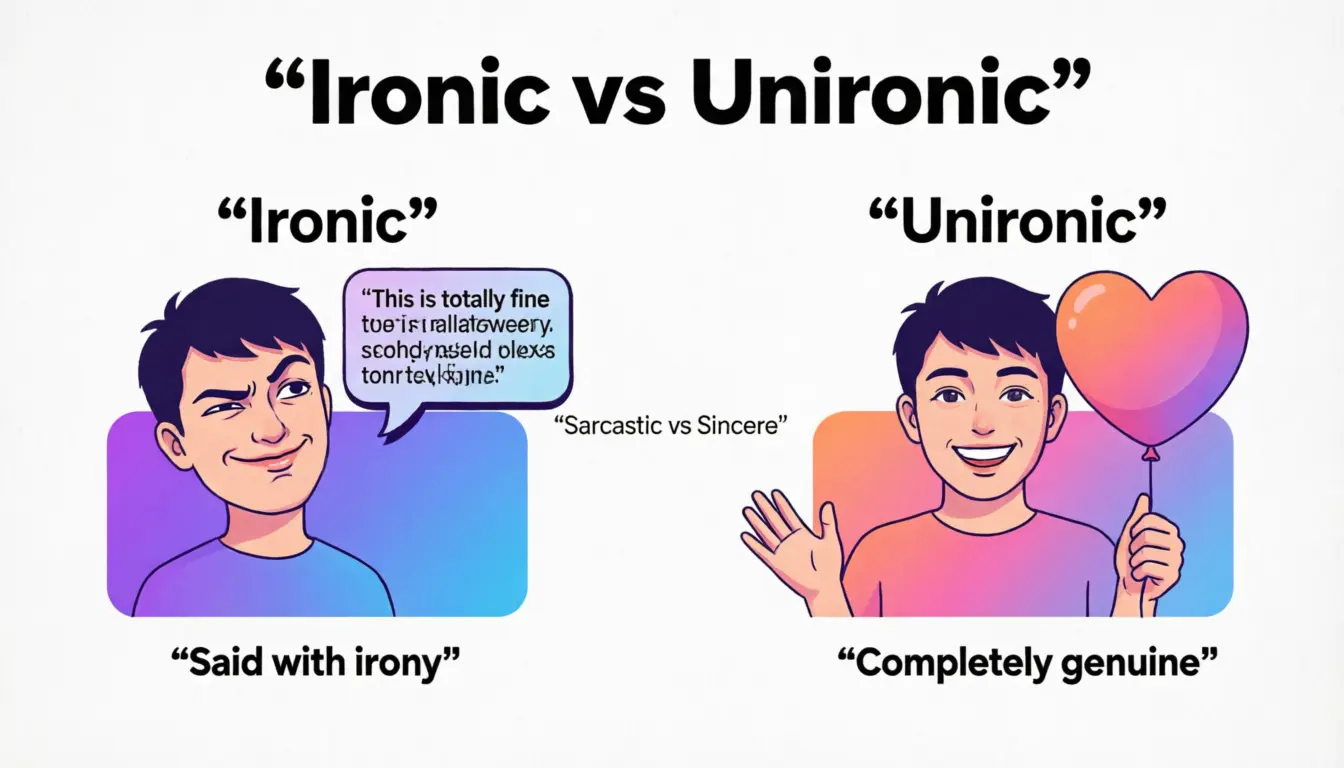
“Ironic” describes something happening in an unexpected or opposite way, often humorously, while “unironic” means something is sincere, genuine, or not intended as irony or sarcasm.
The words “ironic” and “unironic” are common online, but many people still confuse them. You may see someone call a joke “ironic” or say they enjoy something “unironically.” At first, the meanings can seem strange because both words are connected to attitude, humor, and sincerity.
People often search for “ironic vs unironic” because social media, memes, and internet culture use these terms in new ways. One person may wear an old-fashioned shirt as a joke, while another wears the same shirt because they truly like it. The difference between ironic and unironic behavior changes the meaning completely.
This guide explains the difference in very simple English. You will learn what each word means, where the words came from, how they are used in daily life, and which one you should use in formal or casual writing. You will also see examples, common mistakes, spelling advice for British and American English, and usage trends around the world.
By the end, you will clearly understand when something is ironic and when it is unironic.
Ironic vs Unironic – Quick Answer
“Ironic” means something is done with humor, sarcasm, or the opposite meaning.
“Unironic” means something is sincere, genuine, or serious.
Simple Examples
- Ironic:
“He wore ugly sunglasses as a joke.” - Unironic:
“He wore ugly sunglasses because he truly liked them.”
Another Example
- Ironic use:
“I listen to old pop songs ironically.” - Unironic use:
“I genuinely love old pop songs.”
In short:
| Word | Meaning | Tone |
| Ironic | Not fully serious | Humorous or sarcastic |
| Unironic | Fully sincere | Honest and genuine |
The Origin of Ironic vs Unironic
The word “ironic” comes from the Greek word eironeia, which means dissembling or pretending. Over time, English speakers used “irony” to describe situations where the real meaning was different from the expected meaning.
“Ironic” became common in literature, speech, and humor. Writers often used irony to create surprise or hidden meaning.
The word “unironic” is much newer. It formed by adding the prefix “un-” to “ironic.” The prefix “un-” means “not.”
So:
- ironic = sarcastic, humorous, or opposite
- unironic = not sarcastic or not pretending
“Unironic” became very popular on the internet during the 2010s. Social media users started using it to describe genuine opinions, real emotions, or honest enjoyment.
For example:
- “I unironically love this movie.”
- “She has an unironic interest in old cartoons.”
Today, both words are common in online culture, memes, reviews, and casual conversation.
British English vs American English Spelling
The good news is that “ironic” and “unironic” are spelled the same in both British English and American English.
Unlike words such as “colour/color” or “favour/favor,” there is no spelling difference here.
Comparison Table
| British English | American English | Correct? |
| ironic | ironic | Yes |
| unironic | unironic | Yes |
Usage Difference
Although spelling stays the same, usage can vary slightly.
- American internet culture uses “unironically” very often in memes and social media.
- British speakers may use the term more casually or humorously.
Example Sentences
| Region | Example |
| UK | “That music choice feels ironic.” |
| US | “I unironically love this band.” |
Which Spelling Should You Use?
You should use the standard spelling:
- ironic
- unironic
These spellings work everywhere.
For American Audiences
Use:
- ironic
- unironic
These are common in social media, reviews, and modern speech.
For British or Commonwealth Audiences
Use the same spellings:
- ironic
- unironic
British readers understand both words clearly.
For Global Audiences
“Ironic” is universally accepted.
“Unironic” is also widely understood today, especially online. However, in very formal writing, some readers may prefer phrases like:
- sincere
- genuine
- serious
Professional Advice
Use:
- “ironic” in both formal and informal writing
- “unironic” mostly in casual or modern contexts
Common Mistakes with Ironic vs Unironic
Many people misuse these words. Here are the most common errors.
Mistake 1: Using “ironic” for coincidence
❌ “It’s ironic that we both wore blue shirts.”
This is usually just coincidence.
✅ “It was ironic that the fire station caught fire.”
That example shows true contrast.
Mistake 2: Thinking “unironic” means boring
“Unironic” does not mean dull or serious all the time.
It simply means honest and genuine.
✅ “She has an unironic love for classic books.”
Mistake 3: Overusing “unironically”
Some people add “unironically” to every opinion online.
❌ “I unironically like pizza.”
That sounds unnecessary because liking pizza is normal.
Use it only when sincerity may surprise people.
Mistake 4: Confusing sarcasm with irony
Sarcasm is often harsh or mocking.
Irony is broader and can include situations, actions, or hidden meaning.
Ironic vs Unironic in Everyday Examples
Emails
Ironic:
“Thanks for the fast reply after only three weeks.”
Unironic:
“Thank you for your quick response.”
News Writing
Ironic:
“It was ironic that the safety expert ignored the warning signs.”
Unironic:
“The expert sincerely supported the safety campaign.”
Social Media
Ironic:
“Listening to cheesy music ironically.”
Unironic:
“I genuinely enjoy cheesy music.”
In Formal Writing
Formal writing usually avoids “unironic” unless discussing culture or media.
Better formal alternatives:
- sincere
- authentic
- genuine
In Everyday Speech
| Situation | Better Word |
| Joking behavior | ironic |
| Genuine emotion | unironic |
| Sarcastic comment | ironic |
| Honest opinion | unironic |
Ironic vs Unironic – Google Trends & Usage Data
“Ironic” has been popular for many decades because it appears in books, schools, journalism, and media studies.
“Unironic” became much more popular with internet culture.
Popular Regions
| Word | Popular In |
| ironic | Worldwide |
| unironic | US, UK, Canada, Australia |
Common Contexts
Ironic
Used in:
- literature
- journalism
- comedy
- conversations
- education
Unironic
Used in:
- memes
- social media
- pop culture
- online reviews
- youth slang
Online Trends
Searches for “unironically” increased greatly after meme culture became mainstream. Many younger users use it to separate real opinions from jokes.
Example:
- “I unironically think this song is amazing.”
This tells readers the speaker is being serious.
Comparison Table: Ironic vs Unironic
| Feature | Ironic | Unironic |
| Meaning | Opposite or sarcastic meaning | Genuine or sincere meaning |
| Tone | Humorous or mocking | Honest or serious |
| Common Online? | Yes | Very common |
| Formal Writing | Common | Less common |
| Social Media Use | Frequent | Extremely frequent |
| Emotion Type | Detached | Genuine |
| Example | “I wore it as a joke.” | “I truly like it.” |
FAQs About Ironic vs Unironic
What does “unironic” mean?
“Unironic” means sincere, genuine, or not joking.
Is “unironic” a real word?
Yes. It is a real English word and is widely used online and in modern speech.
What is the opposite of ironic?
The direct opposite is “unironic.”
Can something be both ironic and unironic?
Sometimes, yes. People may start something as a joke and later genuinely enjoy it.
Is “unironically” formal?
Not usually. It is more common in casual writing and internet culture.
Why do people say “I unironically love this”?
They use it to show they are completely serious and not joking.
Is irony the same as sarcasm?
No. Sarcasm is a type of verbal mockery. Irony is broader and includes situations and contrasts.
Should I use “unironic” in essays?
Only if it fits the topic. In formal essays, words like “genuine” or “sincere” may sound better.
Is “ironic” overused?
Yes. Many people incorrectly use it for simple coincidence.
Conclusion
Understanding “ironic vs unironic” is important because these words completely change the meaning of a sentence. “Ironic” usually describes humor, contrast, sarcasm, or actions that are not fully serious. “Unironic,” on the other hand, describes honesty, sincerity, and genuine feelings.
The word “ironic” has existed for centuries and is common in literature, journalism, and daily conversation. “Unironic” is newer and became popular through internet culture, memes, and social media. Today, both words are widely understood, especially among younger English speakers.
There is no spelling difference between British English and American English, so you can safely use the same spellings worldwide. However, “unironic” sounds more casual and modern, while words like “genuine” or “sincere” may work better in professional writing.
The easiest way to remember the difference is simple:
- ironic = joking or opposite meaning
- unironic = serious and genuine
When you choose the correct word, your writing becomes clearer, smarter, and easier for readers to understand.

I am an Emily Carter Brooks U.S.A based linguistics writer known for my clear, reader-friendly explanations of English grammar and vocabulary differences. I have contributed to multiple online language resources and specializes in spelling variations, pronunciation confusion, and British vs American English comparisons. I’m passionate about helping learners improve their English through practical, everyday communication. engaging, and stress-free.