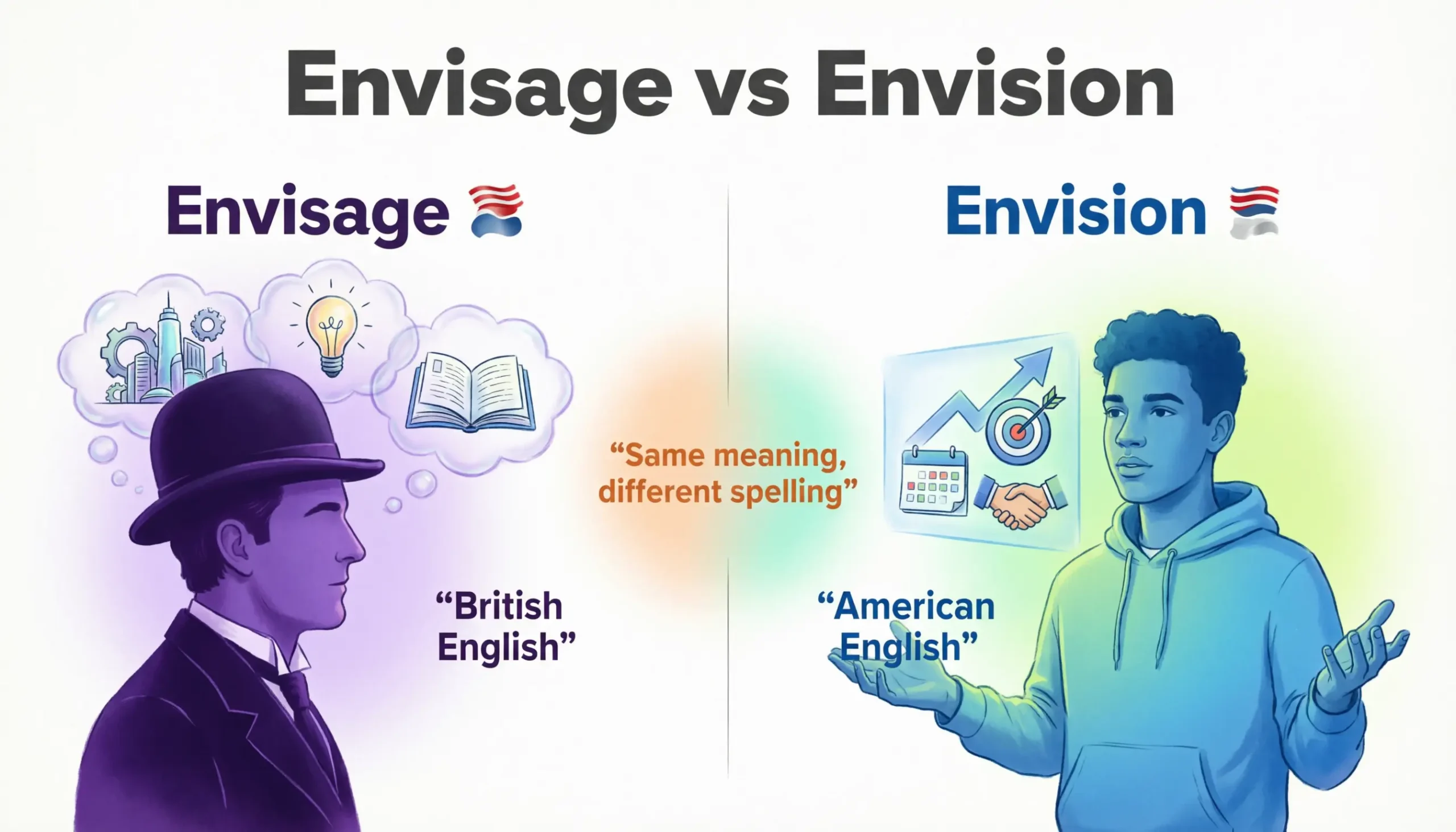
“Envisage” is more common in British English and means to imagine or consider something as a future possibility, while “envision” is more common in American English and means to picture or imagine something clearly in your mind
Many English learners and writers get confused by “envisage” vs “envision.” Both words seem similar. Both talk about imagining the future or forming a mental picture. Because of this, people often wonder if the words mean the same thing or if one is more correct than the other.
The good news is simple: both words are correct. However, they are used differently depending on region, style, and context. In some places, “envision” sounds more natural. In others, “envisage” appears more formal or traditional.
People search for this keyword because they want quick answers about spelling, meaning, and usage. Students use it in essays. Professionals use it in emails and reports. Bloggers and marketers also want to know which version works best for their audience.
This guide explains everything in clear and easy English. You will learn the meaning of each word, their origins, regional differences, common mistakes, and how to use them in real-life writing. By the end, you will know exactly when to use “envisage” and when to use “envision.”
Envisage vs Envision – Quick Answer
Both “envisage” and “envision” mean:
To imagine, picture, or think about something in the future.
Simple Examples
- I envision a better future for our company.
- She envisages a world without pollution.
The meanings are almost the same. The main difference is style and regional preference.
| Word | Meaning | More Common In |
| Envision | Imagine or picture clearly | American English |
| Envisage | Imagine or consider something | British English |
In everyday writing, “envision” is more popular worldwide. “Envisage” often sounds more formal.
The Origin of Envisage or Envision
The words have related histories but developed differently over time.
Origin of “Envisage”
“Envisage” comes from the French word envisager, which means “to look in the face of” or “to consider.” It entered English in the 1800s.
At first, it mainly meant:
- to think about carefully
- to contemplate a possible situation
Example:
- We do not envisage any major problems.
Origin of “Envision”
“Envision” appeared later in American English. It combines:
- en- (to make)
- vision (seeing or imagining)
The word became popular in the 1900s, especially in business and motivational language.
Example:
- Leaders must envision success before achieving it.
Why the Confusion Exists
The words overlap heavily in meaning. Both involve imagination and future thinking. Because they sound alike and work in similar sentences, many writers use them interchangeably.
Still, some people feel:
- “envision” sounds more visual
- “envisage” sounds more thoughtful or formal
British English vs American English Spelling
The biggest difference between the two words is regional usage.
American English
In the United States, “envision” is far more common.
Americans often use it in:
- business writing
- self-help content
- presentations
- leadership discussions
Example:
- We envision rapid growth next year.
British English
In the United Kingdom and some Commonwealth countries, “envisage” appears more often.
It is common in:
- formal reports
- academic writing
- government language
Example:
- The committee envisages several possible outcomes.
Comparison Table
| Feature | Envision | Envisage |
| Main Meaning | Imagine clearly | Imagine or consider |
| Common Region | United States | United Kingdom |
| Tone | Modern and visual | Formal and thoughtful |
| Popularity | Very high | Moderate |
| Used in Business | Very common | Less common |
| Used in Academic Writing | Common | Very common |
Important Note
Both words are grammatically correct in both British and American English. The difference is mainly preference and style.
Which Spelling Should You Use?
The best choice depends on your audience.
Use “Envision” If:
- Your audience is American
- You write marketing content
- You want modern, simple wording
- You create global online content
Example:
- We envision a smarter future.
Use “Envisage” If:
- Your audience is British
- You write formal or academic content
- You want a traditional tone
Example:
- Researchers envisage new policy changes.
For Global Audiences
“Envision” is usually the safer choice because it is more widely recognized online.
Still, consistency matters most. Do not switch between the two words randomly in the same article.
Common Mistakes with Envisage vs Envision
Many writers misuse these words in small but important ways.
Mistake 1: Thinking One Word Is Wrong
❌ “Envisage” is incorrect.
✅ Both words are correct.
Mistake 2: Mixing Styles
❌ British report using mostly American vocabulary but suddenly adding “envisage.”
✅ Keep your language style consistent.
Mistake 3: Using Them in the Wrong Tone
❌ Casual social media post: “I envisage lunch now.”
✅ “I envision pizza tonight.”
“Envisage” can sound too formal in casual speech.
Mistake 4: Confusing Them with “Visualize”
Some people think “envision” and “visualize” are identical.
They are similar, but:
- visualize = create a mental image
- envision = imagine a future idea or possibility
Example:
- I can visualize the room layout.
- I envision a successful business.
Envisage vs Envision in Everyday Examples
Here is how people use these words in daily life.
Emails
- We envision launching the project in June.
- The team envisages several improvements.
News Articles
- Experts envision major technology changes.
- Officials envisage stronger regulations.
Social Media
- I envision a peaceful weekend.
- Can you envisage life without smartphones?
In Formal Writing
- The policy envisages long-term economic growth.
- Researchers envision new medical solutions.
In Business
“Envision” is more common in business branding.
Examples:
- Vision statements
- Startup pitches
- Leadership talks
Example:
- Our company envisions a greener future.
Envisage vs Envision – Google Trends & Usage Data
Search and usage data show clear regional patterns.
“Envision” Popularity
“Envision” is much more popular worldwide, especially in:
- United States
- Canada
- online business content
- technology industries
It appears often in:
- leadership articles
- startup culture
- motivational writing
“Envisage” Popularity
“Envisage” remains common in:
- United Kingdom
- Australia
- legal writing
- academic publications
It is less common in casual online communication.
Usage Context Comparison
| Context | More Common Word |
| Business | Envision |
| Academic Writing | Envisage |
| Social Media | Envision |
| Government Reports | Envisage |
| Marketing | Envision |
| Formal UK English | Envisage |
Overall, “envision” dominates search engine results and online content today.
Comparison Table: Envisage vs Envision
| Aspect | Envisage | Envision |
| Meaning | Imagine or consider | Imagine clearly |
| Tone | Formal | Modern |
| Common In | British English | American English |
| Online Popularity | Lower | Higher |
| Business Use | Moderate | High |
| Academic Use | High | Moderate |
| Casual Use | Less common | Very common |
| Correct English? | Yes | Yes |
FAQs About Envisage vs Envision
1. Is “envisage” the same as “envision”?
Almost. Both mean to imagine or think about the future. The difference is mainly regional and stylistic.
2. Which is more common: “envisage” or “envision”?
“Envision” is more common globally, especially online and in American English.
3. Is “envisage” British English?
Yes. “Envisage” is more commonly used in British English.
4. Is “envision” American English?
Yes. “Envision” is more popular in American English.
5. Can I use both words in the same article?
You can, but it is better to stay consistent with one style.
6. Does “envision” sound more modern?
Yes. Many people feel “envision” sounds more modern and business-friendly.
7. Is “envisage” formal?
Yes. It often sounds more formal or academic.
8. Are these words interchangeable?
In many sentences, yes. However, tone and audience can affect which word sounds better.
9. Which word is better for content writing?
“Envision” is usually better for global content because it has wider recognition and search popularity.
Conclusion
The debate around “envisage vs envision” is not about right or wrong. Both words are correct and both express the idea of imagining something future or possible. The real difference comes from style, tone, and regional preference.
If you write for an American or global audience, “envision” is usually the best option. It sounds modern, simple, and natural in business, marketing, and online content. It is also more popular in search engines and everyday communication.
If your audience is British or academic, “envisage” may fit better. It carries a more formal and thoughtful tone that works well in reports, research papers, and official writing.
The most important rule is consistency. Choose the word that matches your audience and writing style, then use it throughout your content. Understanding these small language differences helps your writing look more professional and polished.
In the end, if you “envisage” success or “envision” it, your message will still be understood clearly.
Discover More Article:
Fairing or Faring – Which Spelling Is Correct and When Should You Use It?

I hold a degree in English Literature and Linguistics and have worked extensively on educational blogs, comparison websites, and digital learning platforms. My writing focuses on simplifying complex language rules, highlighting British vs American English differences, and providing practical examples for everyday usage.