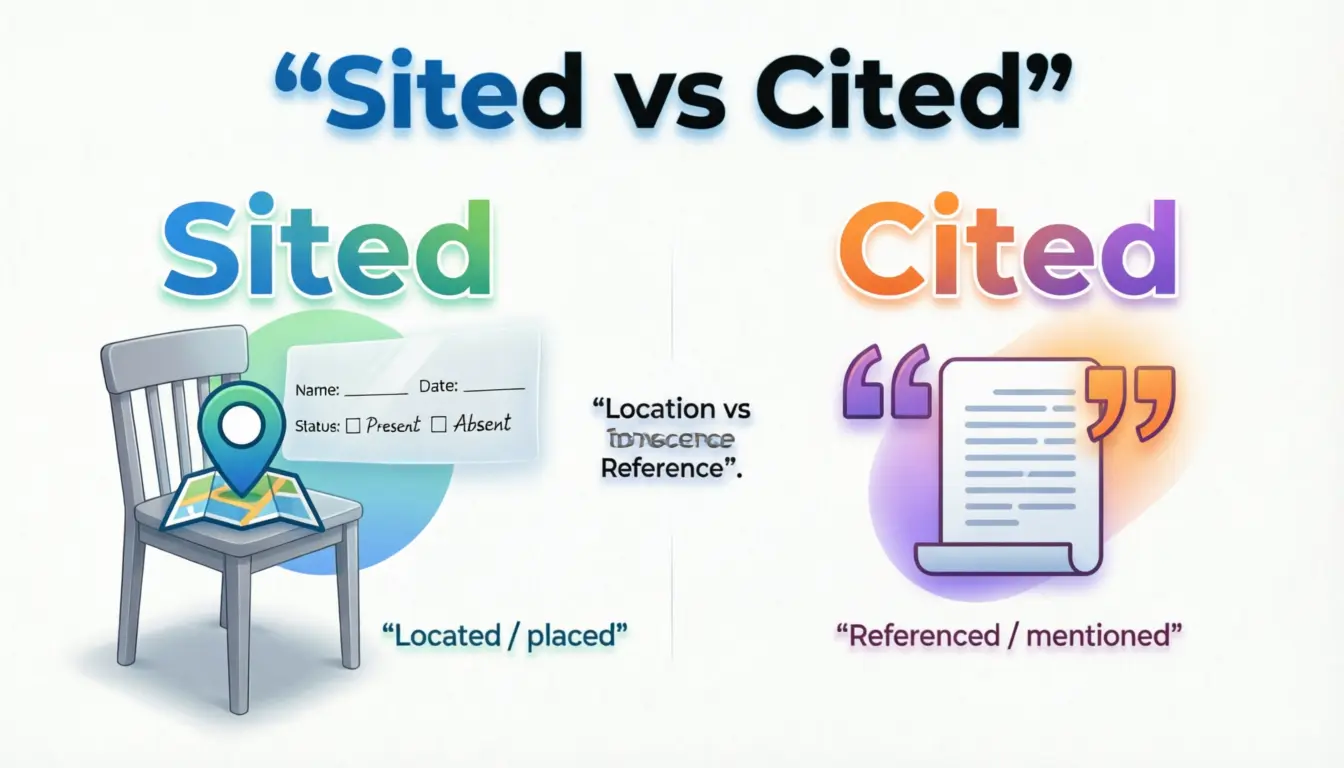
“Sited” means to place or locate something in a specific position, while “cited” means to quote, mention, or refer to a source or evidence.
Many people confuse sited and cited because the two words sound almost the same. They are homophones, which means they have the same pronunciation but different meanings and spellings. This mistake is common in emails, school papers, blog posts, business writing, and even social media comments.
If you have ever written “The article was sited in the report” or “The building was cited near the lake,” you are not alone. English has many confusing word pairs, and this is one of them.
The good news is that the difference between sited vs cited is very simple once you understand the meaning of each word. One word is related to location, while the other is related to references and quotations.
In this guide, you will learn the meaning, origin, spelling rules, and correct usage of both words. You will also see examples, common mistakes, comparison tables, and usage tips for both British and American English. By the end, you will know exactly when to use sited and when to use cited in everyday writing.
Sited vs Cited – Quick Answer
| Word | Meaning | Example |
| Sited | Placed in a location | The school was sited near the river. |
| Cited | Mentioned or quoted as a reference | The student cited three books in her essay. |
Easy Trick to Remember
- Sited → Think of site (a place or location)
- Cited → Think of citation (a reference or quote)
Quick Examples
- The hospital was sited outside the city.
- The lawyer cited a law during the case.
- The company carefully sited the new office.
- The article cited government data.
The Origin of Sited vs Cited
The words sited and cited come from different Latin roots, even though they sound alike today.
Origin of “Sited”
The word sited comes from the noun site, which means a place or position.
The word “site” came from the Latin word situs, meaning “position” or “location.”
Over time, English speakers began using sited as the past tense of the verb “site.”
Example
- The factory was sited near the highway.
Origin of “Cited”
The word cited comes from the verb cite, which means to quote, mention, or refer to something as evidence.
It comes from the Latin word citare, meaning “to summon” or “to call forward.”
Today, people use cited in academic, legal, and professional writing.
Example
- The report cited data from the World Health Organization.
Why People Confuse Them
People confuse these words because:
- They sound identical.
- Both are common in formal writing.
- Spell-check tools may not catch the mistake.
British English vs American English Spelling
Unlike many English words, sited and cited are spelled the same in both British English and American English.
The meanings also stay the same in both versions of English.
Comparison Table
| Word | British English | American English | Meaning |
| Sited | Sited | Sited | Located in a place |
| Cited | Cited | Cited | Quoted or referenced |
Examples in British English
- The new museum was sited near the town center.
- The author cited several studies.
Examples in American English
- The school was sited beside the park.
- The lawyer cited a previous court case.
Important Note
There is no spelling difference between UK and US English for these words. The confusion comes from meaning, not regional spelling.
Which Spelling Should You Use?
The correct spelling depends on the meaning you want.
Use “Sited” When Talking About Location
Choose sited if you mean:
- placed
- located
- positioned
Examples
- The hotel was sited near the beach.
- The wind farm was carefully sited.
Use “Cited” When Talking About References
Choose cited if you mean:
- quoted
- mentioned
- referenced
Examples
- She cited two sources in her paper.
- The journalist cited official records.
Audience-Based Advice
| Audience | Best Choice |
| US readers | Use the correct meaning |
| UK readers | Use the correct meaning |
| Academic writing | Usually “cited” |
| Architecture or planning | Often “sited” |
| Global audience | Focus on meaning clarity |
Common Mistakes with Sited vs Cited
Many writers accidentally swap these words.
Mistake 1
❌ The article was sited in the newspaper.
✅ The article was cited in the newspaper.
Reason: The sentence talks about a reference, not a location.
Mistake 2
❌ The building was cited near the lake.
✅ The building was sited near the lake.
Reason: The sentence talks about position or location.
Mistake 3
❌ She sited several studies in her essay.
✅ She cited several studies in her essay.
Reason: Studies are referenced, not located.
Mistake 4
They cited the factory as being outside the city.”
“They sited the factory outside the city.”
Reason: The sentence describes placement.
Sited vs Cited in Everyday Examples
Emails
Sited
- “They have sited the new office near the airport.”
Cited
- I cited your report in the presentation.
News Articles
Sited
- “They sited the solar plant in a rural area.”
Cited
- The newspaper cited police sources.
Social Media
Sited
- “They have sited that café perfectly beside the river!”
Cited
- He cited fake statistics online.
In Academic Writing
Sited
- “They sited the laboratory away from residential areas.”
Cited
- The researcher cited five journals.
In Legal Writing
Cited
- The judge cited earlier court decisions.
This use is extremely common in law.
Sited vs Cited – Google Trends & Usage Data
“Search data shows that many people look for ‘sited vs cited’ because writers commonly confuse these words.
Where “Cited” Is More Popular
The word cited appears more often in:
- schools
- universities
- legal documents
- research papers
- journalism
Countries with high academic English usage often search this term more.
Where “Sited” Is Common
The word sited is more common in:
- engineering
- construction
- architecture
- urban planning
- environmental studies
Why People Search This Keyword
Most users want to know:
- which spelling is correct
- how to avoid mistakes
- which word fits a sentence
- whether the words are interchangeable
General Usage Trend
| Word | Common Context |
| Sited | Buildings, roads, projects |
| Cited | Essays, books, reports, laws |
Comparison Table: Sited vs Cited
| Feature | Sited | Cited |
| Main Meaning | Located somewhere | Referenced or quoted |
| Root Word | Site | Cite |
| Used for Places? | Yes | No |
| Used for References? | No | Yes |
| Common in Academics? | Rarely | Very common |
| Common in Construction? | Yes | Rarely |
| Pronunciation | Same as cited | Same as sited |
| Part of Speech | Verb | Verb |
FAQs About Sited vs Cited
Is it “sited” or “cited” in an essay?
Use cited in essays because essays reference sources.
- She cited three books.
What does “sited” mean?
“Sited” means placed or located somewhere.
- “They sited the school near the mountains.”
Why do sited and cited sound the same?
They are homophones. English has many words with the same pronunciation but different meanings.
Is “cited” related to citations?
Yes. The word “citation” comes from “cite.”
Can “sited” and “cited” replace each other?
No. They have completely different meanings.
Which word is used in research papers?
Researchers usually use cited because they refer to sources.
Which word is used in construction projects?
Builders and planners often use sited when talking about location.
Are these spellings different in British English?
No. British and American English use the same spellings.
Conclusion
The difference between sited vs cited is easy once you connect each word to its meaning. Sited is about location, placement, or position. Cited is about references, quotations, and evidence.
A simple memory trick can help you avoid mistakes forever. Think of site as a place, and think of citation as a reference. If you are talking about where something is located, use sited. If you are talking about mentioning a source, use cited.
“Search data shows that many people look for ‘sited vs cited’ because writers commonly confuse these words. Writers often confuse them in essays, reports, and business communication because they sound alike. However, choosing the correct word makes your writing clearer and more professional.
Before you finish any document, check whether you are discussing a location or a reference. That small check will help you use sited and cited correctly every time.

I am an Emily Carter Brooks U.S.A based linguistics writer known for my clear, reader-friendly explanations of English grammar and vocabulary differences. I have contributed to multiple online language resources and specializes in spelling variations, pronunciation confusion, and British vs American English comparisons. I’m passionate about helping learners improve their English through practical, everyday communication. engaging, and stress-free.