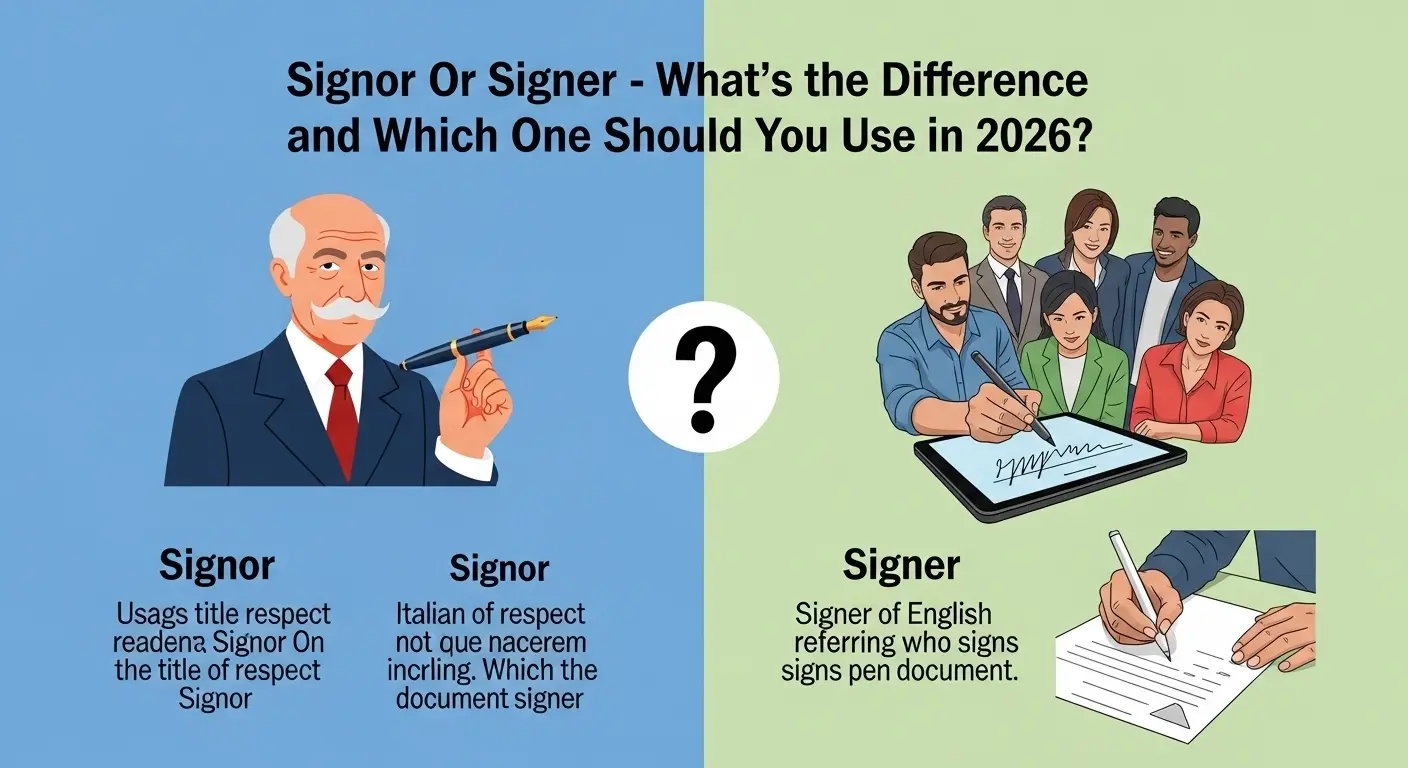
“Signor” and “signer” are both correct words, but they have different meanings. “Signor” is an Italian title of respect meaning Mr. or Sir, while “signer” is a noun referring to a person who signs a document, agreement, or other written item.
Have you ever paused while writing and wondered if to use signor or signer? You’re not alone. These two words look almost identical, but they mean completely different things. This small spelling difference can cause big confusion especially for writers, students, and professionals who want to sound correct and clear.
Many people search for “signor or signer” because they are unsure which word fits their sentence. Is it about a person signing a document, or is it a title used in another language? The answer depends on context. One word comes from Italian culture, while the other belongs to everyday English usage.
Understanding the difference between signor and signer helps you avoid mistakes in emails, documents, and even social media posts. It also improves your writing accuracy and confidence.
In this guide, you’ll get a quick answer, learn the origins, see examples, and discover when to use each word correctly. Let’s clear up the confusion once and for all.
Signor or Signer – Quick Answer
Signor and signer are not interchangeable.
- Signor → An Italian title meaning “Mr.” or “Sir.”
Example: Signor Rossi will join us for dinner. - Signer → A person who signs a document.
Example: The signer must approve the contract.
Simple rule:
- Use signor for Italian names or titles.
- Use signer for someone writing their signature.
The Origin of Signor or Signer
Understanding the origin makes the difference clear.
Signor
- Comes from Italian.
- Derived from Latin senior, meaning “older” or “elder.”
- Used as a respectful title for a man, similar to “Mr.”
Signer
- Comes from English.
- Based on the word sign, meaning to write your name.
- Added suffix -er, meaning “a person who does something.”
Why the Confusion Exists
Both words sound similar, especially in fast speech. But their roots are completely different one cultural, one functional.
British English vs American English Spelling
Good news: There is no spelling difference between British and American English for these words. The confusion is not about regional spelling it’s about meaning.
Comparison Table
| Word | Meaning | Usage Type | Region Difference |
| Signor | Italian title for a man | Formal/Cultural | Same in UK & US |
| Signer | Person who signs a document | Everyday English | Same in UK & US |
Examples
- UK & US: The signer must be present.
- UK & US: Signor Bianchi greeted the guests.
Conclusion: Both spellings stay the same worldwide.
Which Spelling Should You Use?
Your choice depends on context, not location.
Use “Signor” When:
- Referring to an Italian man
- Writing about Italian culture
- Using formal titles in Italian settings
✔ Example: Signor Ferrari owns the restaurant.
Use “Signer” When:
- Talking about contracts or documents
- Referring to someone who signs papers
- Writing in legal or business contexts
✔ Example: Each signer must provide ID.
Audience-Based Advice
- US & UK audiences: Use both words correctly by meaning
- Global audience: Stick to signer unless referring to Italian context
- Professional writing: Avoid mixing them they are not substitutes
Common Mistakes with Signor or Signer
Here are frequent errors and how to fix them:
❌ The signor of the contract must agree.
✔ The signer of the contract must agree.
❌ Signer Luigi will attend the meeting.
✔ Signor Luigi will attend the meeting.
Tip: If it involves paperwork, use signer. If it’s a name/title, use signor.
Signor or Signer in Everyday Examples
1. Emails
- Please ensure each signer completes the form.
- Dear Signor Ricci, thank you for your message.
2. News Writing
- The signer approved the agreement today.
- Signor Conti opened a new business in Rome.
3. Social Media
- Every signer must verify their identity online.
- Dinner with Signor Marco was amazing!
4. Formal Writing
- The signer is legally responsible for the document.
- Signor Bellini attended the official ceremony.
Signor or Signer in Academic Writing
In academic writing, signer is the word that is most likely to appear because it refers to a person who signs a document, agreement, consent form, or official paper. For example, researchers may refer to a signer of a contract or a participant who signed an informed consent form.
Signor, on the other hand, is an Italian title similar to “Mr.” and is generally used only when referring to an Italian man by name.
Examples:
- The signer acknowledged all terms before submitting the application.
- Each signer was required to provide valid identification.
- Signor Rossi presented his research findings at the conference.
Academic Writing Tip: Use signer for legal, administrative, and research-related documents. Use Signor only when addressing or mentioning an Italian male.
Signor or Signer in Business
In business communication, signer is the correct term when referring to someone who signs contracts, agreements, checks, or official business documents. It is commonly used in legal and corporate settings.
Signor is rarely used in business unless you are communicating with or referring to an Italian businessman and using the proper Italian title.
Examples:
- The signer must review the contract before approval.
- An authorized signer is required for all financial transactions.
- Signor Bianchi attended the international trade conference.
Business Tip: If you are discussing contracts, banking, or company documents, choose signer. Reserve Signor for formal Italian names and titles.
Signor or Signer Quiz
Test your understanding of Signor and signer with the following questions.
1. Which word refers to a person who signs a document?
a) Signor
b) Signer
Answer: b) Signer
2. Which word is an Italian title equivalent to “Mr.”?
a) Signor
b) Signer
Answer: a) Signor
3. The ______ reviewed the agreement before adding his signature.
a) Signor
b) Signer
Answer: b) Signer
4. ______ Ferrari welcomed the guests to the event.
a) Signor
b) Signer
Answer: a) Signor
5. Every ______ must provide identification before completing the form.
a) Signor
b) Signer
Answer: b) Signer
Quiz Score Guide:
- 5/5 = Excellent! You fully understand the difference.
- 3–4/5 = Good job! Just review the usage examples once more.
- 0–2/5 = Keep practicing to master Signor and Signer.
Signor or Signer – Google Trends & Usage Data
The popularity of these words depends on usage context:
- Signer
- More common worldwide
- Used in legal, business, and daily writing
- High search volume in English-speaking countries
- Signor
- Less common globally
- Popular in Italy or cultural discussions
- Used in travel, food, and literature topics
Usage by Region
| Region | More Common Word |
| United States | Signer |
| United Kingdom | Signer |
| Italy | Signor |
| Global English | Signer |
Key insight: Signer dominates everyday English, while signor is niche and cultural.
Comparison Table: Signor vs Signer
| Feature | Signor | Signer |
| Meaning | Italian title (Mr./Sir) | Person who signs documents |
| Language | Italian | English |
| Usage Context | Names, culture | Legal, business, forms |
| Frequency | Less common | Very common |
| Example | Signor Rossi | Contract signer |
FAQs:
1. Is “signor” an English word?
No. It comes from Italian but is used in English when referring to Italian men.
2. Can I use “signor” instead of “signer”?
No. They have different meanings and cannot replace each other.
3. What does “signer” mean in legal terms?
A signer is a person who signs a document and agrees to its terms.
4. Is “signor” formal?
Yes. It is a respectful title, similar to “Mr.”
5. Why do people confuse signor and signer?
Because they look and sound similar but have different meanings.
6. Is “signer” used in both UK and US English?
Yes. It is standard in both.
7. Do I need to capitalize “signor”?
Yes, when used before a name (e.g., Signor Carlo).
8. Which word is more common?
“Signer” is much more common in everyday English.
Conclusion:
The difference between signor and signer is simple once you understand their meanings. Signor is an Italian title used to show respect, similar to “Mr.” It belongs in cultural or personal contexts, especially when referring to Italian names. On the other hand, signer is a practical English word used for someone who signs documents. It appears often in legal, business, and everyday writing.
There is no difference between British and American spelling for these words, which makes things easier. The real key is choosing the right word based on context. If your sentence involves paperwork, contracts, or signatures, always use signer. If it involves an Italian person’s title, use signor.
Avoiding this mistake improves your writing clarity and professionalism. It also ensures your message is understood correctly by readers worldwide. With this guide, you now have the confidence to use both words the right way every time.
People Also Search For:
Signor and Signer Meaning
Many people search for signor and signer meaning because the two words look similar but have different uses. Signor is an Italian title of respect, similar to “Mr.” in English, while signer refers to a person who signs a document, contract, or agreement.
Signor and Signer Meaning in Law
In legal contexts, the term signer is commonly used to describe an individual who signs a legal document and accepts its terms. The phrase signor and signer meaning in law often causes confusion because signor has no specific legal meaning, whereas signer plays an important role in contracts and official paperwork.
Signor Legal Definition
When people search for a signor legal definition, they are usually referring to the legal term signer. Legally, a signer is a person who places their signature on a document to indicate approval, consent, or acknowledgment of its contents.
Signor and Signer Example
A simple signor and signer example can help clarify the difference: “Signor Rossi attended the meeting” uses signor as an Italian title, while “The signer approved the contract” uses signer to refer to someone who signed a document.
Is Signer a Word?
Yes, signer is a word in English. It is a noun that refers to a person who signs a document, letter, petition, agreement, or any other official record.
What Is a Signor?
If you’re wondering, what is a signor, it is an Italian honorific title used before a man’s name. It is the equivalent of “Mr.” in English and is commonly used in Italy as a respectful form of address.
Signer or Signatory
The comparison signer or signatory is common because both terms relate to signing documents. A signer is anyone who signs a document, while a signatory is often an officially authorized person who signs on behalf of an organization, company, or agreement.
Authorized Signor
The phrase authorized signor is often used incorrectly in business and legal writing. In most cases, the correct term is authorized signer, which refers to a person who has official permission to sign documents on behalf of an individual, business, or organization.
Read More Article:
- Quit or Quite? Correct Meaning, Usage, and Common Mistakes Explained
- Herd or Heard? A Complete Guide to Understanding the Difference (With Examples, History, and Usage Tips)
- Prey or Pray: The Complete Guide to Meaning, Usage, and Common Mistakes
- Mis or Miss? Correct Meaning, Usage, and Common Mistakes Explained

I am an Emily Carter Brooks U.S.A based linguistics writer known for my clear, reader-friendly explanations of English grammar and vocabulary differences. I have contributed to multiple online language resources and specializes in spelling variations, pronunciation confusion, and British vs American English comparisons. I’m passionate about helping learners improve their English through practical, everyday communication. engaging, and stress-free.