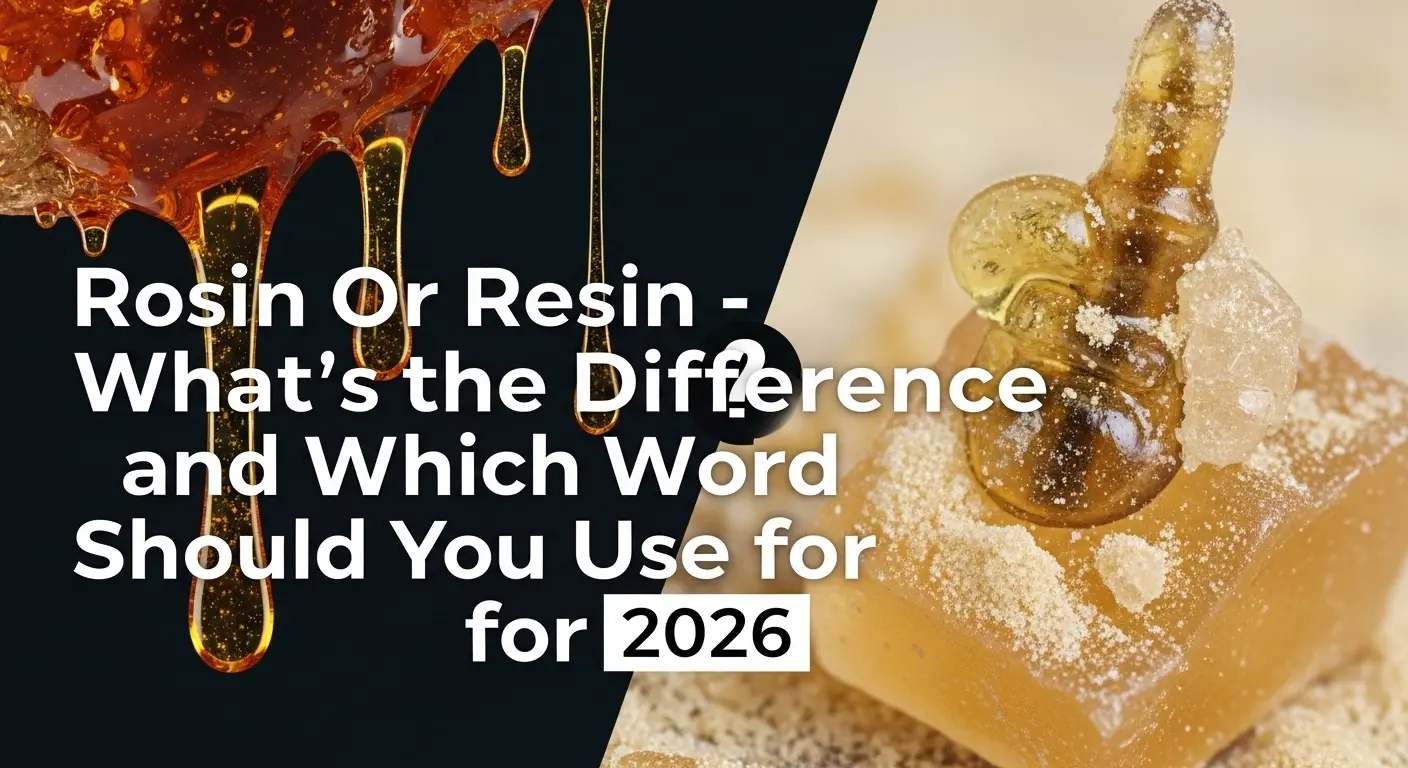
“Rosin” is a solid form of resin often used on violin bows or in industrial products, while “resin” is a sticky natural or synthetic substance produced by plants or used in manufacturing.
Have you ever typed “rosin” when you meant “resin” or the other way around? You’re not alone. These two words look almost the same, sound very similar, and are often confused in writing. But they do not mean the same thing.
Many people search for “rosin or resin” because they want to know which spelling is correct, especially in music, art, woodworking, cannabis products, or industrial materials. The confusion gets bigger because rosin actually comes from resin, which makes the meanings closely linked.
Here’s the simple truth: resin is the natural sticky substance from plants, while rosin is a solid product made by heating resin.
Knowing the difference helps you write better, avoid mistakes, and sound more professional. In this guide, you’ll learn the meaning, origin, spelling differences, common mistakes, examples, and usage trends of both words.
Rosin or Resin – Quick Answer
The quick answer is simple:
- Resin = a sticky natural substance from trees and plants.
- Rosin = a processed solid made from resin.
Examples:
✅ The pine tree leaked resin.
✅ The violin player rubbed rosin on the bow.
✅ Artists use epoxy resin for crafts.
✅ Baseball pitchers use rosin bags for grip.
Think of it this way:
Resin comes first. Rosin comes from resin.
That is the easiest way to remember it.
| Word | Meaning | Example |
| Rosin | Processed tree product | Violin rosin |
| Resin | Natural sticky sap | Tree resin |
The Origin of Rosin or Resin
The word resin comes from the Latin word resina, meaning sticky gum or sap.
People have used resin for thousands of years. Ancient cultures used it for glue, medicine, and sealing boats.
The word rosin came later. It comes from Old French raisine and Latin roots linked to resin.
Why the confusion?
Because rosin is made by heating fresh resin and removing liquid oils. What remains is a hard, brittle material.
That means:
All rosin starts as resin.
But not all resin becomes rosin.
This connection is why people mix up the words.
British English vs American English Spelling

This is where many people get confused.
Unlike words like “color” and “colour,” rosin and resin are not British vs American spelling differences.
They are two separate words with different meanings in both British and American English.
Example:
American English:
The artist poured clear resin into the mold.
British English:
The artist poured clear resin into the mould.
Notice:
The spelling of resin stays the same.
Only surrounding words may change.
Same with rosin:
American English: violin rosin
British English: violin rosin
Comparison Table
| Type | American English | British English |
| Natural tree sap | Resin | Resin |
| Processed bow grip | Rosin | Rosin |
| Different spelling? | No | No |
So there is no US vs UK spelling battle here.
Which Spelling Should You Use?
Use the word based on meaning.
Use resin if you mean:
- Tree sap
- Epoxy products
- Plastic-like compounds
- Craft materials
- Industrial chemicals
Example:
“This table is coated in epoxy resin.”
Use rosin if you mean:
- Violin bow grip
- Baseball grip powder
- Processed pine product
- Rosin extraction in cannabis
Example:
“The musician bought fresh rosin.”
Audience-based advice
| Audience | Best Word |
| US readers | Meaning-based |
| UK readers | Meaning-based |
| Global readers | Meaning-based |
There is no regional rule.
Only meaning matters.
Common Mistakes with Rosin or Resin
Here are common writing mistakes:
Mistake 1: Using rosin for tree sap
❌ Pine trees produce rosin.
✅ Pine trees produce resin.
Why?
Trees make resin naturally.
Mistake 2: Using resin for violin bows
❌ Put resin on your violin bow.
✅ Put rosin on your violin bow.
Why?
Violin bows use processed rosin.
Mistake 3: Thinking they are spelling variants
❌ Rosin is the UK spelling of resin.
✅ Rosin and resin are different words.
Mistake 4: Mixing them in product names
❌ Resin bag for baseball grip
✅ Rosin bag for baseball grip
Rosin or Resin in Everyday Examples
Here is how people use them in daily life.
Emails
Resin:
“The resin shipment will arrive tomorrow.”
Rosin:
“Please pack the violin rosin in the case.”
News
Resin:
“The company launched a new resin product.”
Rosin:
“The pitcher reached for the rosin bag.”
Social media
Resin:
“Just made a beautiful resin art piece!”
Rosin:
“New rosin for my violin sounds amazing.”
Formal writing
Resin:
“The resin showed high heat resistance.”
Rosin:
“Rosin improved friction between bow and string.”
Rosin or Resin /Google Trends & Usage Data
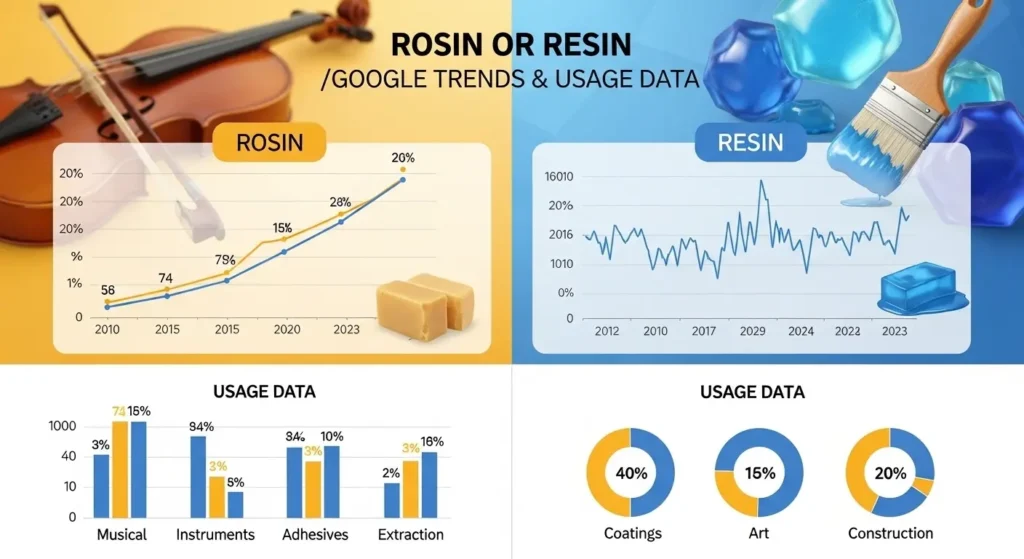
Search behavior shows that resin is much more popular than rosin.
Why?
Because resin is used in many industries:
- Art
- Construction
- Jewelry
- Manufacturing
- Chemistry
Rosin has a narrower use:
- Music
- Sports
- Extraction products
Popular by country
Resin is highly searched in:
- United States
- Canada
- Australia
- United Kingdom
Rosin is searched more in niche markets:
- Music communities
- Sports users
- Specialty product buyers
Usage context
| Word | Main Use |
| Resin | Crafts, chemicals, trees |
| Rosin | Music, sports, extracts |
Resin wins in overall search volume.
Rosin wins in specialized fields.
Rosin vs Resin Comparison Table
| Feature | Rosin | Resin |
| Natural? | No | Yes |
| Comes from trees? | Yes, processed | Yes, direct |
| Used in music? | Yes | No |
| Used in crafts? | Sometimes | Yes |
| Used in chemistry? | Rarely | Yes |
| Sticky? | Less | More |
| Common word? | Less common | More common |
FAQs About Rosin or Resin
1. Is rosin the same as resin?
No. Rosin is made from resin after processing.
2. Which is correct: rosin or resin?
Both are correct, but they mean different things.
3. Is rosin a type of resin?
Yes. Rosin is a processed form of resin.
4. Do violinists use rosin or resin?
They use rosin.
5. Is epoxy called rosin?
No. Epoxy is a resin.
6. Can trees produce rosin?
No. Trees naturally produce resin.
7. Is rosin used in baseball?
Yes. Pitchers use rosin for grip.
8. Is there a British spelling difference?
No. Both words stay the same in UK and US English.
9. Which word is more common?
Resin is far more common.
Conclusion
The difference between rosin or resin is easy once you know the meaning. Resin is the natural sticky material that comes from trees and plants. It is widely used in crafts, chemistry, and manufacturing. Rosin is made by heating and processing resin into a harder solid form. It is mostly used in music, sports, and some extraction methods.
The key point is simple: these are not spelling variations like British and American English often have. They are two different words with two different jobs.
If you are talking about tree sap, epoxy, or industrial materials, use resin. If you mean violin bow grip or baseball grip powder, use rosin.
A simple memory trick can help:
Resin is raw. Rosin is refined.
Use the right word for the right meaning, and your writing will be clearer, smarter, and more accurate.
Discover More Articles:
Updated Or Update – Which Word Should You Use for 2026?

I hold a degree in English Literature and Linguistics and have worked extensively on educational blogs, comparison websites, and digital learning platforms. My writing focuses on simplifying complex language rules, highlighting British vs American English differences, and providing practical examples for everyday usage.