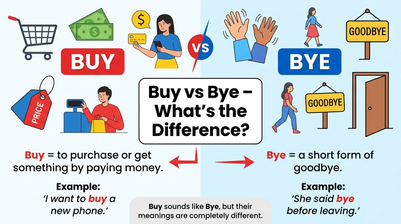
“Buy” is a verb meaning to purchase something, while “bye” is used as a farewell or to mean goodbye.
“Buy” or “bye” may sound exactly the same, but they mean very different things. This is why many writers, students, and English learners often mix them up. Since both words are homophones (words that sound alike), it is easy to choose the wrong one when writing fast.
People search for “buy or bye” because they want to know which spelling fits their sentence. Is it “I need to buy milk” or “I need to bye milk”? Is it “bye for now” or “buy for now”? Small spelling mistakes like these can change the meaning of a sentence and make writing look less professional.
The confusion is common in emails, text messages, social media posts, and even formal writing. The good news is that the difference is simple once you understand it.
In this guide, you will learn the meaning of “buy” and “bye,” where they came from, how they are used, common mistakes, and which one to use in different situations.
Buy or Bye – Quick Answer
The quick answer is simple:
- Buy = to purchase something
- Bye = a way to say goodbye
Examples:
✅ Correct: I want to buy a new phone.
❌ Wrong: I want to bye a new phone.
✅ Correct: Bye, see you tomorrow.
❌ Wrong: Buy, see you tomorrow.
A simple trick:
- If money is involved, use buy.
- If leaving or ending a conversation, use bye.
This is the easiest way to remember.
The Origin of Buy or Bye
Understanding where these words come from helps explain why they look different.
Origin of Buy
The word buy comes from Old English bycgan, which means “to acquire in exchange for payment.” It has been used for hundreds of years in trade and shopping.
Over time, the spelling became shorter and simpler, but the meaning stayed the same.
Example:
- People buy food every day.
- She wants to buy a house.
Origin of Bye
The word bye comes from the phrase “goodbye.” Over time, English speakers shortened “goodbye” into “bye.”
It became a casual and friendly way to end conversations.
Example:
- Bye, have a nice day.
- He said bye before leaving.
Why the spelling difference exists
Even though they sound the same, they developed from different root words. That is why English keeps both spellings.
British English vs American English Spelling
Good news: there is no spelling difference between British and American English for these words.
Both use:
- Buy for purchasing
- Bye for saying goodbye
The meaning stays the same in both language styles.
| Word | British English | American English | Meaning |
| Buy | Buy | Buy | Purchase |
| Bye | Bye | Bye | Goodbye |
Examples in British English
- I will buy tea later.
- Bye, mate.
Examples in American English
- I will buy coffee later.
- Bye, buddy.
The only difference is style and vocabulary around the sentence, not the spelling.
Which Spelling Should You Use?
Choosing between “buy” and “bye” depends on your meaning, not your location.
For US audiences
Use buy for shopping or purchasing.
Example:
- Customers can buy online.
Use bye for saying farewell.
Example:
- Bye, talk later.
For UK and Commonwealth audiences
The same rule applies.
Example:
- I need to buy groceries.
- Bye, see you soon.
For global audiences
Stick to the standard meanings:
- Buy = purchase
- Bye = goodbye
This avoids confusion everywhere.
Professional advice:
Always read your sentence and ask:
“Am I talking about money or leaving?”
That answer gives you the correct spelling.
Common Mistakes with Buy or Bye
These mistakes happen often.
Mistake 1: Using “bye” for shopping
❌ I need to bye shoes.
✅ I need to buy shoes.
Reason: Shoes are purchased.
Mistake 2: Using “buy” for goodbye
❌ Buy, see you later.
✅ Bye, see you later.
Reason: The person is leaving.
Mistake 3: Autocorrect errors
Sometimes phones change the word.
Example:
Typing “bye” may change to “buy.”
Always check before sending.
Quick correction chart
| Wrong | Right |
| Bye milk | Buy milk |
| Buy for now | Bye for now |
| I will bye it | I will buy it |
Buy or Bye in Everyday Examples
Here is how these words appear in daily life.
In emails
Correct:
- I would like to buy your product.
- Bye, thank you for your time.
Wrong:
- I would like to bye your product.
In news
Correct:
- Investors plan to buy more shares.
News writing uses buy for business.
On social media
Correct:
- Time to buy the new sneakers.
- Bye, internet. I’m going offline.
Social media often uses both.
In formal writing
Correct:
- The company agreed to buy new equipment.
Formal writing rarely uses bye unless quoting speech.
Buy or Bye – Google Trends & Usage Data
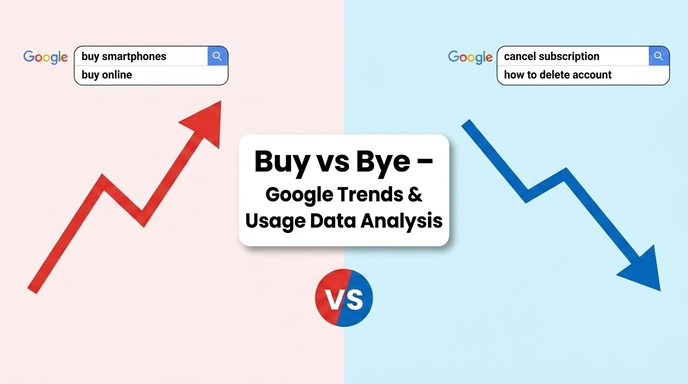
Search behavior shows strong interest in “buy” because shopping is a daily activity.
“Buy” is much more common than “bye” because:
- Online shopping is huge
- Business writing uses it often
- Marketing uses it every day
Countries with high “buy” usage:
- United States
- United Kingdom
- Canada
- Australia
“Bye” is common in casual communication:
- Texting
- Chat apps
- Social media
- Personal emails
Usage by context
| Word | Main Use | Popular Context |
| Buy | Shopping | Business, e-commerce |
| Bye | Farewell | Chat, texting |
This shows the words are popular for different reasons.
Buy or Bye Comparison Table
| Feature | Buy | Bye |
| Part of speech | Verb | Interjection/Noun |
| Meaning | Purchase | Goodbye |
| Money involved | Yes | No |
| Used in business | Yes | Rarely |
| Used in conversations | Sometimes | Often |
| Formal writing | Common | Less common |
This table makes the difference easy to see.
FAQs About Buy or Bye
1. Is it buy or bye something?
It is buy because it means purchase.
Example:
- I want to buy a car.
2. Is bye correct for saying goodbye?
Yes, bye is correct.
Example:
- Bye, take care.
3. Why do buy and bye sound the same?
They are homophones, which means same sound, different meaning.
4. Can I use buy in texting?
Yes.
Example:
- I will buy food on my way home.
5. Can bye be used in formal writing?
Yes, but mostly in quotes or informal messages.
6. Is “bye now” correct?
Yes.
It means farewell for now.
7. Is “buy now” correct?
Yes.
It means purchase now.
8. Which word is more common?
Buy is more common because commerce is everywhere.
Conclusion
The difference between “buy” and “bye” is easy once you connect the word to its purpose. If your sentence is about paying for something, the correct word is buy. If your sentence is about leaving or ending a conversation, the correct word is bye.
These words sound the same, which makes them easy to confuse. This happens a lot in texting, emails, and social media. But the meaning is completely different, so using the right spelling matters.
A simple memory trick can help: buy = money, bye = goodbye. That quick check can save you from mistakes.
The best choice depends on what you want to say, not whether you write British or American English. Both forms stay the same across English styles.
Before you write, read the sentence one more time. If you are purchasing, use buy. If you are leaving, use bye. That small choice makes your writing clear, correct, and professional.

I am an Emily Carter Brooks U.S.A based linguistics writer known for my clear, reader-friendly explanations of English grammar and vocabulary differences. I have contributed to multiple online language resources and specializes in spelling variations, pronunciation confusion, and British vs American English comparisons. I’m passionate about helping learners improve their English through practical, everyday communication. engaging, and stress-free.