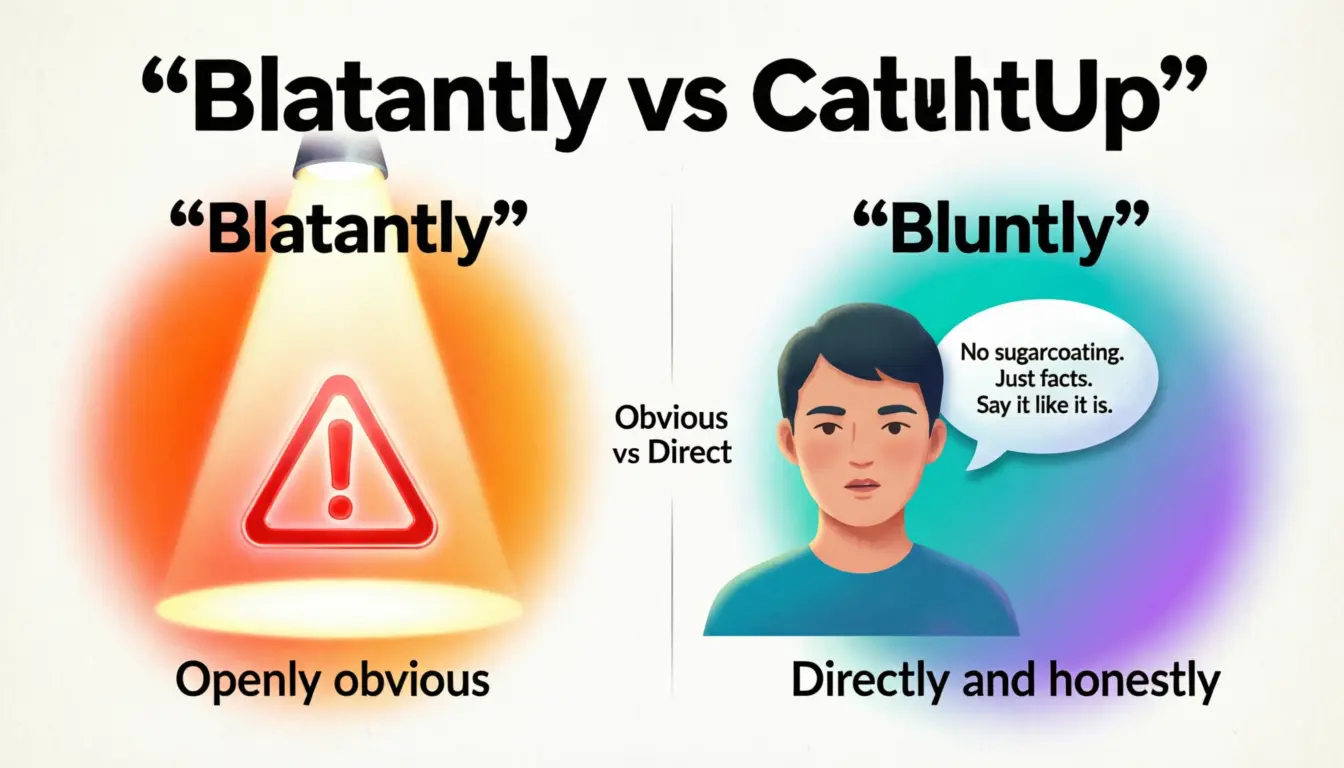
“Blatantly” means in an obvious, open, or unapologetic way, while “bluntly” means in a direct, straightforward manner without trying to soften the message.
Many English learners and writers confuse “blatantly” and “bluntly” because both words often appear in strong or direct statements. They may seem similar at first, but they have very different meanings and tones. One word talks about something being obvious or shameless, while the other describes speaking in a direct and honest way.
If you have ever wondered whether to say someone spoke blatantly or bluntly, you are not alone. This confusion is common in emails, news articles, social media posts, and daily conversation. Choosing the wrong word can completely change the meaning of a sentence.
This guide explains the difference between blatantly vs bluntly in simple language. You will learn the meaning of each word, where they came from, how they are used in British and American English, and which one fits different situations. You will also see examples, comparison tables, common mistakes, FAQs, and writing tips.
By the end, you will know exactly when to use blatantly and when to use bluntly with confidence.
Blatantly vs Bluntly – Quick Answer
The difference is simple:
- Blatantly means something is done openly, obviously, or without shame.
- Bluntly means speaking in a direct, honest, and sometimes rude way.
Examples
| Word | Meaning | Example |
| Blatantly | Openly obvious or shameless | He blatantly ignored the rules. |
| Bluntly | Directly and honestly | She bluntly said the idea would fail. |
Quick Tip
- Use blatantly for actions or behavior.
- Use bluntly for speech or communication.
The Origin of Blatantly vs Bluntly
Understanding the history of these words helps explain why they are different.
Origin of “Blatantly”
The word blatant became popular in the 1500s. It originally described loud or noisy behavior. Over time, the meaning changed to describe actions that are very obvious or done without shame.
Today, “blatantly” often describes behavior people see as wrong or disrespectful.
Examples
- The company blatantly copied the design.
- He blatantly lied during the interview.
Origin of “Bluntly”
The word blunt comes from an old meaning related to dull or not sharp. Later, it described speech that was not softened or polished.
When someone speaks bluntly, they say exactly what they think.
Examples
- She bluntly refused the offer.
- He bluntly told the truth.
Why the Confusion Exists
People confuse these words because both can sound harsh or strong. However:
- Blatantly focuses on obvious behavior.
- Bluntly focuses on direct speech.
British English vs American English Spelling
Unlike many English word pairs, blatantly and bluntly do not have different British or American spellings. The spelling stays the same in both language styles.
However, usage style can differ slightly.
- American English often uses bluntly in business and workplace communication.
- British English may use softer wording in formal situations.
Comparison Table
| Feature | British English | American English |
| Blatantly spelling | Blatantly | Blatantly |
| Bluntly spelling | Bluntly | Bluntly |
| Formal tone | Often softer | Often more direct |
| Common use of “bluntly” | Less aggressive tone | More accepted in business speech |
Examples
British Style
- He spoke rather bluntly during the meeting.
American Style
- She bluntly said the plan was bad.
Which Spelling Should You Use?
Since the spelling does not change, the real question is which word you should use.
Use “Blatantly” When:
- Something is obvious
- Someone breaks rules openly
- An action looks shameless
Examples
- The player blatantly cheated.
- They blatantly ignored customer complaints.
Use “Bluntly” When:
- Someone speaks directly
- A person is honest without softening words
- You describe communication style
Examples
- To speak bluntly, the project failed.
- He bluntly answered the question.
Audience-Based Advice
| Audience | Better Choice |
| US business writing | Bluntly |
| UK formal writing | Softer wording preferred |
| Global audience | Use simple direct wording |
| News reporting | Blatantly for obvious actions |
| Emails and feedback | Bluntly with care |
Professional Advice
In formal writing, avoid sounding too harsh. “Bluntly” can sound rude if used carelessly.
Instead of:
- “I will bluntly say your work is poor.”
Try:
- “I want to be direct about the concerns.”
Common Mistakes with Blatantly vs Bluntly
Many writers mix these words incorrectly.
Mistake 1: Using “Blatantly” for Speech
❌ She blatantly told me the truth.
✅ She bluntly told me the truth.
Why?
Because the sentence describes direct speaking.
Mistake 2: Using “Bluntly” for Obvious Actions
❌ He bluntly broke the law.
✅ He blatantly broke the law.
Why?
Breaking the law openly is an action, not speech.
Mistake 3: Assuming They Mean “Rude”
Neither word directly means rude.
- Bluntly can sound rude because it is direct.
- Blatantly usually describes obvious bad behavior.
Mistake 4: Using Them Interchangeably
These words are not synonyms.
| Incorrect | Correct |
| She blatantly criticized me. | She bluntly criticized me. |
| He bluntly ignored the rules. | He blatantly ignored the rules. |
Blatantly vs Bluntly in Everyday Examples
Here are real-life examples to show how each word works.
Emails
Bluntly
- Bluntly speaking, the report needs improvement.
Blatantly
- The supplier blatantly ignored our agreement.
News Writing
Blatantly
- The company blatantly violated safety laws.
Bluntly
- The coach bluntly criticized the team’s performance.
Social Media
Bluntly
- I will say this bluntly: the movie was terrible.
Blatantly
- That account is blatantly spreading false information.
In Formal Writing
Bluntly
- The manager bluntly explained the risks.
Blatantly
- The organization blatantly failed to follow policy.
Blatantly vs Bluntly – Google Trends & Usage Data
Search interest for blatantly vs bluntly usually comes from:
- Students learning English
- Writers editing articles
- Professionals writing emails
- People checking grammar online
Popular Usage by Country
| Country | More Common Usage |
| United States | Bluntly |
| United Kingdom | Both equally |
| Canada | Bluntly |
| Australia | Both commonly used |
| India | Bluntly in business English |
Context Differences
| Context | Preferred Word |
| Obvious wrongdoing | Blatantly |
| Honest conversation | Bluntly |
| Journalism | Blatantly |
| Workplace feedback | Bluntly |
| Political criticism | Both |
Why Searches Keep Growing
People often:
- hear these words in news reports,
- see them online,
- and want to avoid using the wrong one.
Because the meanings are close in tone but different in function, many users search for clarification.
Comparison Table: Blatantly vs Bluntly
| Feature | Blatantly | Bluntly |
| Main meaning | Openly obvious | Directly honest |
| Usually describes | Actions | Speech |
| Tone | Negative | Direct or harsh |
| Common context | Rule-breaking | Honest opinions |
| Example | Blatantly cheating | Bluntly speaking |
| Related words | Obviously, shamelessly | Frankly, directly |
FAQs About Blatantly vs Bluntly
1. Are blatantly and bluntly synonyms?
No.
“Blatantly” means openly obvious, while “bluntly” means directly honest.
2. Can I use “bluntly” in formal writing?
Yes, but carefully. It may sound harsh in professional communication.
3. Is “blatantly” always negative?
Usually, yes. It often describes bad behavior.
Example:
- blatantly lying
- blatantly cheating
4. Does “bluntly” mean rude?
Not always. It simply means direct and honest.
5. Which word is more common in business writing?
“Bluntly” is more common when discussing communication.
6. Can actions be described as bluntly done?
Usually no. “Bluntly” mainly describes speaking.
7. Which word fits journalism better?
Both are common:
- “blatantly” for obvious misconduct
- “bluntly” for direct statements
8. Do British and American English spell them differently?
No. The spelling is the same in both.
9. What is an easy way to remember the difference?
- Bluntly = blunt speech
- Blatantly = blatant behavior
Conclusion
The difference between blatantly vs bluntly becomes clear once you focus on what each word describes. “Blatantly” is about actions that are obvious, open, or shameless. It is commonly used for rule-breaking, dishonesty, or behavior people strongly notice. “Bluntly,” on the other hand, describes direct communication. A person who speaks bluntly says exactly what they think, sometimes without softening the message.
Even though these words can sound similar in tone, they should not replace each other. Using the wrong one may confuse readers or change the meaning of your sentence completely. A simple memory trick can help: bluntly relates to blunt speech, while blatantly relates to blatant actions.
For professional writing, choose carefully based on context. Use “bluntly” when discussing honesty or direct feedback. Use “blatantly” when describing obvious behavior or wrongdoing. Knowing the difference improves clarity, grammar, and confidence in everyday English writing.

I hold a degree in English Literature and Linguistics and have worked extensively on educational blogs, comparison websites, and digital learning platforms. My writing focuses on simplifying complex language rules, highlighting British vs American English differences, and providing practical examples for everyday usage.