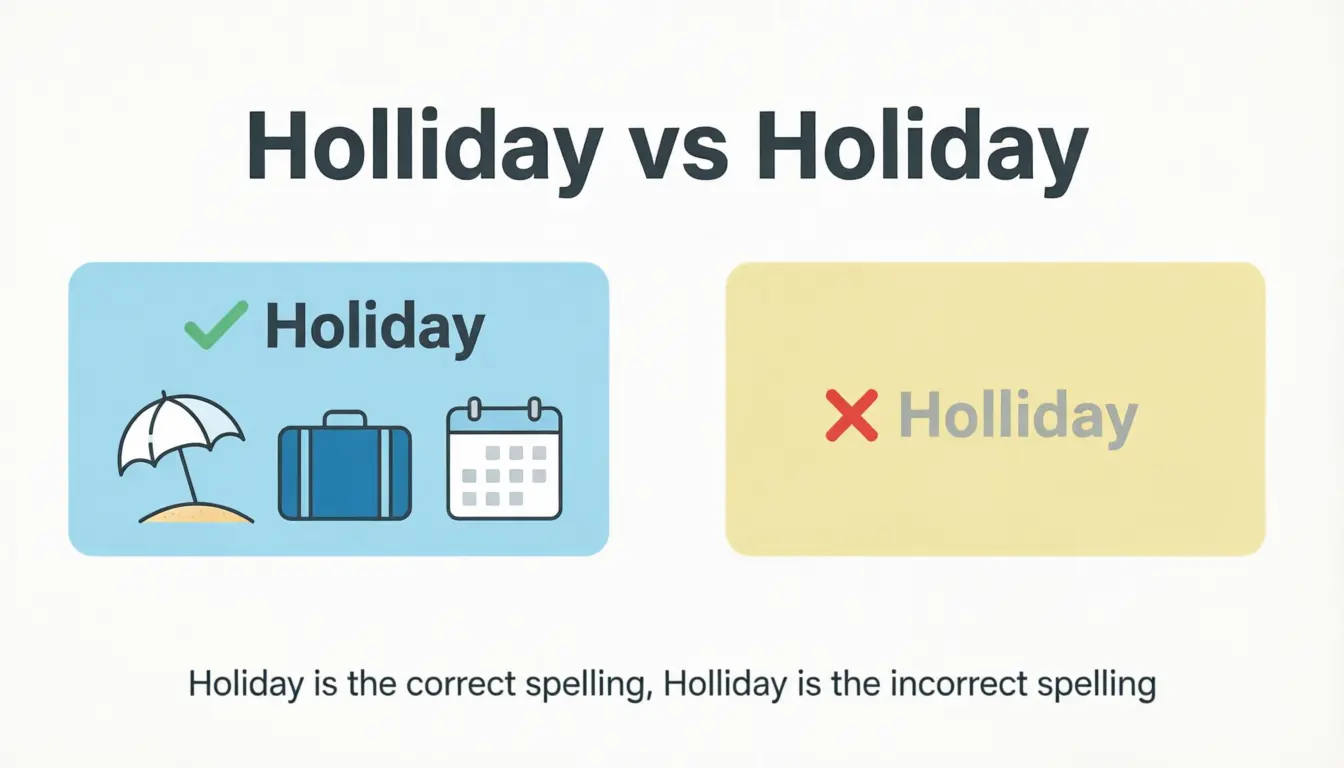
“Holiday” is a noun meaning a day of celebration, vacation, or time off from work or school, whereas “holliday” has no accepted meaning in English.
Have you ever typed “holliday” and wondered if it looked right? You are not alone. Many people search for “holliday or holiday” because the two words look similar, but only one is correct in standard English.
Spelling mistakes happen often with common words, especially when pronunciation can be misleading. The extra “l” in holliday makes it seem like it could be right, but English spelling does not work that way here. This confusion shows up in emails, school writing, social posts, and even business messages.
Knowing the correct spelling matters. A small spelling error can make writing look less professional. It can also affect search results, school grades, and communication at work.
In this guide, you will learn the quick answer, the history of the word, British and American English rules, common mistakes, and real-life examples. By the end, you will know exactly when to use holiday and why holliday is usually a misspelling.
Holliday or Holiday – Quick Answer
The correct spelling is holiday.
Holiday means a day of celebration, rest, or travel.
Holliday is usually a spelling mistake when you mean holiday.
Examples:
✅ We are going on a holiday next week.
✅ Christmas is my favorite holiday.
✅ The office is closed for the public holiday.
❌ We are going on a holliday next week.
Quick rule:
If you mean vacation, celebration, or time off, always write holiday.
The Origin of Holliday or Holiday
The word holiday comes from the old phrase holy day.
Long ago, people used holy day to talk about religious days. These were special days for worship and rest.
Over time, holy day became one word: holiday.
That is why the word still keeps the spelling with one “l.”
Why do people write “holliday”?
There are a few reasons:
- The spoken sound can make people think there are two “l” letters.
- Many English words use double consonants.
- Fast typing causes mistakes.
But the original word never had two “l” letters.
Simple timeline:
| Time | Form |
| Old English | Holy day |
| Middle English | Holiday |
| Modern English | Holiday |
So the history clearly supports holiday.
British English vs American English Spelling
Good news: both British and American English use the same spelling — holiday.
There is no spelling difference.
The difference is mostly in meaning.
| Type | British English | American English |
| Holiday | Vacation or special day | Special day or celebration |
| Example | I am on holiday. | It is a national holiday. |
British English example:
“I am going on holiday to Spain.”
In the UK, holiday often means vacation.
American English example:
“Thanksgiving is a national holiday.”
In the US, holiday usually means a special celebration day.
Key point:
The spelling stays the same:
✅ Holiday
❌ Holliday
Which Spelling Should You Use?
The answer is simple: use holiday.
Here is advice based on your audience.
For US readers
Use holiday.
Americans use it for special days like Thanksgiving or Christmas.
Example:
The school closes for the holiday.
For UK readers
Use holiday.
British people also use it for vacations.
Example:
We booked a summer holiday.
For Commonwealth countries
Countries like Australia, Canada, and New Zealand also use holiday.
Example:
We enjoyed our beach holiday.
For global writing
Always choose holiday.
It is correct everywhere.
Professional tip:
If your audience is worldwide, holiday is the safe and correct choice.
Common Mistakes with Holliday or Holiday
Here are common mistakes people make.
| Wrong | Correct |
| Holliday | Holiday |
| Happy hollidays | Happy holidays |
| Summer holliday | Summer holiday |
Mistake 1: Adding an extra “l”
❌ Holliday
✅ Holiday
Reason: people hear the sound and double the letter.
Mistake 2: Misspelling plural form
❌ Hollidays
✅ Holidays
Remember: add “s” only.
Mistake 3: Mixing meaning
UK: holiday = vacation
US: holiday = celebration
Know your audience.
Easy memory trick
Think of holy day.
It helps you remember holiday.
One “l,” not two.
Holliday or Holiday in Everyday Examples
Here is how the word appears in daily life.
Emails
Correct:
“Enjoy your holiday and see you next week.”
Wrong:
“Enjoy your holliday.”
News writing
“The government announced a public holiday on Friday.”
News writing always uses holiday.
Social media
“Holiday vibes at the beach!”
Very common use.
In formal writing
“The company grants paid holiday leave.”
Formal documents use holiday.
In school writing
“My favorite holiday is Eid.”
Always correct.
In travel writing
“We planned a family holiday in July.”
Correct in travel context.
Holliday or Holiday – Google Trends & Usage Data
Search data shows that holiday is far more popular than holliday.
Why?
Because holiday is the correct spelling.
People search holliday mostly because they want spelling help.
Where “holiday” is popular:
- UK vacation meaning
- USA celebration meaning
- Australia both meanings
- Canada both meanings
Search intent behind “holliday”
People often ask:
- Is holliday correct?
- How do you spell holiday?
- Holiday or holliday?
This shows spelling confusion.
Usage by context
| Context | Common Word |
| Travel | Holiday |
| Christmas | Holiday |
| Time off work | Holiday |
| Public event | Holiday |
Real-world use strongly supports holiday.
Comparison Table: Holliday vs Holiday
| Word | Correct? | Meaning | Use Case |
| Holiday | Yes | Celebration, vacation, time off | All English writing |
| Holliday | No (usually) | Misspelling | Avoid |
Quick rule:
If you mean time off, celebration, or vacation → use holiday.
FAQs About Holliday or Holiday
1. Is holliday a real word?
No. In normal English, holliday is a misspelling of holiday.
2. Why do people spell holiday as holliday?
Because the spoken sound can make it seem like it has two “l” letters.
3. Is holiday correct in British English?
Yes. It is correct and common.
4. Is holiday correct in American English?
Yes. Americans use the same spelling.
5. Does holiday mean vacation?
In British English, yes.
In American English, less often.
6. What is the plural of holiday?
The plural is holidays.
Example: Happy holidays!
7. Can I use holiday in formal writing?
Yes. It is fully correct.
8. Is “happy holliday” correct?
No.
Correct form: Happy holiday or Happy holidays.
Conclusion
The spelling battle between holliday or holiday is easy to settle: holiday is the correct word, and holliday is usually just a spelling mistake.
The word comes from holy day, which explains its spelling and history. That origin helps make the correct form easier to remember. If you write for school, work, travel, or social media, holiday is the standard choice in both British and American English.
The only real difference between British and American English is how the word is used. In British English, it often means vacation. In American English, it usually means a special celebration or public day off. But the spelling stays the same.
If you want clear, correct, and professional writing, always choose holiday. A simple spelling choice can improve your writing and help avoid confusion. Remember the easy trick: holy day = holiday. One “l” is all you need.

I am an Emily Carter Brooks U.S.A based linguistics writer known for my clear, reader-friendly explanations of English grammar and vocabulary differences. I have contributed to multiple online language resources and specializes in spelling variations, pronunciation confusion, and British vs American English comparisons. I’m passionate about helping learners improve their English through practical, everyday communication. engaging, and stress-free.