Subjunctive or Indicative: Common Grammar Confusion Solved
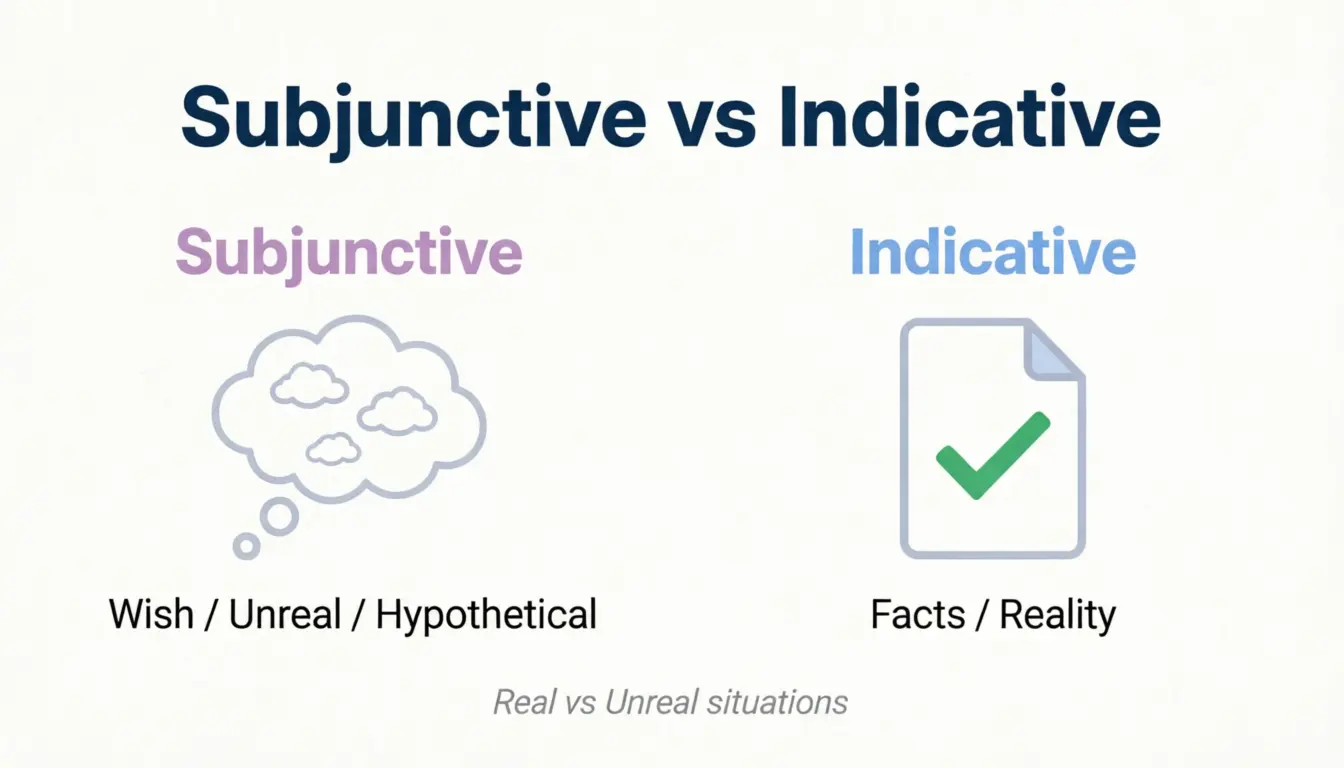
Subjunctive or Indicative

“Indicative” is used to state facts, ask questions, or describe real situations, while “subjunctive” is used to express wishes, suggestions, demands, or hypothetical situations. Many English learners and even native speakers search for “subjunctive or indicative” because these two grammar moods feel confusing. Both are used to form sentences, but they do very different jobs. … Read more


🧠Hypothesis Or Hypotheses: Learn the Difference with Easy Examples

Hypothesis Or Hypotheses

Many people search for “hypothesis or hypotheses” because they are not sure which word is correct. This confusion often happens when students write assignments, researchers prepare papers, or professionals create reports. Both words look very similar, but they are not interchangeable. One is singular, and the other is plural. The confusion gets worse because hypothesis … Read more

Premise or Premises: Common Grammar Confusion Solved 2026

Premise or Premises

Many people search for “premise or premises” because these two words look almost the same but are used very differently. The confusion usually starts when someone wants to talk about a place, building, or property and is not sure whether to use premise or premises. Others get confused when they see premise used in logic, … Read more

Relieving Or Reliving: Which Word Is Correct and When to Use It?

Relieving Or Reliving

“Relieving” means removing stress, pain, or difficulty, while “reliving” means experiencing something again in your memory or imagination. English learners and even native speakers often search for “relieving or reliving” because these two words look similar but mean very different things. One small spelling change can completely change the message. This confusion shows up in … Read more

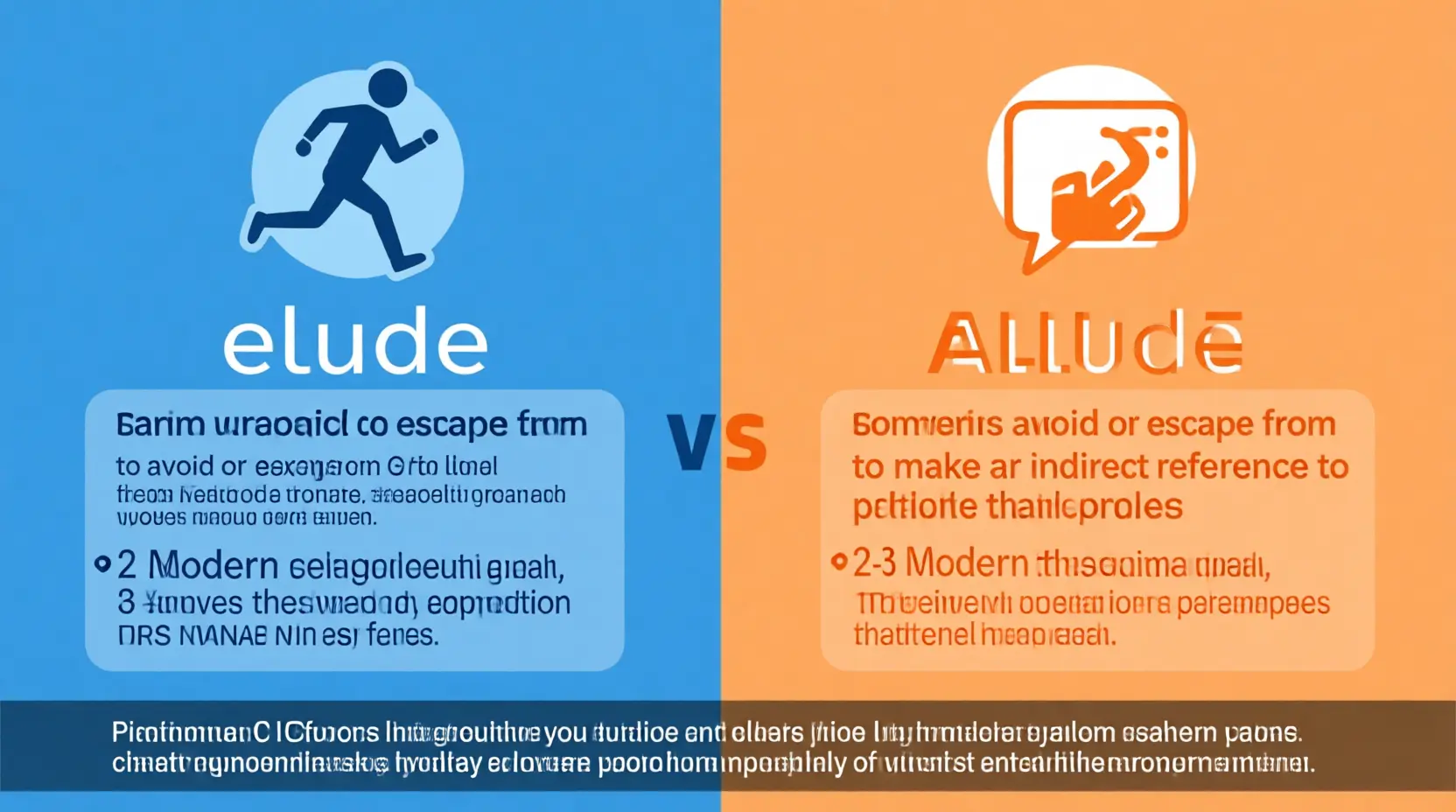
Elude Or Allude: Meaning, Examples, and Usage Guide for 2026

Elude Or Allude

English learners and even native speakers often search for “elude or allude” because these two words sound similar but mean very different things. One small mistake can change the whole meaning of a sentence. That is why this keyword is popular among students, writers, bloggers, and professionals. Many people confuse elude and allude in exams, … Read more

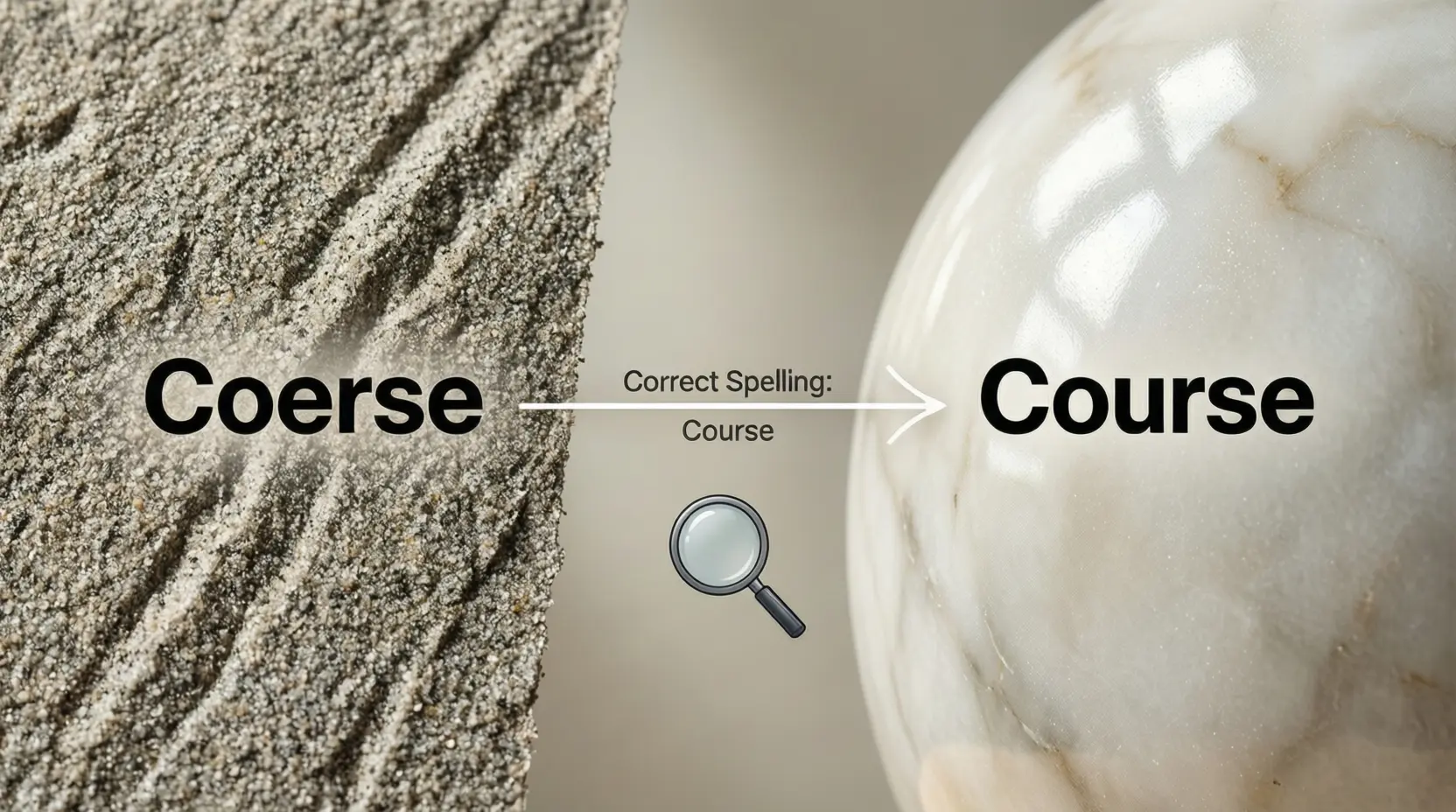
Coarse Or Course: What’s the Difference and Which One Should You Use?

Coarse Or Course

English spelling can be confusing, even for native speakers. One common problem many people face is choosing between coarse and course. These two words look and sound very similar, but their meanings are very different. Because of this, people often type the wrong word in emails, articles, school assignments, and even professional documents. Many users … Read more

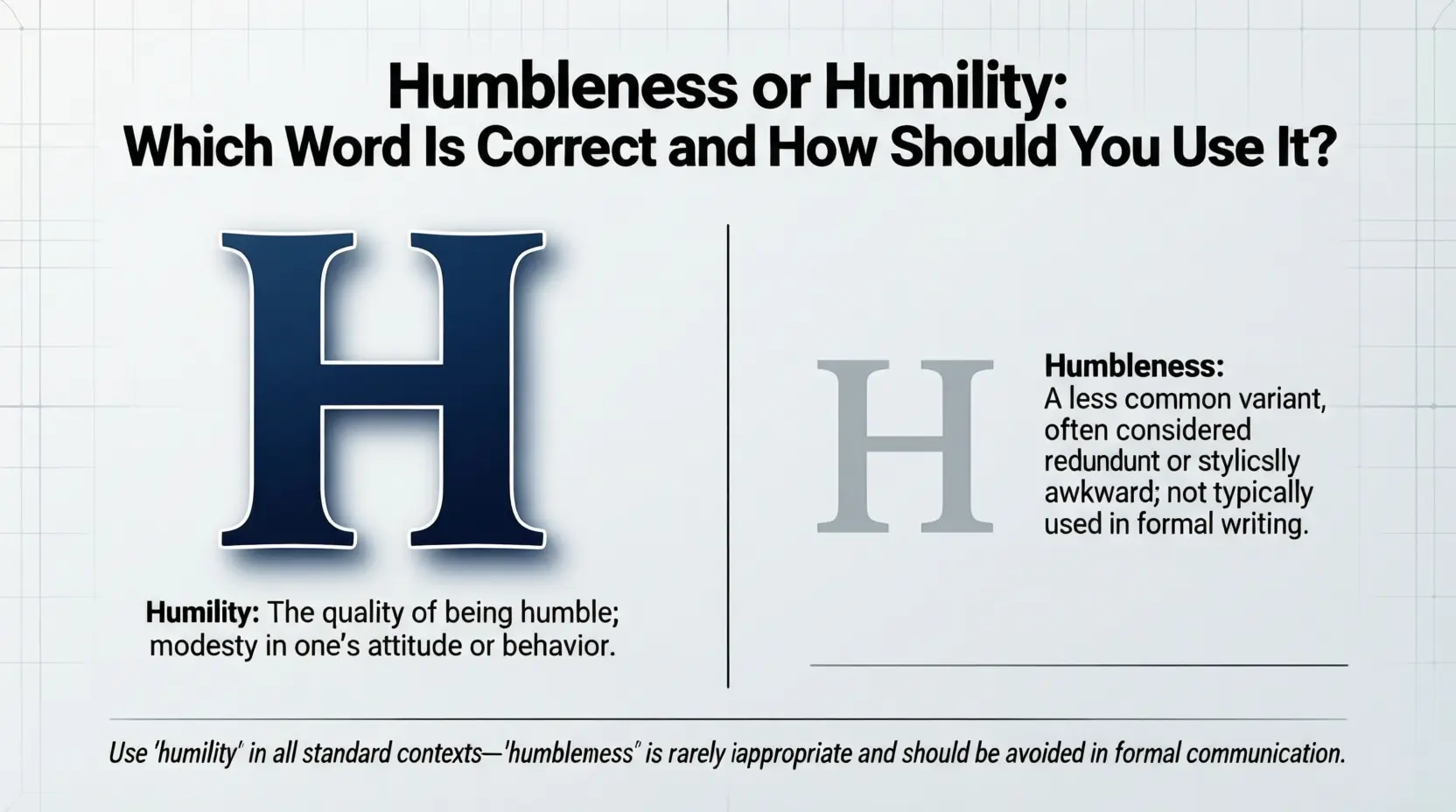
Humbleness or Humility: Which Word Is Correct and How Should You Use It?

Humbleness or Humility

Words shape how we think and how we are seen by others. One small spelling choice can change how professional, educated, or confident your writing sounds. That is exactly why many people search for “humbleness or humility.” They want to know which word is correct, which one sounds natural, and which one they should use … Read more

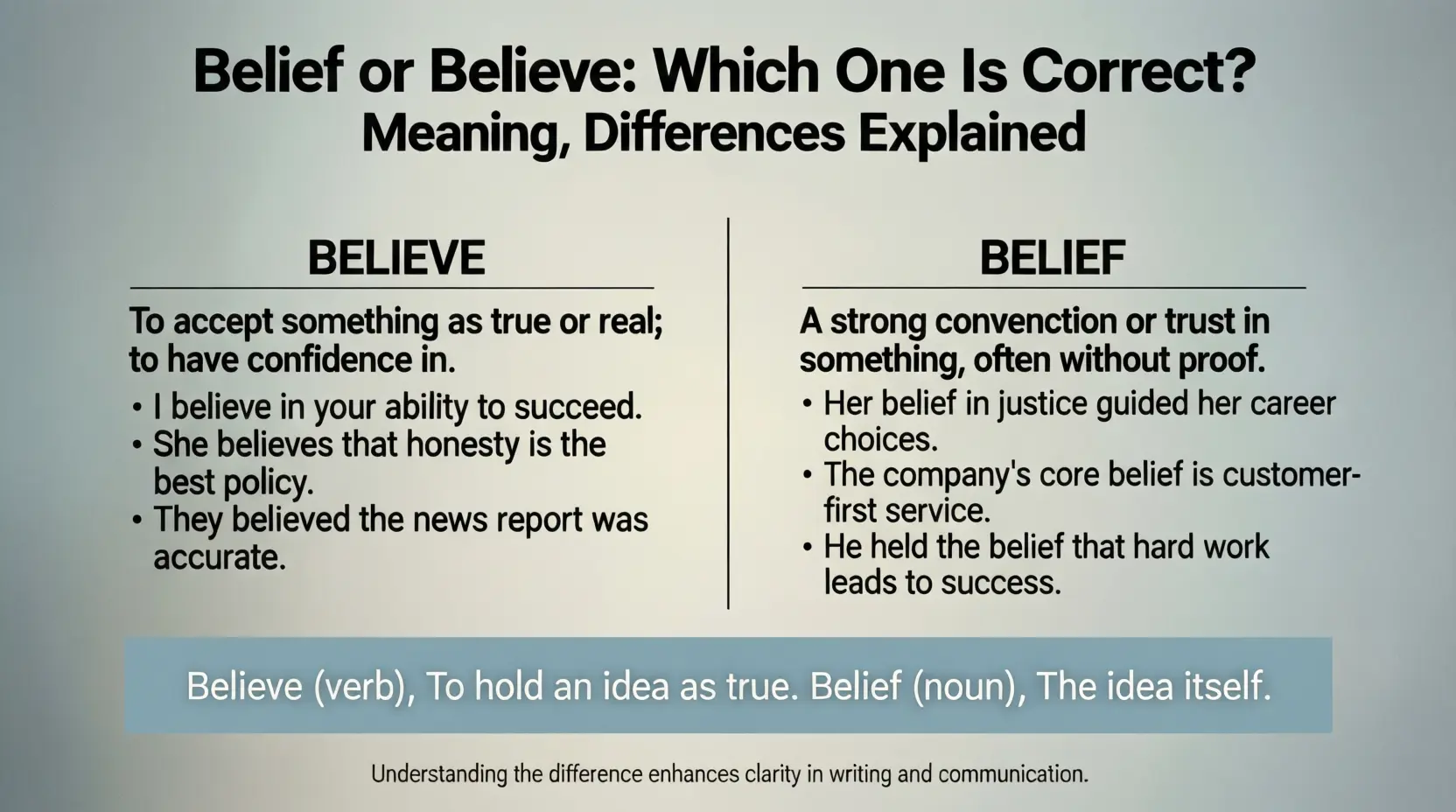
Belief or Believe: Which One Is Correct? Meaning, Differences Explained

Belief or Believe

Do you ever stop while writing and think, “Should I use beliefor believehere?” You are not alone. This is one of the most searched English grammar questions online. Students, writers, bloggers, and even professionals often get confused because these two words look and sound very similar but they do very different jobs in a sentence. … Read more

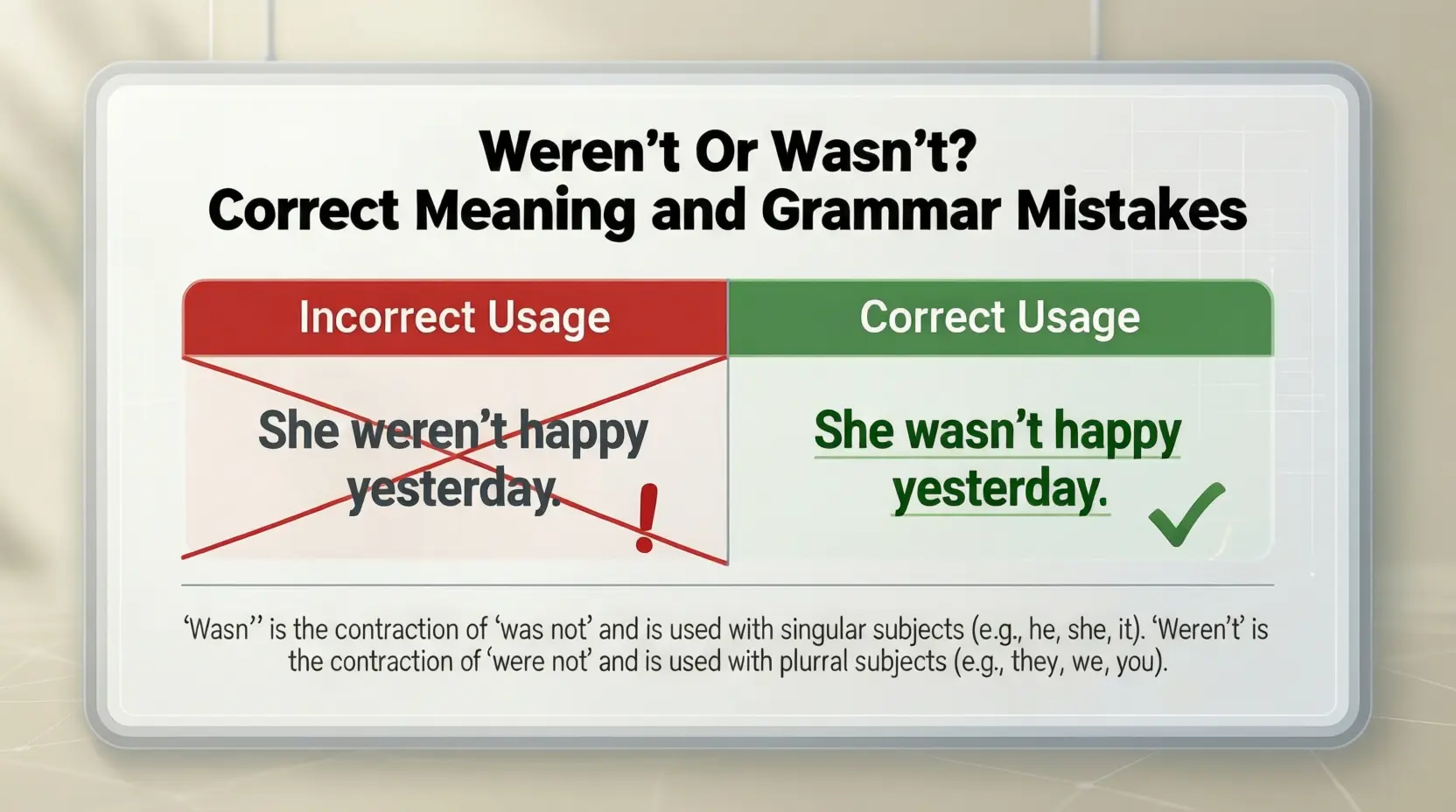
Weren’t Or Wasn’t? Correct Meaning and Grammar Mistakes

Weren’t Or Wasn’t

Many English learners feel confused when choosing between “weren’t” and “wasn’t.” Both words are negative forms of the verb “to be,” but they are not used in the same situations. People often search for weren’t or wasn’t because these words appear in daily speech, school exams, emails, and social media posts. The confusion usually happens … Read more

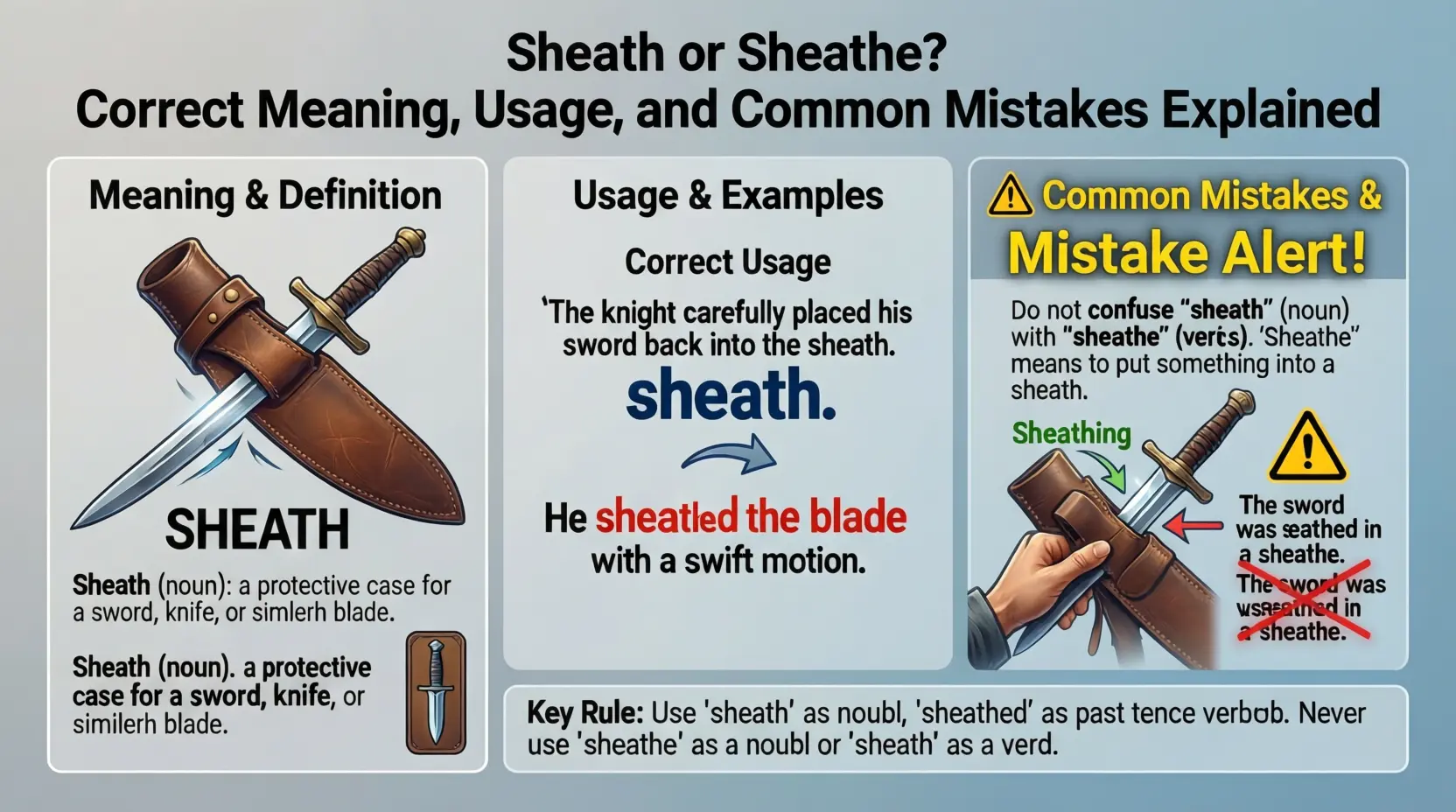
Sheath Or Sheathe? Correct Meaning, and Common Mistakes

Sheath or Sheathe

English words can be tricky, especially when they sound almost the same. One common question is “sheath or sheathe.” Both words exist, but their meanings and uses are slightly different. Many learners search for sheath or sheathe because they are unsure which spelling to use in writing or conversation. Confusion usually appears in contexts like … Read more