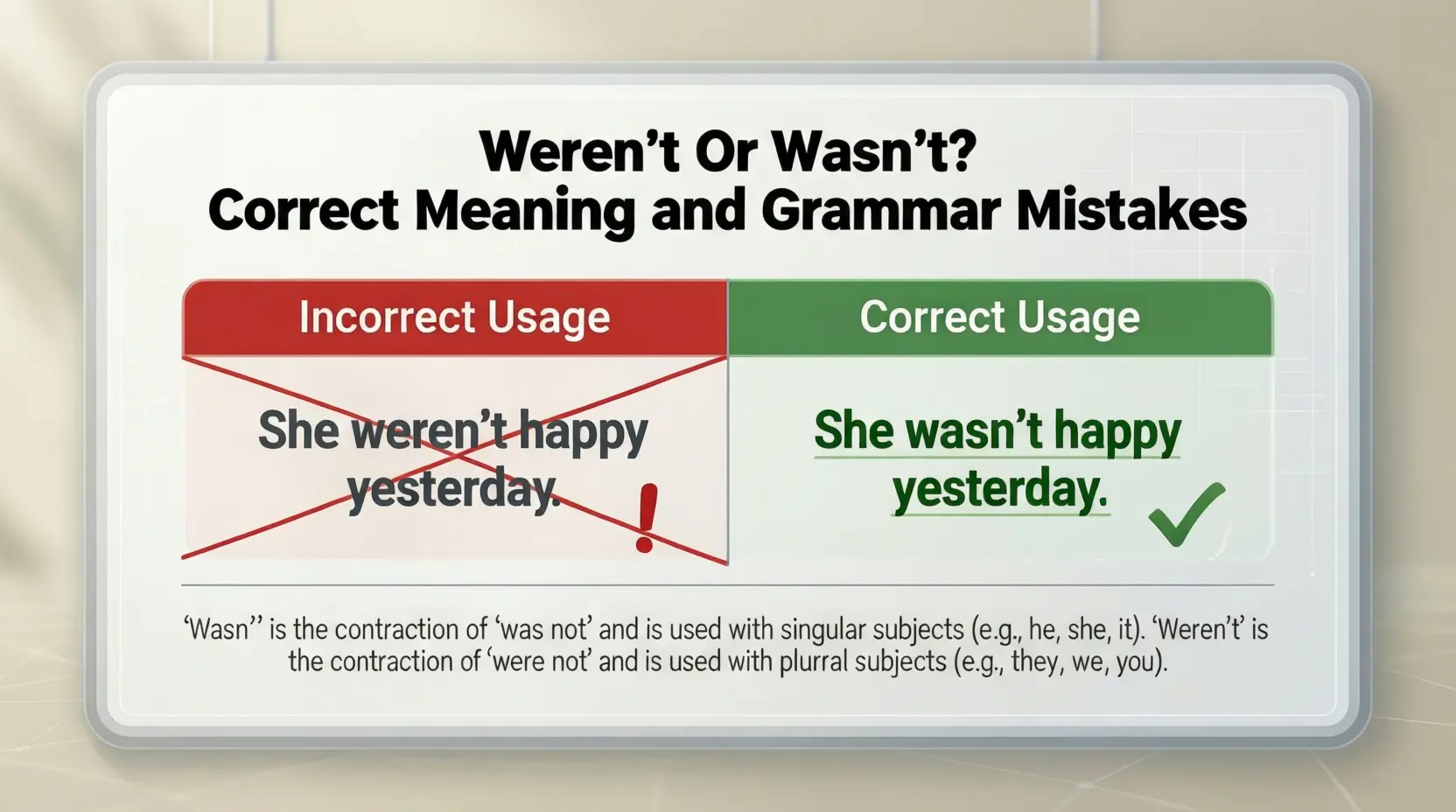
Many English learners feel confused when choosing between “weren’t” and “wasn’t.” Both words are negative forms of the verb “to be,” but they are not used in the same situations. People often search for weren’t or wasn’t because these words appear in daily speech, school exams, emails, and social media posts.
The confusion usually happens with subjects like I, you, we, they, and even in sentences that sound informal. For example:
“I wasn’t late” or “I weren’t late” which one is correct?
The answer depends on grammar rules and sometimes on informal speech patterns.
This article clearly explains the difference between weren’t and wasn’t, with easy rules, examples, tables, FAQs, and common mistakes.
By the end, you will confidently know which word to use in formal writing, spoken English, and exams.
Weren’t or Wasn’t – Quick Answer
- Wasn’t → used with I, he, she, it
- Weren’t → used with you, we, they
Simple Examples
- I wasn’t tired.
- She wasn’t happy.
- You weren’t late.
- They weren’t ready.
👉 Wasn’t = singular
👉 Weren’t = plural
What Does “Wasn’t” Mean?
Wasn’t is the negative form of “was.”
It is used with singular subjects.
Used With:
- I
- He
- She
- It
Examples
- I wasn’t hungry.
- He wasn’t at home.
- She wasn’t ready.
- It wasn’t easy.
What Does “Weren’t” Mean?
Weren’t is the negative form of “were.”
It is used with plural subjects and you.
Used With:
- You
- We
- They
Examples
- You weren’t listening.
- We weren’t late.
- They weren’t invited.
Weren’t vs Wasn’t – Subject Rule Table
| Subject | Correct Word |
| I | wasn’t |
| He | wasn’t |
| She | wasn’t |
| It | wasn’t |
| You | weren’t |
| We | weren’t |
| They | weren’t |
The Origin of Weren’t and Wasn’t
Origin of “Wasn’t”
- Comes from “was not”
- Used in English for hundreds of years
- Became common in spoken and written English
Origin of “Weren’t”
- Comes from “were not”
- Used mainly with plural subjects
- Also used in questions and conditionals
Both are contractions, meaning short forms of two words.
British English vs American English Usage
There is no spelling difference between British and American English.
Important Difference (Formal vs Informal)
- Standard English uses grammar rules strictly
- Informal British speech sometimes uses “weren’t” with I (not grammatically correct)
Comparison Table
| Sentence | Formal English | Informal Speech |
| I wasn’t ready | ✅ Correct | — |
| I weren’t ready | ❌ Incorrect | ⚠ Informal (UK only) |
👉 Avoid “I weren’t” in writing or exams
Which One Should You Use?
Use Wasn’t When:
- Subject is I / he / she / it
- Writing formally
- Writing exams or emails
Use Weren’t When:
- Subject is you / we / they
- Talking about more than one person
Common Mistakes with Weren’t or Wasn’t
Mistake 1
❌ I weren’t happy.
✅ I wasn’t happy.
Mistake 2
❌ They wasn’t ready.
✅ They weren’t ready.
Mistake 3
❌ She weren’t there.
✅ She wasn’t there.
Weren’t or Wasn’t in Everyday Examples
Emails
- I wasn’t available yesterday.
- We weren’t able to attend the meeting.
Social Media
- I wasn’t feeling well today.
- They weren’t happy with the result.
School / Exams
- He wasn’t present in class.
- Students weren’t prepared.
Weren’t or Wasn’t in Questions
Questions change word order but rules stay the same.
Examples
- Wasn’t I invited?
- Weren’t you there?
- Weren’t they late?
Weren’t in Conditional Sentences
Sometimes weren’t is used with I in unreal or imaginary situations.
Example
- If I weren’t tired, I would help you.
👉 This is grammatically correct and formal.
Weren’t or Wasn’t – Google Trends & Usage Data
- Wasn’t is searched more because beginners struggle with “I wasn’t.”
- Weren’t is often searched for grammar checks and exam preparation.
Popular Search Regions
- United States
- United Kingdom
- India
- Pakistan
- Australia
Weren’t vs Wasn’t – Side-by-Side Comparison Table
| Feature | Wasn’t | Weren’t |
| Full Form | was not | were not |
| Used With | I, he, she, it | you, we, they |
| Singular | Yes | No |
| Plural | No | Yes |
| Common Mistake | I weren’t | They wasn’t |
Easy Trick to Remember
👉 One person → wasn’t
👉 More than one → weren’t
Tip:
- “I” sounds alone → wasn’t
- “They” sounds many → weren’t
Practice Sentences
Fill in the blanks:
- I ___ tired yesterday.
- They ___ ready for the test.
- She ___ happy with the result.
Answers
- wasn’t
- weren’t
- wasn’t
FAQs:
1. Can I say “I weren’t”?
No, it is incorrect in standard English.
2. Is “I weren’t” ever correct?
Only in conditional sentences: If I weren’t busy…
3. Which is correct: “They wasn’t” or “They weren’t”?
“They weren’t” is correct.
4. Is there a US vs UK spelling difference?
No, both use the same spelling.
5. Which is better for exams?
Always follow grammar rules: I wasn’t, they weren’t.
6. Are these contractions formal?
Yes, acceptable in modern English writing.
Conclusion
The difference between weren’t and wasn’t is simple once you know the subject rules. Wasn’t is used with singular subjects like I, he, she, and it, while weren’t is used with plural subjects like you, we, and they. Although informal speech may bend the rules, proper English writing follows these clear patterns.
To avoid mistakes, always match the verb with the subject. This small grammar rule can greatly improve your spoken and written English. Once you master weren’t vs wasn’t, your sentences will sound natural, correct, and confident.
Read More Article:
Sheath or Sheathe? Correct Meaning, Usage, and Common Mistakes Explained

I am an Emily Carter Brooks U.S.A based linguistics writer known for my clear, reader-friendly explanations of English grammar and vocabulary differences. I have contributed to multiple online language resources and specializes in spelling variations, pronunciation confusion, and British vs American English comparisons. I believes that learning English should be practical, engaging, and stress-free.