Many people search for “weren’t or wasn’t” because these two words look similar but follow different grammar rules. You may pause while writing an email, a school assignment, or a social media post and wonder which one sounds right. This confusion is common for English learners and native speakers alike.
The problem comes from English verb agreement. Both weren’t and wasn’t are past tense forms of “to be,” but they match different subjects. One small mistake can change how clear or professional your writing sounds. That is why people often turn to Google for a quick answer.
This guide solves that problem step by step. First, you will get a fast, clear answer. Then, you will learn why these forms exist, how British and American English treat them, and which one you should use for your audience. You will also see real-life examples, common mistakes, and usage trends. By the end, you will feel confident using weren’t or wasn’t in any situation.
Read more about
Metronidazole or Clindamycin: Which One Is Right for You?
Pheonix or Phoenix
Weren’t or Wasn’t – Quick Answer
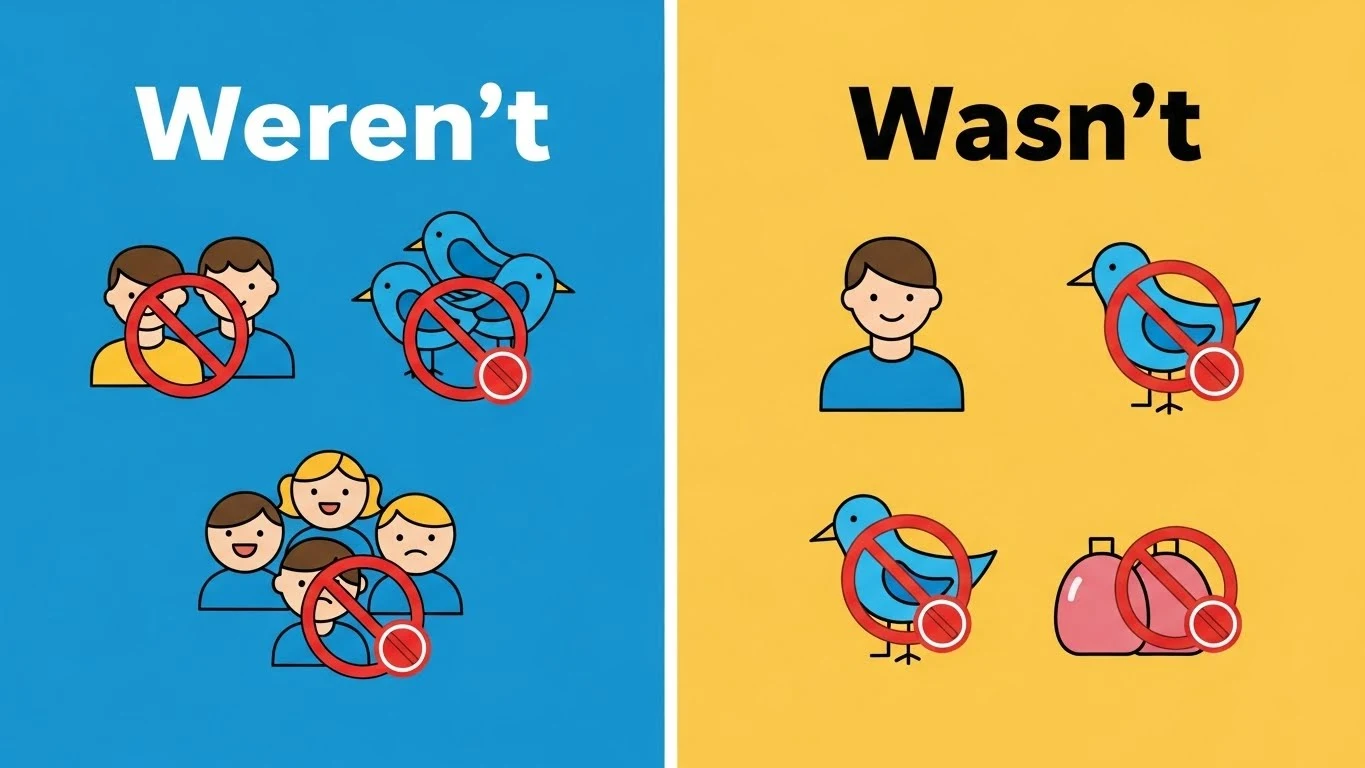
Wasn’t is used with singular subjects.
Weren’t is used with plural subjects and “you.”
Examples:
- I wasn’t ready.
- He wasn’t happy.
- They weren’t late.
- You weren’t wrong.
Simple rule:
If the subject is one person or thing, use wasn’t.
If it is more than one, or “you,” use weren’t.
The Origin of Weren’t or Wasn’t
Both words come from the verb “to be.” In Old English, this verb had many forms. Over time, English simplified them, but past tense forms stayed different for singular and plural subjects.
- Was came from Old English wæs (singular).
- Were came from wǣron (plural).
The negative forms added not, which later shortened to n’t. That is how we got wasn’t and weren’t. The difference exists to keep subject–verb agreement clear in speech and writing.
British English vs American English Spelling
There is no spelling difference between British and American English for weren’t or wasn’t. Both follow the same grammar rules.
The only difference appears in formal style. British English sometimes prefers “were” in hypothetical sentences.
Example (British style):
- If I were taller, I’d play basketball.
Comparison Table
| Context | American English | British English |
| Past fact | I wasn’t there | I wasn’t there |
| Plural subject | They weren’t ready | They weren’t ready |
| Hypothetical | If I was wrong… | If I were wrong… |
Which Spelling Should You Use?
Choose based on grammar, not location.
- US audience: Follow standard rules (singular = wasn’t, plural = weren’t).
- UK/Commonwealth: Same rule, but “were” may appear in formal hypotheticals.
- Global audience: Stick to basic grammar for clarity.
Correct grammar matters more than regional style in most writing.
Common Mistakes with Weren’t or Wasn’t
Here are frequent errors people make:
- ❌ They wasn’t happy.
✅ They weren’t happy. - ❌ I weren’t sure.
✅ I wasn’t sure. - ❌ She weren’t invited.
✅ She wasn’t invited.
Tip: Match the verb to the subject, not the noun next to it.
Weren’t or Wasn’t in Everyday Examples
Emails
- I wasn’t available yesterday.
- We weren’t informed about the change.
News
- The players weren’t ready for the match.
Social Media
- Sorry, I wasn’t online earlier.
Formal Writing
- The results weren’t consistent with the study.
Weren’t or Wasn’t – Google Trends & Usage Data
Search data shows that “weren’t or wasn’t” is popular worldwide. It is often searched by students, job seekers, and non-native speakers. The phrase appears most in grammar-related searches, school content, and writing help tools.
English-learning countries show high interest, but native-speaking countries also search it often. This proves the confusion is universal, not a skill issue.
Comparison Table: Weren’t vs Wasn’t
| Form | Subject Type | Example |
| Wasn’t | Singular | She wasn’t ready |
| Wasn’t | I / He / She / It | I wasn’t late |
| Weren’t | Plural | They weren’t home |
| Weren’t | You | You weren’t wrong |
FAQs
1. Can I use “weren’t” with I?
Only in very informal speech. Correct grammar uses wasn’t.
2. Is “wasn’t” always singular?
Yes, it matches singular subjects only.
3. Is “weren’t” ever singular?
Only in hypotheticals like “If I were…” (formal).
4. Which one sounds more polite?
Both are neutral. Correct grammar sounds professional.
5. Are both contractions?
Yes. They are short forms of “was not” and “were not.”
6. Do exams accept “weren’t” for I?
No. Exams expect wasn’t.
7. Is this a common ESL mistake?
Yes, very common for learners.
Conclusion
The choice between weren’t or wasn’t is simple once you know the rule. Use wasn’t with singular subjects like I, he, she, and it. Use weren’t with plural subjects and you. This small grammar detail makes your writing clearer and more professional.
Both British and American English follow the same basic rule. Differences only appear in formal or hypothetical sentences. For most writing, you do not need to worry about regional style. Focus on matching the verb to the subject.
Many people search this topic because English verb forms feel tricky. The good news is that this is an easy fix. With practice and attention, you can avoid common mistakes and write with confidence. When in doubt, check the subject first. That single step will help you choose weren’t or wasn’t correctly every time.

I hold a degree in English Literature and Linguistics and have worked extensively on educational blogs, comparison websites, and digital learning platforms. My writing focuses on simplifying complex language rules, highlighting British vs American English differences, and providing practical examples for everyday usage.