Have you ever written a sentence like “My shirt has shrank” and wondered if it sounds right? You’re not alone. Many English learners and even native speakers get confused between “shrank” and “shrunk.” These two words come from the same verb, but they are used in different ways. That’s where the confusion begins.
People often search for “shrank or shrunk” because both forms seem correct and in some cases, they are. The problem is knowing when to use each one. Is it past tense? Past participle? Does it change in British or American English? These questions make the topic tricky.
This article clears up the confusion in a simple way. You’ll learn the quick answer, the history behind the words, and how to use them in real-life sentences.
By the end, you’ll know exactly which word to use and feel confident in your writing.
Shrank or Shrunk – Quick Answer
Short answer:
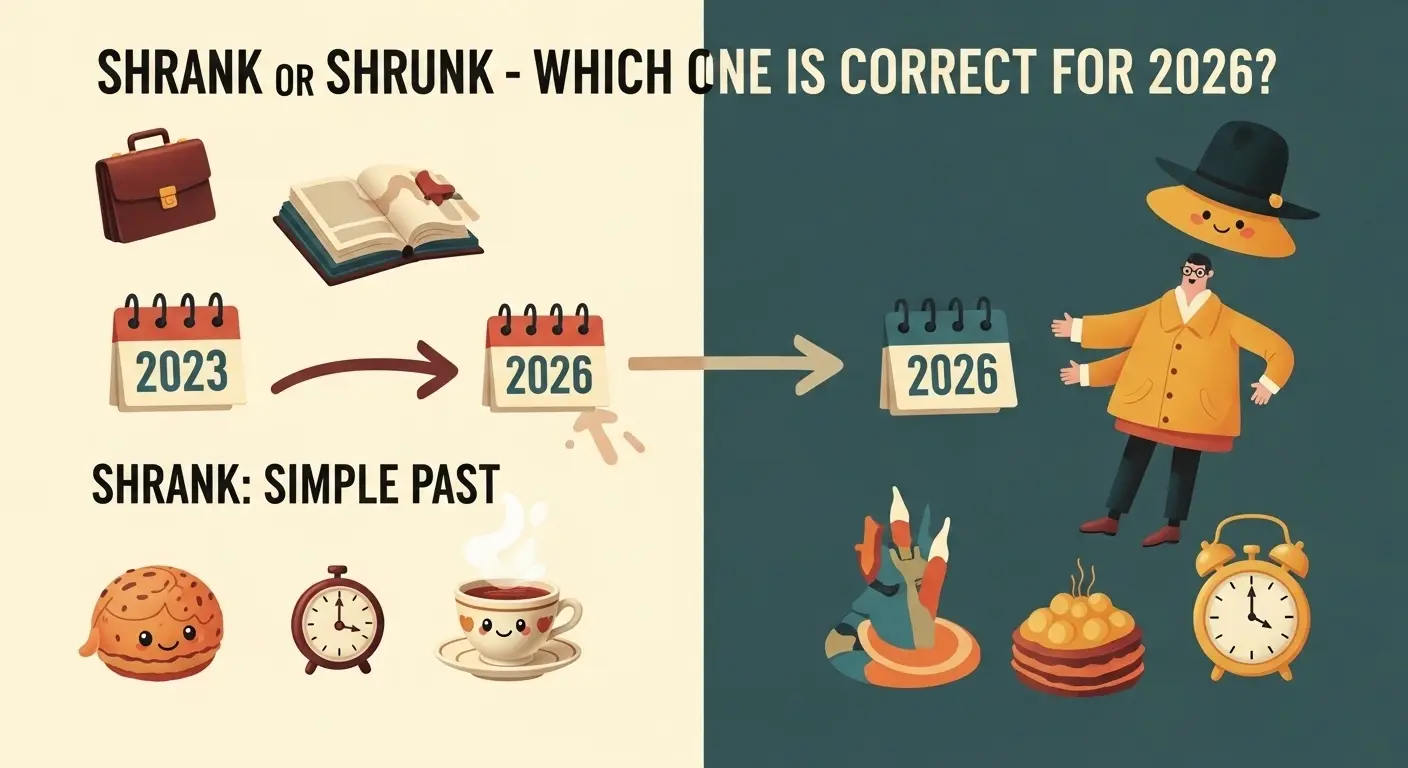
- “Shrank” = simple past tense
- “Shrunk” = past participle (used with “has,” “have,” or “had”)
Examples:
- ✅ The sweater shrank in the wash.
- ✅ The sweater has shrunk.
Easy rule:
- Use shrank → for something that happened in the past
- Use shrunk → with helping verbs (has/have/had)
The Origin of Shrank or Shrunk
The words “shrank” and “shrunk” come from the verb “shrink.” This verb has roots in Old English, from the word “scrincan,” which means to contract, withdraw, or become smaller.
Over time, English verbs changed forms. Many strong verbs (like drink–drank–drunk) follow a pattern. “Shrink” follows a similar pattern:
- Base form → shrink
- Past tense → shrank
- Past participle → shrunk
This pattern is part of a group of irregular verbs in English. That’s why “shrunk” sometimes feels more natural to people—it sounds like other common forms like “drunk” or “sung.”
However, grammar rules kept both forms for different uses, which is why we still use both today.
British English vs American English Spelling
Good news: there is no major difference between British and American English for “shrank” and “shrunk.” Both forms are used the same way in both regions.
However, usage habits can vary slightly. In casual speech, some people (especially in American English) may use “shrunk” as a past tense but this is not considered standard grammar.
Comparison Table:
| Form | British English | American English | Correct Usage |
| Shrank | ✅ Common | ✅ Common | Past tense |
| Shrunk | ✅ Common | ✅ Common | Past participle |
| Shrunk (past tense) | ❌ Informal | ⚠️ Sometimes heard | Not standard |
Which Spelling Should You Use?
Choosing between “shrank” and “shrunk” depends on your audience and sentence structure.
Use “shrank” if:
- You are writing in past tense
- You are not using helping verbs
Example:
- Sales shrank in 2023.
Use “shrunk” if:
- You use “has,” “have,” or “had”
- You need a past participle
Example:
- Sales have shrunk this year.
Audience Tips:
- 🇺🇸 US audience → Follow strict grammar rules (shrank vs shrunk)
- 🇬🇧 UK/Commonwealth → Same rule applies
- 🌍 Global audience → Stick to standard grammar for clarity
👉 Best advice: Always use the correct grammatical form. It works everywhere.
Common Mistakes with Shrank or Shrunk
Here are common errors people make:
❌ Mistake 1:
- The shirt has shrank.
✔️ Correct: The shirt has shrunk.
❌ Mistake 2:
- My jeans shrunk yesterday.
✔️ Correct: My jeans shrank yesterday.
Quick Tip:
If you see has/have/had → use shrunk
Shrank or Shrunk in Everyday Examples
Let’s see how these words appear in daily life.
Emails:
- The budget shrank last quarter.
- Our profits have shrunk significantly.
News:
- The economy shrank during the crisis.
- The market has shrunk by 10%.
Social Media:
- My hoodie shrank 😭
- It has shrunk after one wash!
Formal Writing:
- The population shrank over the decade.
- The industry has shrunk due to new laws.
Shrank or Shrunk – Google Trends & Usage Data
Search data shows that many people look up “shrank or shrunk” because they are unsure about grammar rules.
Key Insights:
- “Shrunk” is searched more often
- People use “shrunk” more in casual speech
- “Shrank” is more correct for past tense
By Region:
- 🇺🇸 United States → Higher search volume
- 🇬🇧 United Kingdom → Similar usage pattern
- 🌍 Global → Confusion is common everywhere
Why the confusion?
Because English learners try to match patterns like:
- drink → drank → drunk
So they assume “shrunk” works the same everywhere.
Comparison Table: Shrank vs Shrunk
| Feature | Shrank | Shrunk |
| Verb Form | Past tense | Past participle |
| Used With “has/have” | ❌ No | ✅ Yes |
| Example | It shrank | It has shrunk |
| Formal Usage | ✅ Yes | ✅ Yes |
| Common Mistake | Used with “has” | Used as past tense |
FAQs:
1. Is “shrunk” ever correct as past tense?
Not in standard grammar. Use “shrank” instead.
2. Why do people say “shrunk” instead of “shrank”?
Because it sounds like other verbs (like “drunk”). It’s common but not correct.
3. Is “shrank” outdated?
No. It is still the correct past tense form.
4. Can I use both in one sentence?
Yes:
- The fabric shrank because it has shrunk before.
5. Which is more common in speech?
“Shrunk” is more common in casual speech.
6. Which one should I use in writing?
Use the correct form:
- Past → shrank
- With has/have → shrunk
7. Is this difference important?
Yes. It improves clarity and makes your writing more professional.
8. Do exams care about this?
Yes. Grammar tests expect the correct form.
Conclusion:
The difference between “shrank” and “shrunk” is simple once you know the rule. “Shrank” is the past tense, while “shrunk” is the past participle. The confusion comes from how similar they sound and how often people use them incorrectly in casual speech.
To avoid mistakes, remember this easy trick: if your sentence has “has,” “have,” or “had,” then “shrunk” is the right choice. If not, use “shrank.” This small change can make a big difference in your writing.
Both British and American English follow the same rule, so you don’t need to worry about regional differences. Just focus on correct grammar. Whether you are writing emails, essays, or social media posts, using the right form shows clarity and confidence.
Keep practicing with simple sentences, and soon this confusion will disappear. Once you master this, your English will feel more natural and correct every time you write.

I hold a degree in English Literature and Linguistics and have worked extensively on educational blogs, comparison websites, and digital learning platforms. My writing focuses on simplifying complex language rules, highlighting British vs American English differences, and providing practical examples for everyday usage.