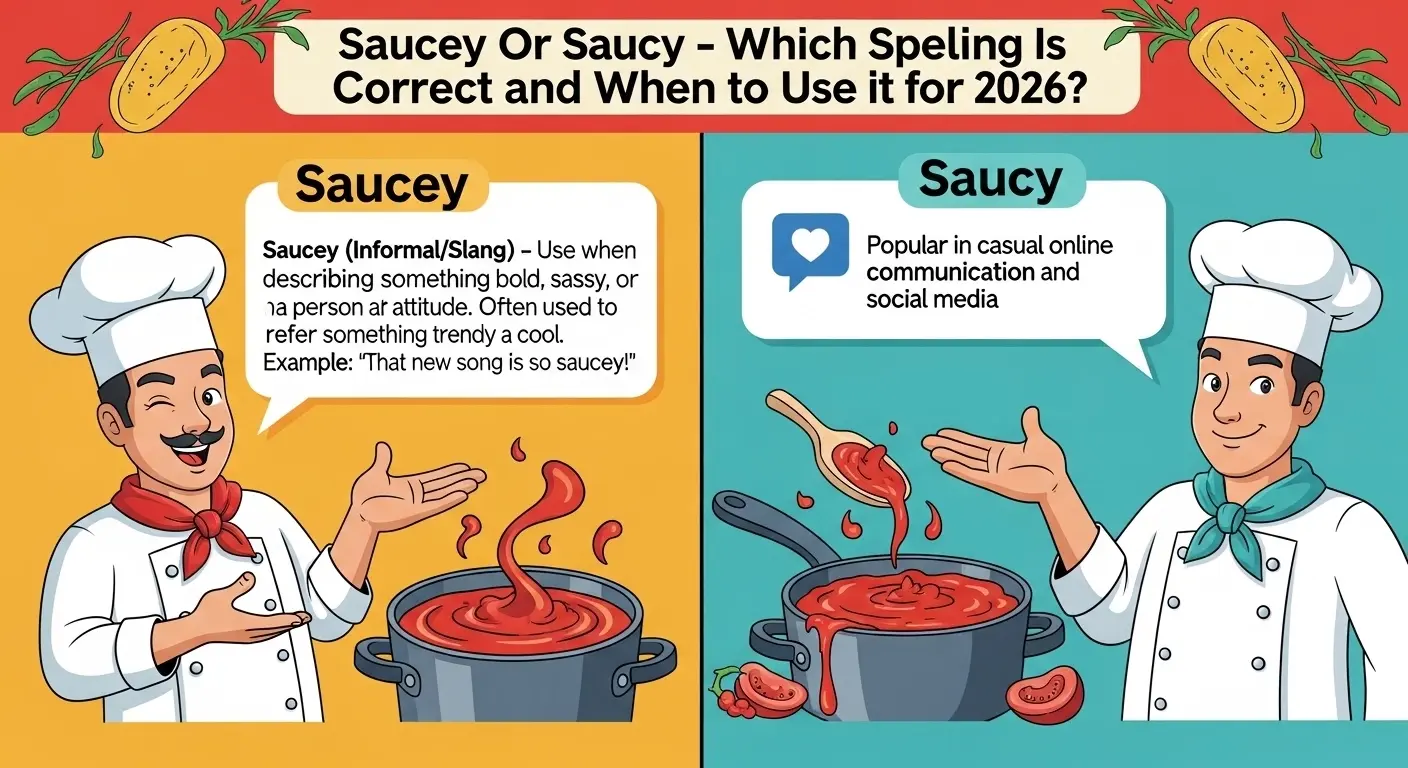
“Saucy” is an adjective meaning bold, playful, or slightly rude in a fun way, whereas “saucey” has no accepted meaning in English.
Have you ever typed “saucey” and wondered if it looks a bit off? You’re not alone. Many people get confused between “saucey” and “saucy” because both sound the same. This mix-up often happens in casual writing, social media posts, or even emails.
The confusion comes from how English words are spelled versus how they sound. Some words follow clear rules, while others don’t. In this case, one spelling is correct, and the other is just a common mistake. Still, many people use both forms, which adds to the confusion.
This article will clear things up in a simple way. You’ll learn which spelling is right, where it comes from, and how to use it in real life.
We’ll also look at common mistakes, examples, and even trends in usage. By the end, you’ll know exactly which word to use and feel confident using it in any situation.
Saucey or Saucy – Quick Answer
The correct spelling is “saucy.”
“Saucey” is a misspelling and should be avoided in formal and correct writing.
Examples:
- Correct: She gave him a saucy reply.
- Incorrect: She gave him a saucey reply.
“Sausy” means bold, cheeky, or slightly rude in a playful way. It can also describe food with a lot of sauce.
The Origin of Saucey or Saucy
The word “saucy” comes from the word “sauce.” In the past, adding sauce to food made it richer and more exciting. Over time, the meaning changed.
By the 1500s, “saucy” started to describe people. It meant someone bold, lively, or a bit rude. For example, a person who talks back in a playful way might be called “saucy.”
The spelling “saucy” follows a common English pattern. When a word ends in “-ce,” we often change it to “-cy” when adding “-y.” That’s why “sauce” becomes “saucy,” not “saucey.”
“Saucey” likely appeared because people spelled the word based on how it sounds. But it never became standard or correct.
British English vs American English Spelling
Good news: there is no difference between British and American English for this word. Both use “saucy.”
Key Point:
Unlike words like “colour” vs “color,” this word stays the same everywhere.
Comparison Table:
| Version | British English | American English | Correct? |
| Saucy | ✔ Yes | ✔ Yes | ✔ Correct |
| Saucey | ✘ No | ✘ No | ✘ Incorrect |
So no matter where you are, always use “saucy.”
Which Spelling Should You Use?
For US Audience
Always use “saucy.” “Saucey” looks incorrect and unprofessional.
For UK & Commonwealth
Again, use “saucy.” This is the standard form in all formal writing.
For Global Audience
Stick with “saucy.” It is widely accepted and understood everywhere.
Simple Rule:
If you want to sound correct and clear, always choose “saucy.”
Common Mistakes with Saucey or Saucy
Here are some common errors people make:
1. Adding Extra “e”
❌ saucey
✔ saucy
2. Spelling by Sound
People hear “saw-see” and write “saucey.” This is wrong.
3. Using in Formal Writing
Using “saucey” in emails or reports looks careless.
4. Confusing Meaning
Some think “saucy” only relates to food. It also means bold or cheeky.
5. Mixing Styles
Switching between “saucy” and “saucey” in the same text is incorrect.
Saucey or Saucy in Everyday Examples
1. Emails
- Correct: Your email had a slightly saucy tone.
2. News Writing
- The actor made a saucy comment during the interview.
3. Social Media
- That caption is so saucy!
4. Food Reviews
- This pasta is rich and saucy.
5. Formal Writing
- The character is known for her saucy personality.
In all cases, “saucy” works perfectly. “Saucey” should not be used.
Saucey or Saucy – Google Trends & Usage Data
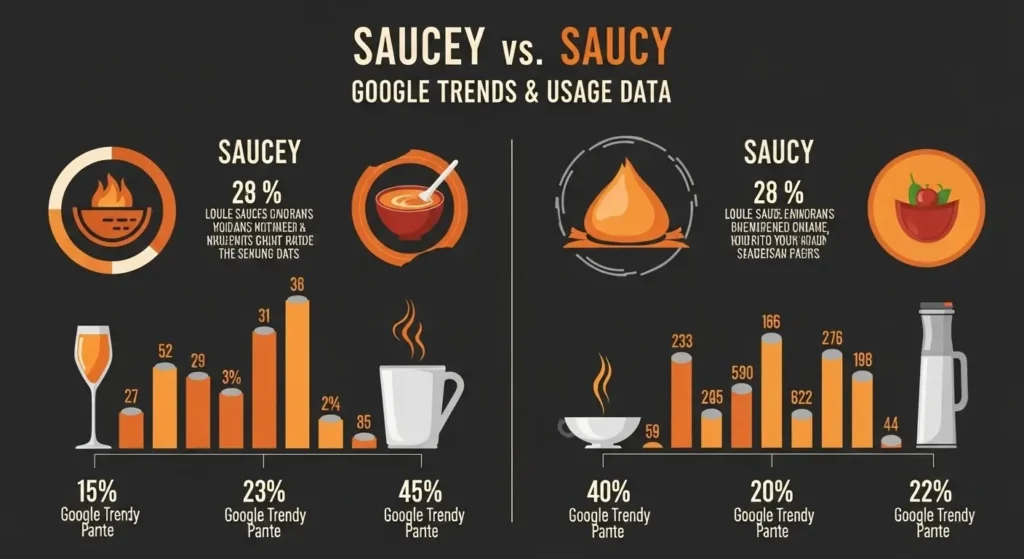
Search data shows that “saucy” is far more popular than “saucey.”
Key Insights:
- “Saucy” is used worldwide in books, news, and online content.
- “Saucey” appears mostly in casual posts or typing mistakes.
- Countries like the US, UK, Canada, and Australia all prefer “saucy.”
Context of Use:
- Food: common use
- Personality: very common
- Social media slang: growing usage
This proves that “saucy” is the only correct and trusted form.
Comparison Table (Keyword Variations)
| Word | Meaning | Correct Usage | Example |
| Saucy | Bold, cheeky, or full of sauce | ✔ Yes | A saucy remark |
| Saucey | Misspelling of saucy | ✘ No | Avoid using |
FAQs
1. Is “saucey” ever correct?
No. It is always considered a misspelling.
2. What does “saucy” mean?
It means bold, cheeky, or full of flavor (for food).
3. Why do people write “saucey”?
Because it sounds similar to “saucy,” leading to spelling errors.
4. Is “saucy” informal?
It can be both informal and formal, depending on context.
5. Can I use “saucy” in professional writing?
Yes, if the tone fits. It is a real and correct word.
6. Does “saucy” only relate to food?
No. It also describes personality and behavior.
7. Is there a UK vs US difference?
No. Both use “saucy.”
8. Is “saucy” slang?
Sometimes, but it is also a standard English word.
Conclusion
The confusion between “saucey” and “saucy” is common, but the answer is simple. “Saucy” is the correct spelling, while “saucey” is just a mistake. This confusion often happens because English spelling does not always match pronunciation.
The word “saucy” has a long history. It started from “sauce” and later came to describe bold or cheeky behavior. Today, it is used in many ways, from food descriptions to personality traits. The best part is that it stays the same in both British and American English, so there’s no need to worry about regional differences.
To avoid errors, remember this simple rule: if you’re writing anything formal or professional, always use “saucy.” Even in casual writing, sticking to the correct spelling helps you look more polished and confident.
By understanding the meaning, origin, and correct usage, you can now use “saucy” the right way every time. No more second-guessing, no more spelling mistakes just clear and correct English.

I hold a degree in English Literature and Linguistics and have worked extensively on educational blogs, comparison websites, and digital learning platforms. My writing focuses on simplifying complex language rules, highlighting British vs American English differences, and providing practical examples for everyday usage.