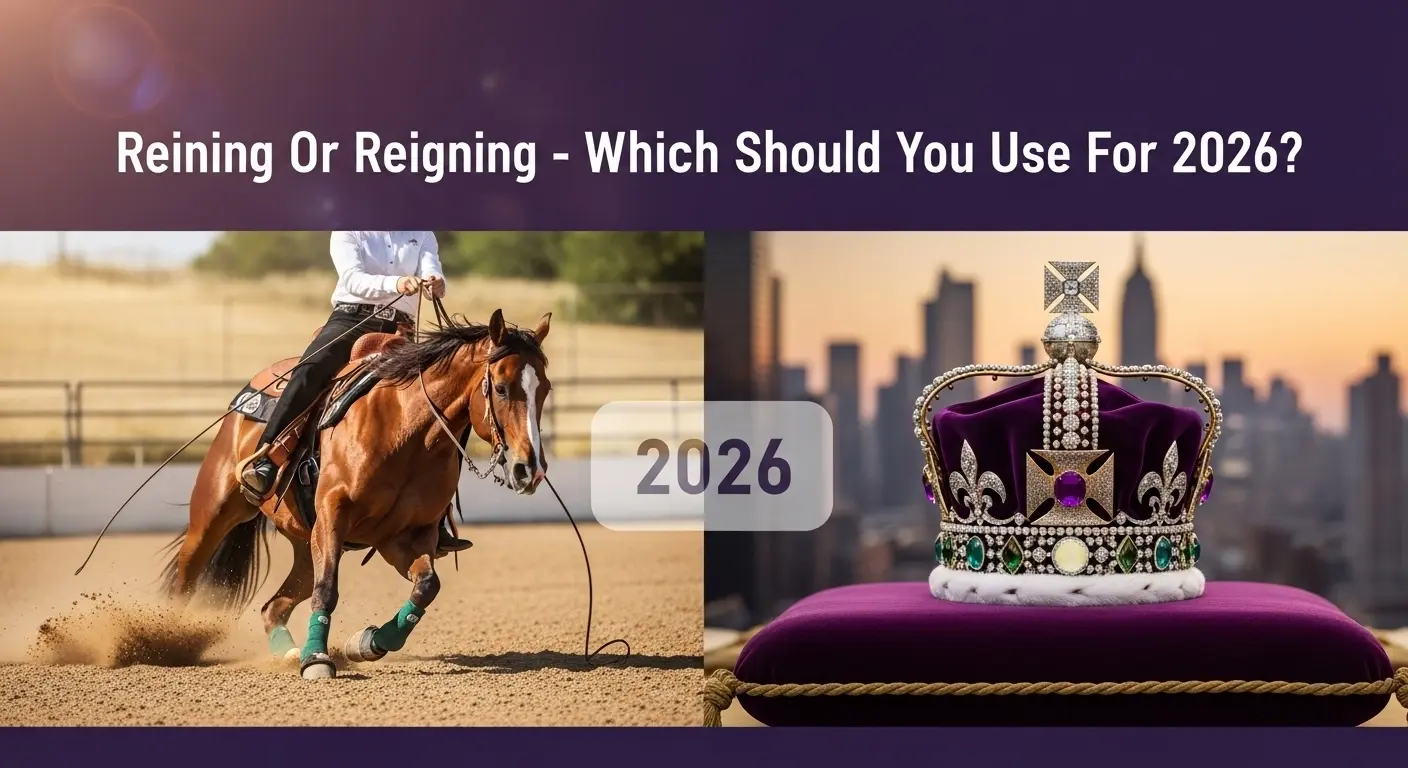
Many people get confused between reining and reigning. At first glance, they look similar. They even sound almost the same. But their meanings are very different. This small spelling mix-up can change the whole meaning of a sentence.
People often search for “reining or reigning” when writing emails, blogs, or social posts. For example, should you write “reining in costs” or “reigning in costs”? One is correct, and the other is a common mistake.
This confusion happens because both words come from old English roots. They also share similar sounds. But each word belongs to a different context. One relates to control, while the other relates to power or rule.
In this guide, you’ll learn the quick answer, origins, spelling differences, and correct usage. You’ll also see real examples, common mistakes, and helpful tips. By the end, you’ll never mix up reining and reigning again.
Reining or Reigning – Quick Answer
- Reining = controlling or pulling back (often from horse riding)
- Reigning = ruling or being in power (like a king or queen)
Examples:
- ✅ She is reining in her spending. (correct: controlling spending)
- ❌ She is reigning in her spending. (incorrect)
- ✅ The reigning champion won again. (correct: current ruler/champion)
- ❌ The reining champion won again. (incorrect)
Simple tip:
- Rein = control
- Reign = rule
The Origin of Reining or Reigning
Reining
The word reining comes from “rein”, which is a strap used to control a horse. Riders pull the reins to guide or stop the horse. Over time, the word became a metaphor for control.
- Origin: Old French “resne” → Latin “retinere” (to hold back)
- Meaning evolved to: control, limit, or restrain
Reigning
The word reigning comes from “reign”, meaning to rule as a king or queen.
- Origin: Old French “regner” → Latin “regnare” (to rule)
- Meaning: to hold power or authority
Why the Confusion Exists
Both words sound similar (homophones). But their roots are very different. One comes from control, the other from power.
British English vs American English Spelling
Good news: there is no spelling difference between British and American English for these words.
| Word | British English | American English | Meaning |
| Reining | Reining | Reining | Controlling |
| Reigning | Reigning | Reigning | Ruling or being in power |
Key Point
Unlike words like color/colour, these two words stay the same in both versions of English.
Example Sentences
- UK & US: The government is reining in inflation.
- UK & US: She is the reigning champion.
Which Spelling Should You Use?
Choosing between reining and reigning depends on your meaning, not your location.
Use “Reining” When:
- You talk about control or limits
- You describe reducing something
Examples:
- The company is reining in expenses.
- He is reining in his emotions.
Use “Reigning” When:
- You talk about power or leadership
- You refer to a current champion
Examples:
- The reigning king addressed the nation.
- She is the reigning world champion.
Audience-Based Advice
- US audience: Use based on meaning (no change)
- UK/Commonwealth: Same rule applies
- Global writing: Focus on clarity, not region
Always ask: Am I talking about control or rule?
Common Mistakes with Reining or Reigning
Here are the most common errors people make:
1. Using “Reigning” Instead of “Reining”
❌ The manager is reigning in costs.
✅ The manager is reining in costs.
2. Using “Reining” Instead of “Reigning”
❌ The reining champion defended his title.
✅ The reigning champion defended his title.
3. Confusing Idioms
The phrase “rein in” is very common. Many people write it as “reign in”, which is wrong.
❌ Reign in your anger.
✅ Rein in your anger.
4. Overthinking the Spelling
Some writers think it’s a regional spelling issue. It is not.
Reining or Reigning in Everyday Examples
In Emails
- We need to rein in our budget this quarter.
- She remains the reigning CEO of the company.
In News
- The government is reining in inflation.
- The reigning president gave a speech.
On Social Media
- Trying to rein in my spending this month
- The reigning champ just won again!
In Formal Writing
- Policies were introduced to rein in excessive spending.
- The reigning monarch holds ceremonial power.
Reining or Reigning – Google Trends & Usage Data
Search data shows that many users confuse these words, especially in phrases like:
- “reigning in costs” (incorrect but popular)
- “reining in costs” (correct)
Popularity by Region
- United States: High confusion in business writing
- United Kingdom: Similar confusion in media and blogs
- Global: Common among non-native speakers
Context Usage
- Reining appears more in business, finance, and self-control topics
- Reigning appears more in sports, politics, and royalty contexts
Insight: Most errors happen in the phrase “rein in”
Comparison Table: Reining vs Reigning
| Feature | Reining | Reigning |
| Root Word | Rein | Reign |
| Meaning | Control, limit | Rule, dominate |
| Usage Context | Business, behavior | Royalty, sports |
| Example | Reining in expenses | Reigning champion |
| Common Error | Written as “reigning” | Written as “reining” |
FAQs:
1. Is it “reining in” or “reigning in”?
Correct: reining in (means controlling something)
2. What does “reigning” mean?
It means ruling or being in power
3. Why do people confuse these words?
Because they sound alike but have different meanings
4. Is “reign in” ever correct?
No, in the context of control, it should always be rein in
5. What is a “reigning champion”?
It means the current title holder
6. Can “reining” be used metaphorically?
Yes, it often means controlling emotions or spending
7. Do British and American English differ here?
No, both use the same spellings
8. How can I remember the difference?
- Rein = control (horse reins)
- Reign = rule (king reigns)
Conclusion:
The difference between reining and reigning is simple once you understand their meanings. Reining is about control. It comes from horse riding, where reins guide movement. Today, it is used in everyday language to mean limiting or managing something. On the other hand, reigning is about power. It refers to ruling, leading, or holding a top position.
Most confusion happens because the words sound alike. Many people mistakenly write “reigning in” when they mean “reining in.” This is especially common in business and online writing. But remembering one small trick can help: rein = control, reign = rule.
There is no difference between British and American English for these words. The correct choice always depends on meaning, not location. If you are writing an email, article, or social post, choosing the right word improves clarity and professionalism.
Take a moment to check your usage. A small spelling change can make a big difference in meaning. With this guide, you can now use reining and reigning correctly and confidently every time.

I hold a degree in English Literature and Linguistics and have worked extensively on educational blogs, comparison websites, and digital learning platforms. My writing focuses on simplifying complex language rules, highlighting British vs American English differences, and providing practical examples for everyday usage.