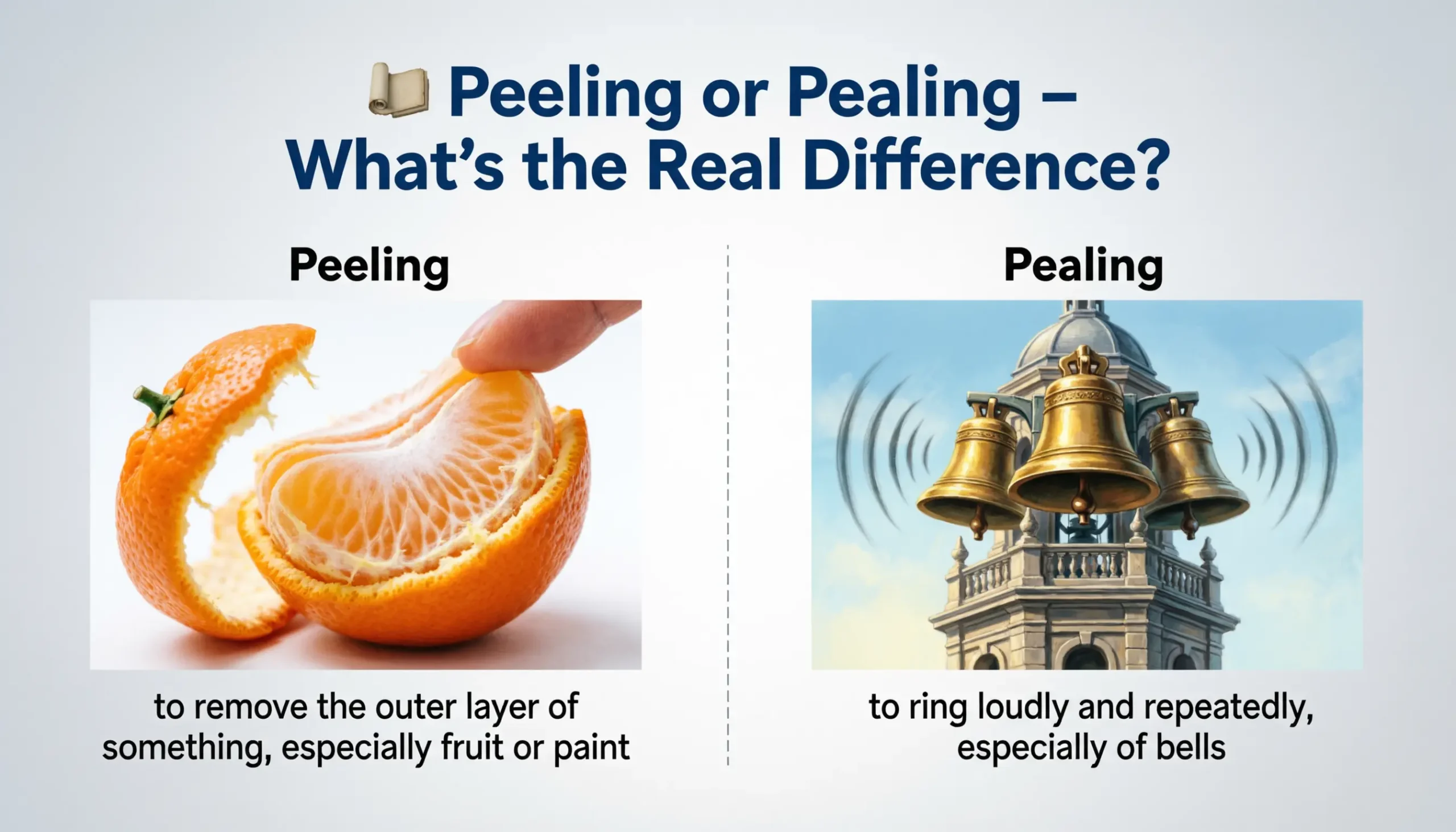
English spelling can be tricky, especially when two words look almost the same but mean very different things. One common example is peeling or pealing. Many people search for this keyword because they see both spellings online and are not sure which one is correct. Is it peeling paint or pealing paint? Do bells go peeling or pealing? 🤔
This confusion happens because both words are real, both are verbs, and both come from old English roots. However, they are not interchangeable. Using the wrong one can change the meaning of your sentence or make your writing look unprofessional especially in exams, academic work, emails, or content.
People often search for “peeling or pealing” to get a quick answer, but they also want clear examples, grammar rules, and advice for British and American English. This article solves that problem step by step. You’ll get a fast answer first, then deeper explanations, tables, examples, and practice exercises.
By the end, you’ll know exactly when to use peeling and when to use pealing, and you’ll never mix them up again.
Peeling or Pealing – Quick Answer
Peeling means something is coming off in layers.
Pealing means a loud ringing sound, usually from bells or thunder.
Examples:
- The paint is peeling off the wall. ✅
- She is peeling an orange. ✅
- Church bells are pealing across the town. ✅
- ❌ The bells are peeling loudly. (wrong word)
Tip:
- Peel = skin or layer coming off
- Peal = sound
The Origin of Peeling or Pealing
The confusion between peeling and pealing comes from their long history and similar spelling.
Origin of Peel / Peeling
- Comes from Old French peler
- Meaning: to strip off skin or outer layer
- Related to words about removing or uncovering
This is why peeling is used for:
- Fruits
- Paint
- Skin
- Wallpapers
Origin of Peal / Pealing
- Comes from Middle English pele
- Meaning: a loud sound or series of sounds
- Often used for bells, thunder, or laughter
Because both words evolved separately but sound similar, modern English learners often mix them up.
British English vs American English Spelling
Unlike words such as colour/color or catalogue/catalog, peeling and pealing are spelled the same in both British and American English. The difference is not regional—it is meaning-based.
Comparison Table
| Aspect | Peeling | Pealing |
| Meaning | Removing layers | Loud ringing sound |
| Used in US English | Yes | Yes |
| Used in UK English | Yes | Yes |
| Common Context | Paint, fruit, skin | Bells, thunder |
| Part of Speech | Verb / Adjective | Verb / Noun |
✔ No spelling change by country
✔ Only meaning decides usage
Which Spelling Should You Use?
You should choose based on context, not location.
Use Peeling if your audience is:
- US readers
- UK readers
- Global audience
…and you are talking about: - Paint
- Fruit
- Skin
- Paper
- Stickers
Use Pealing if your audience is:
- Academic
- Literary
- News readers
…and you are talking about: - Bells
- Thunder
- Loud sounds
Professional tip:
If your sentence includes sound, choose pealing.
If it includes layers, choose peeling.
Common Mistakes with Peeling or Pealing
Here are mistakes people make all the time:
❌ The church bells were peeling loudly.
✅ The church bells were pealing loudly.
❌ The old house had pealing paint.
✅ The old house had peeling paint.
Why these mistakes happen
- Both words sound similar
- Spellcheck may not catch the error
- Learners guess based on sound, not meaning
Peeling or Pealing in Everyday Examples
Emails
- The sticker is peeling off my laptop.
- I heard bells pealing during the ceremony.
News
- Residents complain about peeling walls in old buildings.
- Wedding bells were pealing across the city.
Social Media
- My sunburn skin is peeling 😬
- Church bells pealing on Sunday morning 🔔
Formal Writing
- The report noted peeling paint as a safety issue.
- Bells were pealing to mark the national event.
Peeling or Pealing / Google Trends & Usage Data
Search data shows:
- Peeling is searched much more often worldwide
- Pealing has lower search volume and is mostly searched in:
- Literature
- Grammar questions
- Religious or historical content
- Literature
By Country
- USA, UK, Canada, Australia → Mostly peeling
- Academic searches → Often compare peeling vs pealing
This shows most users want to confirm which spelling is correct, not just the meaning.
Comparison Table: Peeling vs Pealing
| Feature | Peeling | Pealing |
| Main Meaning | Layers coming off | Loud sound |
| Common Objects | Paint, fruit, skin | Bells, thunder |
| Frequency | Very common | Less common |
| Used in Daily Life | Yes | Rare |
| Used in Literature | Sometimes | Often |
Peeling or Pealing in Academic Writing
In academic writing, precision matters.
- Use peeling in:
- Material science
- Biology
- Medicine
- Architecture
- Material science
- Example:
The study observed peeling of the outer layer. - Use pealing in:
- Literature
- History
- Religious studies
- Literature
- Example:
Bells were pealing during the ceremony.
Using the wrong word can lower writing quality and clarity.
Peeling or Pealing in Professional Writing
In professional settings:
- Peeling appears in:
- Reports
- Complaints
- Maintenance logs
- Reports
- Pealing appears in:
- News articles
- Event descriptions
- Ceremonial writing
- News articles
Tip for professionals:
Avoid pealing unless you are clearly talking about sound.
Exercises: Test Your Understanding
Exercise 1: Choose the Correct Word
- The paint is ___ from the door.
- Bells were ___ during the festival.
Answers:
- peeling
- pealing
Exercise 2: Fix the Sentence
❌ The bells were peeling across the town.
✅ The bells were pealing across the town.
Exercise 3: Write Your Own Sentence
- One sentence with peeling
- One sentence with pealing
FAQs:
1. Is peeling or pealing more common?
Peeling is much more common.
2. Can I use pealing for paint?
No. Paint peels, it does not peal.
3. Do bells peel or peal?
Bells peal.
4. Is this a US vs UK spelling difference?
No. Both spellings are the same in US and UK English.
5. Can spellcheck detect this mistake?
Usually no, because both words are correct.
6. Is pealing used in modern English?
Yes, but mostly in formal or literary contexts.
7. How can I remember the difference?
- Peel = remove skin
- Peal = sound
Conclusion:
The confusion between peeling or pealing is common, but once you understand the meanings, the choice becomes easy. Peeling is about layers coming off like paint, skin, or fruit. Pealing is about sound especially loud, ringing sounds like bells or thunder.
There is no British or American spelling difference here. The key is context. If you are writing emails, blogs, academic papers, or professional documents, choosing the right word shows clarity and strong language skills.
Most of the time, you will use peeling in daily life. Pealing is rarer and usually appears in formal, literary, or ceremonial writing. Remember the simple rule: layers peel, sounds peal.
With this guide, examples, tables, and exercises, you now have both the quick answer and deep understanding. You can confidently use peeling or pealing correctly in any situation.
Read More Article:
✍️ Subjunctive or Indicative: Common Grammar Confusion Solved

I hold a degree in English Literature and Linguistics and have worked extensively on educational blogs, comparison websites, and digital learning platforms. My writing focuses on simplifying complex language rules, highlighting British vs American English differences, and providing practical examples for everyday usage.