Words shape how we think and how we are seen by others. One small spelling choice can change how professional, educated, or confident your writing sounds. That is exactly why many people search for “humbleness or humility.” They want to know which word is correct, which one sounds natural, and which one they should use in exams, essays, emails, or online content.
At first glance, both words seem fine. They come from the same idea: being modest, respectful, and not proud. But in real English usage, one word is far more common and accepted than the other. Writers, students, bloggers, and even professionals often feel confused because they see humbleness in older texts or casual speech, while humility appears in books, news, and academic writing.
This article clears that confusion once and for all. You will get a quick answer, clear examples, history, spelling rules, usage advice for different audiences, and real-life examples.
By the end, you will know exactly when to use humility, when humbleness appears, and how to sound confident and correct every time.
Humbleness or Humility – Quick Answer
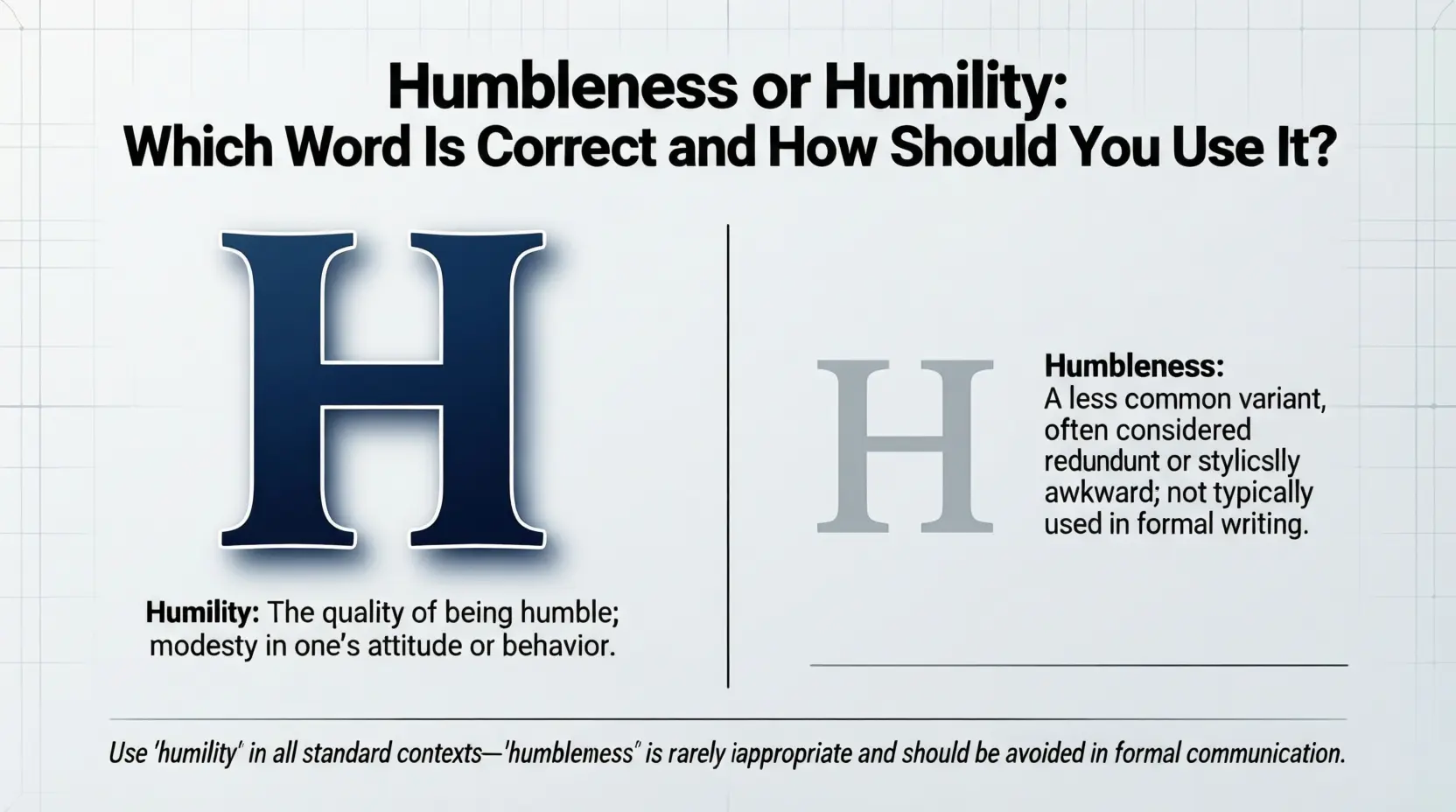
Humility is the correct and preferred word in modern English.
Humbleness exists but is rare and often sounds unnatural.
Simple examples:
- ✅ She spoke with great humility about her success.
- ❌ She spoke with great humbleness about her success.
- ✅ Humility is valued in leadership.
- ⚠️ Humbleness is valued in leadership. (grammatically possible, but uncommon)
Bottom line:
Use humility in almost all situations—academic, professional, and everyday writing.
The Origin of Humbleness and Humility
The word humility comes from the Latin word humilitas, which means “lowness” or “modesty.” It entered English through Old French in the 13th century and quickly became the standard noun form of humble.
Humbleness, on the other hand, is formed by adding -ness to humble. While this is grammatically allowed in English, it never became the preferred form. Over time, writers and speakers favored humility because it sounded smoother and more formal.
Why both exist:
- English allows many noun forms (kind → kindness, dark → darkness)
- But language use decides what survives
- Humility won, humbleness faded
Today, humility is the dominant form in books, education, religion, psychology, and leadership studies.
British English vs American English Spelling
This is not a spelling difference like colour vs color. Both British English and American English strongly prefer humility.
| Feature | British English | American English |
| Preferred word | Humility | Humility |
| Formal writing | Humility | Humility |
| Academic use | Humility | Humility |
| Humbleness usage | Very rare | Very rare |
✔ No regional difference
✔ No spelling debate
✔ Same rule worldwide
Which Spelling Should You Use?
For US audiences
- Always use humility
- Expected in schools, offices, and media
For UK and Commonwealth audiences
- Humility is standard
- Used in exams, essays, and publications
Professional advice:
If you want safe, correct, and polished writing choose humility every time.
Common Mistakes with Humbleness or Humility
Here are frequent errors people make:
❌ Using humbleness in formal writing
- The leader showed humbleness in his speech.
✔ Correct: The leader showed humility in his speech.
❌ Thinking humbleness is more “descriptive”
- Humility already covers the meaning fully
Humbleness or Humility in Everyday Examples
Emails
- ✅ Thank you for your feedback. I accept it with humility.
- ❌ I accept it with humbleness.
News
- ✅ The athlete spoke with humility after the win.
Social media
- ✅ Success feels better when paired with humility.
Formal writing
- ✅ Humility is a key trait in ethical leadership.
Humbleness or Humility – Google Trends & Usage Data
Search behavior clearly favors humility.
Usage insights:
- Humility is searched far more than humbleness
- Popular in:
- United States
- United Kingdom
- Canada
- India
- Pakistan
- United States
- Common contexts:
- Religion
- Leadership
- Psychology
- Education
- Religion
Humbleness appears mostly in:
- Old texts
- Non-native writing
- Very casual speech
Comparison Table: Humbleness vs Humility
| Feature | Humbleness | Humility |
| Correct | Rarely | Yes |
| Common usage | Very low | Very high |
| Formal writing | Not recommended | Recommended |
| Academic writing | Avoid | Preferred |
| SEO friendly | No | Yes |
| Sounds natural | Often no | Yes |
Humbleness or Humility Exercises (Practice Section)
Exercise 1: Choose the correct word
- She accepted the award with great ________.
- ________ helps people grow.
- His speech showed true ________.
Answers:
- humility
- humility
- humility
Exercise 2: Correct the sentence
- Humbleness is important in leadership.
✔ Corrected: Humility is important in leadership.
Humbleness or Humility in Academic Writing
In academic writing, humility is the only acceptable choice.
Why academics prefer humility:
- Established usage
- Formal tone
- Accepted by style guides
- Common in research papers
Example:
- ✅ Humility plays a role in ethical decision-making.
Using humbleness in academic work may be marked incorrect or informal.
Humbleness or Humility in Professional Writing
In business and professional settings, word choice affects credibility.
Best practice:
- Use humility in:
- Reports
- Emails
- Speeches
- CVs and cover letters
- Reports
Example:
- ✅ She leads with confidence and humility.
Humbleness may sound awkward or unpolished in professional contexts.
FAQs:
1. Is humbleness a real word?
Yes, but it is rare and outdated in modern usage.
2. Which is more correct: humbleness or humility?
Humility is more correct and widely accepted.
3. Can I use humbleness in exams?
No. Use humility to be safe.
4. Do native speakers use humbleness?
Very rarely. Most prefer humility.
5. Is there any situation where humbleness is better?
Almost none in modern English.
6. Is humbleness informal?
It sounds less natural and less formal.
7. Is humility British or American?
Both. It is standard worldwide.
8. Does humbleness change the meaning?
No, but it weakens clarity and style.
Conclusion:
The confusion between humbleness or humility is common, but the solution is simple. While both words come from the same root, modern English has clearly chosen humility as the correct, natural, and professional option. It is used in education, business, media, and everyday speech across the world. Humbleness, although grammatically possible, feels outdated and awkward to most native speakers.
If your goal is clear communication, strong writing, humility should always be your first choice. It fits formal and informal contexts, works across regions, and meets reader expectations.
If you are writing an academic paper, a professional email, a blog post, or a social media caption, choosing humility shows confidence and language awareness. Modern English prefers humility. Stick with it, and your writing will always sound correct, polished, and trustworthy.

I am an Emily Carter Brooks U.S.A based linguistics writer known for my clear, reader-friendly explanations of English grammar and vocabulary differences. I have contributed to multiple online language resources and specializes in spelling variations, pronunciation confusion, and British vs American English comparisons. I believes that learning English should be practical, engaging, and stress-free.