Many people search for “cheep or cheap” because these two words look almost the same but mean very different things. One small spelling change can completely change your message.
If you write emails, posts, ads, or articles in English, this confusion can cause embarrassment or misunderstanding. Imagine calling a product cheep instead of cheap—you may sound incorrect or unclear to readers.
This confusion happens because both words are pronounced in a similar way by many learners. Also, spellcheck tools do not always help, because both cheep and cheap are real English words. That makes this spelling issue even more tricky.
This guide solves that problem in a simple way. You will get a quick answer, a clear explanation, real-life examples, and professional advice on which spelling to use and when.
By the end of this article, you will never confuse cheep or cheap again, whether you are writing for school, work, business, or online content.
Read more about;
mistakingly-or-mistakenly
Edited or editted
Cheep or Cheap – Quick Answer
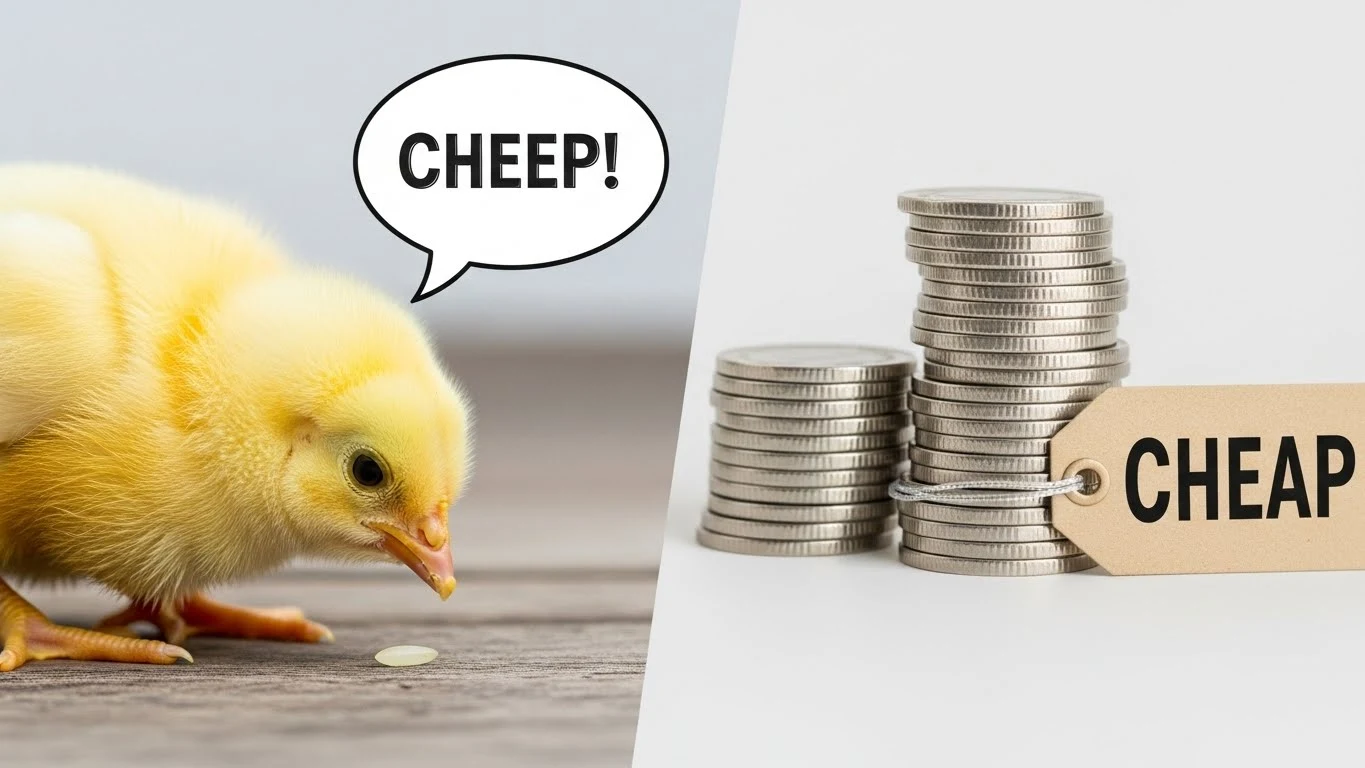
Cheap is the correct word when you mean low price or good value.
Cheep is a real word, but it means the short sound a bird makes.
Simple Examples
- ✅ This phone is very cheap.
- ❌ This phone is very cheep. (Wrong meaning)
- ✅ The bird went cheep cheep.
- ❌ The bird went cheap cheap. (Wrong meaning)
👉 Most of the time, people want “cheap,” not “cheep.”
The Origin of Cheep or Cheap
Understanding word history makes spelling easier.
Origin of Cheap
The word cheap comes from Old English ceap, which meant trade or bargain. Over time, it became linked to price and value. By the 18th century, cheap clearly meant low cost.
That is why today we say:
- cheap clothes
- cheap food
- cheap prices
Origin of Cheep
The word cheep comes from sound imitation. It copies the short, high sound made by small birds, especially baby chicks. This type of word is called onomatopoeia.
Examples:
- cheep cheep
- the chicks cheeped loudly
Why the Confusion Exists
- Same pronunciation for many learners
- Only one letter difference
- Both words exist in English
- Spellcheck does not flag the error
British English vs American English Spelling
There is no spelling difference between British and American English for cheap or cheep. Both follow the same rules in all major English varieties.
Comparison Table
| Aspect | Cheap | Cheep |
| British English | Cheap = low price | Cheep = bird sound |
| American English | Cheap = low price | Cheep = bird sound |
| Australian English | Cheap = inexpensive | Cheep = chirping |
| Formal Writing | Very common | Rare |
| Everyday Use | Extremely common | Limited |
👉 Cheap is universal. Cheep is situational.
Which Spelling Should You Use?
If Your Audience Is American
Use cheap when talking about:
- prices
- deals
- budget items
Example:
This is the cheapest laptop in the store.
If Your Audience Is British or Commonwealth
Same rule applies. Use cheap for price and value.
Example:
Flights are cheap this season.
If Your Audience Is Global
Always use cheap unless you are describing bird sounds.
Simple Rule to Remember
If money or price is involved, use CHEAP.
If a bird is involved, use CHEEP.
Common Mistakes with Cheep or Cheap
Mistake 1: Using cheep for low price
❌ This hotel is very cheep.
✅ This hotel is very cheap.
Mistake 2: Trusting spellcheck blindly
Spellcheck allows cheep, so writers think it is correct.
Mistake 3: SEO and content errors
Using cheep instead of cheap can:
- lower credibility
- confuse readers
- hurt SEO rankings
Mistake 4: Social media embarrassment
A small spelling mistake can make posts look unprofessional.
Cheep or Cheap in Everyday Examples
Emails
- ❌ We offer cheep services.
- ✅ We offer cheap services.
News Articles
- ❌ The market sells cheep goods.
- ✅ The market sells cheap goods.
Social Media
- ❌ Looking for cheep flights ✈️
- ✅ Looking for cheap flights ✈️
Formal Writing
- ❌ The product was cheep in quality and cost.
- ✅ The product was cheap in cost but good in quality.
Nature Writing
- ✅ The baby birds cheeped all morning.
Cheep or Cheap – Google Trends & Usage Data
Popularity by Usage
- Cheap is searched millions of times every month.
- Cheep is searched far less and mostly in:
- spelling checks
- learning contexts
- sound descriptions
Context-Based Use
| Word | Common Contexts |
| Cheap | Shopping, travel, business, ads |
| Cheep | Birds, animals, sounds |
Why People Search This Keyword
- English learners
- Content writers
- SEO bloggers
- Students
- Non-native speakers
👉 Search intent is mostly about price-related confusion.
Cheep or Cheap – Side-by-Side Comparison Table
| Feature | Cheap | Cheep |
| Meaning | Low price | Bird sound |
| Part of Speech | Adjective | Verb / Noun |
| Common Use | Very high | Very low |
| Used in Business | Yes | No |
| Used in Nature Writing | No | Yes |
| Correct for Money | ✅ Yes | ❌ No |
FAQs
1. Is cheep ever correct?
Yes, but only when describing bird sounds.
2. Why do people confuse cheep and cheap?
Because they sound similar and both are real words.
3. Can I use cheep for informal writing?
Only if you mean bird sounds. Otherwise, no.
4. Is cheap considered rude?
Sometimes. It can mean low quality when used about people or actions.
5. Which word is better for SEO?
Cheap is far better and widely searched.
6. Does British English use cheep differently?
No. The meaning is the same everywhere.
7. How can I remember the difference?
Think: Money = Cheap, Birds = Cheep.
Conclusion
The confusion between cheep or cheap is very common, but it is also very easy to fix once you understand the difference.
Cheap is the word you want almost every time, especially when talking about prices, deals, value, or affordability. It works the same in British English, American English, and global English.
Cheep, on the other hand, has a narrow use. It belongs to birds, chicks, and sound descriptions. Using it in place of cheap can make your writing look incorrect or unprofessional, especially in emails, ads, blogs, and formal content.
For clear communication, strong SEO, and professional writing, always double-check this spelling. Remember the simple rule: money equals cheap, birds equal cheep.
If you follow this advice, you will avoid one of the most common English spelling mistakes and write with confidence every time.

I hold a degree in English Literature and Linguistics and have worked extensively on educational blogs, comparison websites, and digital learning platforms. My writing focuses on simplifying complex language rules, highlighting British vs American English differences, and providing practical examples for everyday usage.