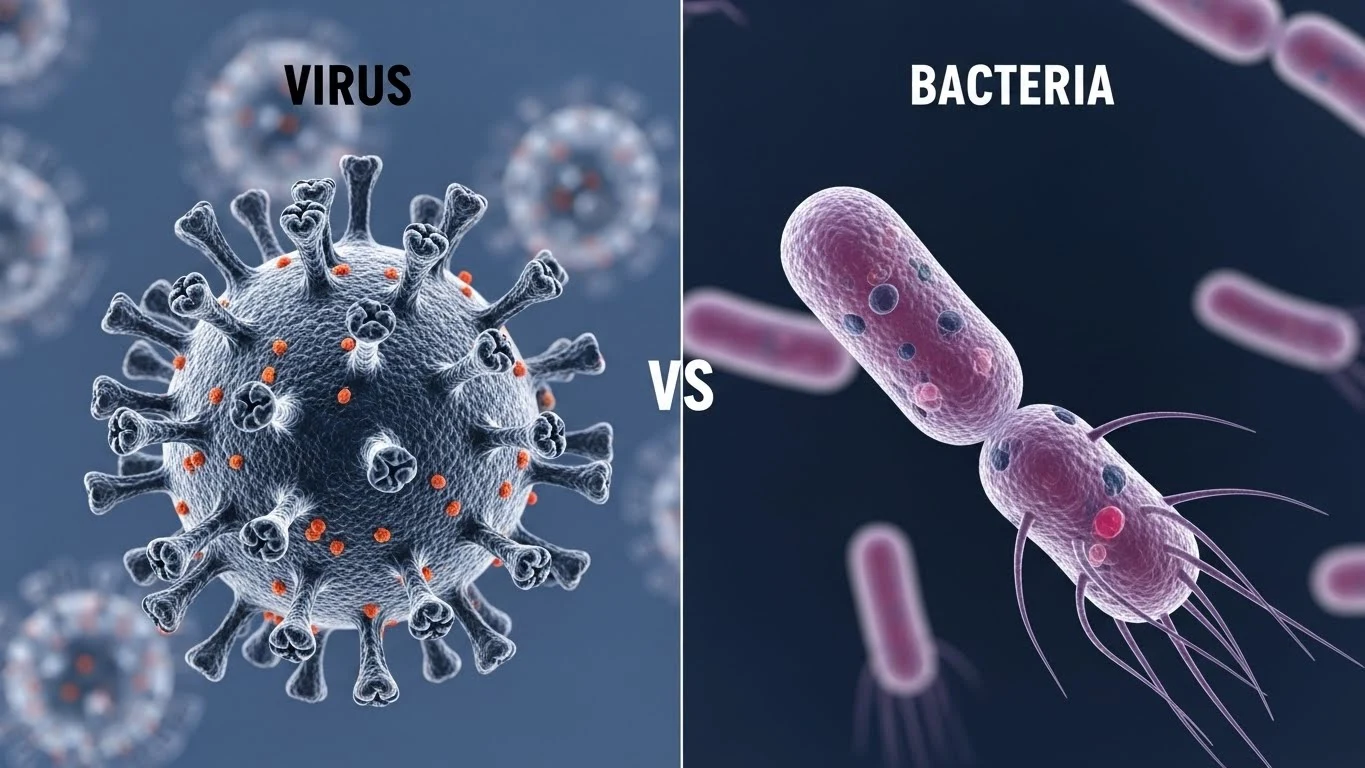
Many people search for virus or bacteria when they feel sick, read health news, or hear medical terms they do not fully understand. A fever, cough, sore throat, or stomach pain often leads to one big question: Is this caused by a virus or bacteria? This confusion is very common. Both are tiny germs. Each can make humans ill. Both spread fast. Yet they are not the same.
The problem is simple. People often use the words virus and bacteria as if they mean the same thing. They do not. A wrong assumption can lead to wrong treatment.
For example, antibiotics work on bacteria but not on viruses. Using the wrong medicine wastes time and can even cause harm.
This article solves that confusion. It gives a clear, simple, and complete guide to virus or bacteria. You will learn what each word means, where the terms come from, and how they are used in daily life. You will also see common mistakes, examples, trends, and expert advice on correct usage. By the end, you will know exactly when to say virus and when to say bacteria—with confidence.
Read more about;
Metronidazole or Clindamycin
Virus or Bacteria
Virus and bacteria are both microscopic germs, but they are very different.
- Virus: A virus is not a living cell. It needs a host to survive. It causes illnesses like flu, COVID-19, measles, and the common cold.
- Bacteria: Bacteria are living, single-cell organisms. Some cause disease, but many are helpful. They cause illnesses like strep throat, tuberculosis, and food poisoning.
Example:
- The flu is caused by a virus, so antibiotics do not help.
- Strep throat is caused by bacteria, so antibiotics are useful.
In short:
👉 Viruses need hosts. Bacteria can live on their own.
The Origin of Virus or Bacteria
Understanding the origin of words helps remove confusion.
Origin of Virus
The word virus comes from Latin. It originally meant poison or slimy liquid. In the late 1800s, scientists used the word to describe infectious agents smaller than bacteria. Over time, it became a scientific term for non-living particles that infect cells.
Origin of Bacteria
The word bacteria comes from the Greek word bakterion, meaning small rod. Early scientists observed rod-shaped microbes under microscopes and named them bacteria. Unlike viruses, bacteria were quickly known to be living organisms.
Why Confusion Exists
Both terms entered common language through medical news, pandemics, and education. Since both cause illness, people often mix them up. There are no spelling differences, but there is a huge meaning difference.
British English vs American English Spelling
Good news: there is no spelling difference between British and American English for these words.
- Virus = Virus (UK and US)
- Bacteria = Bacteria (UK and US)
The confusion is not about spelling. It is about meaning and usage.
Comparison Table
| Term | British English | American English | Meaning |
| Virus | Virus | Virus | Non-living infectious agent |
| Bacteria | Bacteria | Bacteria | Living microorganisms |
Which Spelling Should You Use?
Since spelling is the same everywhere, the real question is which word should you use?
Use Virus when:
- Talking about flu, COVID-19, HIV, or colds
- Mentioning infections that do not respond to antibiotics
- Referring to computer viruses (metaphor use)
Use Bacteria when:
- Talking about infections treated with antibiotics
- Discussing gut health or probiotics
- Referring to food safety issues
Audience-Based Advice
- US audience: Use medical clarity. Mention treatment differences.
- UK/Commonwealth audience: Same usage. Add examples.
- Global audience: Keep language simple. Explain briefly.
Common Mistakes with Virus or Bacteria
Many people make the same errors again and again.
Mistake 1: Saying antibiotics kill viruses
❌ Wrong
✔ Antibiotics kill bacteria, not viruses
Mistake 2: Using “bacteria” as singular
❌ “A bacteria is dangerous”
✔ “A bacterium is dangerous”
Mistake 3: Calling every illness viral
❌ “Food poisoning is always viral”
✔ Many food poisonings are bacterial
Mistake 4: Mixing treatment advice
❌ Treating viral fever with antibiotics
✔ Use rest and fluids for viral infections
Virus or Bacteria in Everyday Examples
Emails
“I have a viral infection, so I need rest.”
News
“Doctors confirmed the illness was caused by bacteria.”
Social Media
“Antibiotics won’t help against a virus.”
Formal Writing
“The study compares bacterial and viral transmission patterns.”
Virus or Bacteria – Google Trends & Usage Data
Search interest in virus or bacteria increases during outbreaks, flu seasons, and pandemics. During COVID-19, searches for “virus vs bacteria” spiked worldwide.
Popular by Region
- United States: High searches during flu season
- UK & Europe: Common in health education
- Asia & Africa: Rising interest due to public health campaigns
Context of Use
- Medical education
- School exams
- Health blogs
- News reports
People search this keyword to understand treatment, safety, and prevention.
Comparison Table: Virus vs Bacteria
| Feature | Virus | Bacteria |
| Living? | No | Yes |
| Needs host? | Yes | No |
| Size | Smaller | Larger |
| Antibiotics work? | No | Yes |
| Examples | Flu, COVID-19 | Strep throat, TB |
FAQs
1. Is COVID-19 a virus or bacteria?
COVID-19 is caused by a virus.
2. Do antibiotics work on viruses?
No. Antibiotics only work on bacteria.
3. Are all bacteria harmful?
No. Many bacteria help digestion and immunity.
4. Can viruses live on surfaces?
Yes, but only for limited time.
5. What causes food poisoning?
Often bacteria, sometimes viruses.
6. Is fever viral or bacterial?
It can be either. Tests confirm the cause.
7. Why do doctors test before giving antibiotics?
To avoid misuse and resistance.
Conclusion
The difference between virus or bacteria is simple but important. Viruses are not living cells. They need a host to survive. Bacteria are living organisms that can live on their own. This single difference affects treatment, recovery, and prevention.
People search for this keyword because they want clarity. They want to know why antibiotics work sometimes and fail other times. They want to protect themselves and their families. Knowing the correct term helps you ask better questions and make smarter health choices.
There is no spelling difference between British and American English. The real skill is choosing the right word. Use virus for flu-like illnesses and outbreaks. Use bacteria for infections treated with antibiotics. Avoid common mistakes. Use clear examples.
When you understand virus or bacteria, you gain control over health information. Clear words lead to better decisions, safer treatment, and smarter communication.

I hold a degree in English Literature and Linguistics and have worked extensively on educational blogs, comparison websites, and digital learning platforms. My writing focuses on simplifying complex language rules, highlighting British vs American English differences, and providing practical examples for everyday usage.