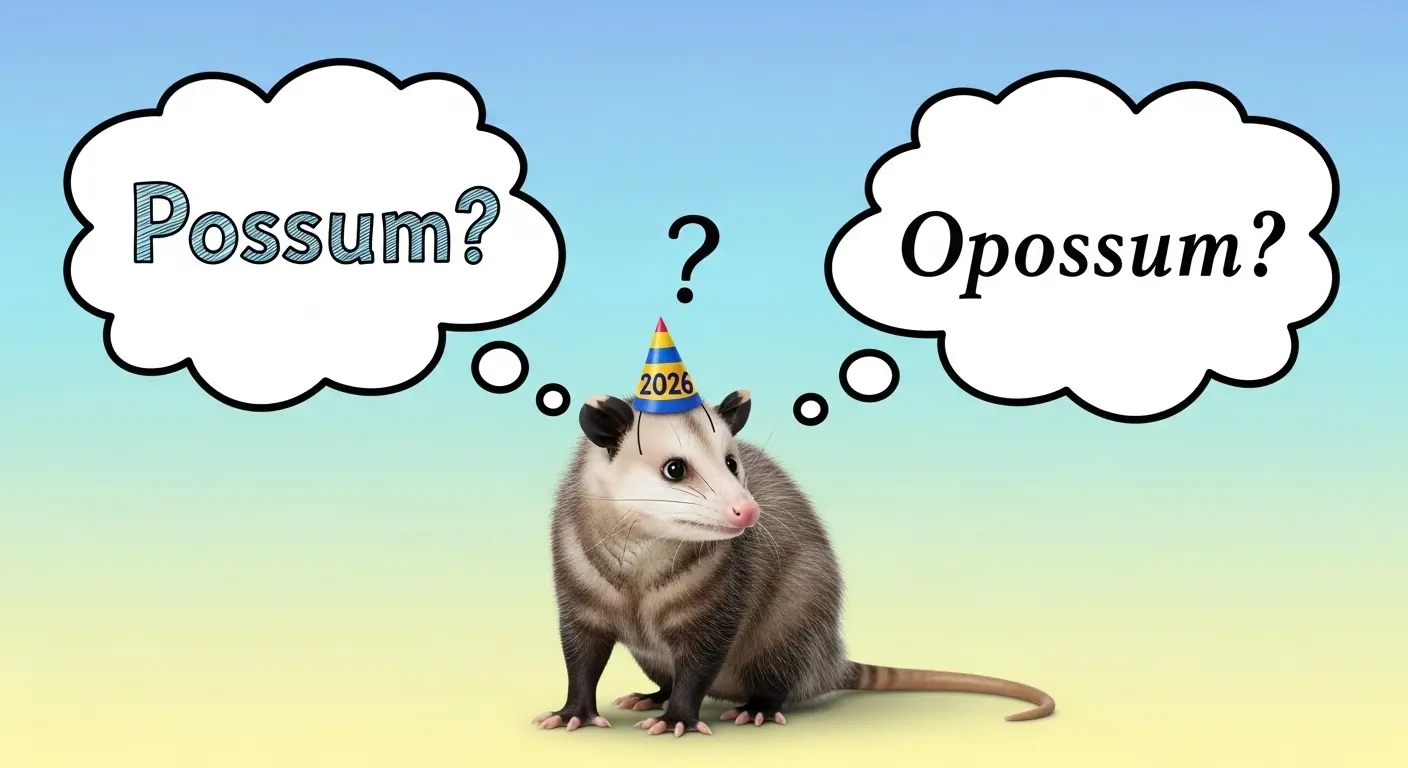
Have you ever wondered whether it’s “possum” or “opossum”? This is a common question for wildlife enthusiasts, writers, and anyone who enjoys reading about animals. People often search for this term because the two words look similar but are used differently depending on geography and context. Some might even confuse them as different species, but there’s more to it.
Understanding the difference helps avoid errors in writing, social media posts, educational content, and even casual conversations. While both words refer to marsupial animals, “opossum” is the formal term used in North America, whereas “possum” is commonly used in Australia and informal American English.
This article breaks down the difference, explains the origin, provides examples in everyday writing, and gives advice on which spelling to use depending on your audience.
By the end, you’ll know exactly when to use possum and when opossum is the correct choice.
Possum or Opossum – Quick Answer
Quick Answer:
- Opossum → Formal name for the marsupial native to North and South America. Example: “The opossum crossed the road at night.”
- Possum → Informal shorthand in the U.S., or the official name for a different marsupial in Australia. Example: “I spotted a possum in the backyard.”
Key Point: All opossums are marsupials, but not all possums are opossums.
| Term | Usage Context | Example Sentence |
| Opossum | North America, formal writing | The opossum scavenged near the dumpster. |
| Possum | Australia, informal US | A possum climbed the tree last night. |
The Origin of Possum or Opossum
The word “opossum” comes from the Powhatan Native American language, meaning “white animal.” Early European settlers in America adopted this term to describe the local marsupial.
Over time, “possum” emerged as a shortened, informal version in the U.S., especially in casual writing and speech. Meanwhile, Australian settlers used “possum” for their native marsupials, which are completely different species from American opossums.
- Opossum: Adopted by English settlers from Native American languages.
- Possum: Shortened version in informal English; also official term in Australia.
British English vs American English Spelling
| Feature | American English | British/Commonwealth English |
| Formal Marsupial Name | Opossum | Opossum |
| Informal Usage | Possum | Less common |
| Australian Marsupial | N/A | Possum (different species) |
| Examples | The opossum ran. | Possum spotted in Australian bush. |
Summary: American English prefers opossum in formal writing. British English may adopt the term in academic writing but generally recognizes possum only for Australian marsupials.
Which Spelling Should You Use?
- U.S. Audience: Use opossum for formal writing, “possum” is okay informally.
- UK/Commonwealth Audience: Use opossum in scientific writing. Use possum only for Australian species.
- Global/General Writing: Default to opossum, as it is universally understood and avoids confusion.
Common Mistakes with Possum or Opossum
| Mistake | Why It’s Wrong | Correct Usage |
| Using “possum” for US species in formal writing | Informal slang, not recognized scientifically | Opossum |
| Confusing Australian possums with North American opossums | Different animals, different habitats | Clarify context: “Australian possum” vs “North American opossum” |
| Spelling “opasum” or “posum” | Typos | Always use opossum or possum |
| Mixing plural forms | Incorrect grammar | Opossums / Possums |
Possum or Opossum in Everyday Examples
Emails:
- “We saw an opossum near the office parking lot last night.”
News Articles:
- “Opossums help control pests in urban areas.”
Social Media:
- “Look at this cute possum I spotted in my garden!”
Formal Writing:
- “The Virginia opossum is the only marsupial native to North America.”
Possum or Opossum – Google Trends & Usage Data
- United States: “Opossum” is 4x more searched than “possum” in formal contexts.
- Australia: “Possum” dominates searches due to native species.
- UK & Canada: Low search volume, mostly in educational or wildlife articles.
Trends: Interest spikes in spring and summer when marsupials are more visible.
| Keyword | Popularity Region | Notes |
| Opossum | USA | Academic, formal usage |
| Possum | Australia | Native species, informal US |
| Possum | USA | Informal, casual speech |
Comparison Table – Possum vs Opossum
| Aspect | Possum | Opossum |
| Formality | Informal (US), Official (AU) | Formal (US & global) |
| Region | Australia, USA | North & South America |
| Species | Different marsupial species | North American marsupial |
| Writing Context | Casual, wildlife blogs | Academic, wildlife articles |
FAQs:
- Is possum the same as opossum?
No. In the U.S., “possum” is informal; in Australia, it refers to a different animal. - Which spelling is correct in formal writing?
Use opossum in North American formal writing. - Can I use possum in casual speech?
Yes, in the U.S., “possum” is acceptable in informal conversations. - Do opossums exist outside the Americas?
No, true opossums are native to the Americas only. - Are Australian possums marsupials?
Yes, but they belong to a different family than American opossums. - How do I pluralize opossum?
Opossums (not opossumses). - Is possum accepted in British English?
Only when referring to Australian species; otherwise, use opossum. - Are possums dangerous?
Generally, they are harmless and avoid humans. - Why do Americans say possum sometimes?
It’s a shortened, informal version of opossum for casual speech.
Conclusion:
Understanding whether to use possum or opossum depends on context, audience, and geography. If you’re writing for a North American audience or producing formal content, opossum is the safest choice. Use possum only in informal U.S. contexts or when referring to Australian species.
By knowing the origin and differences, you can confidently write about these fascinating marsupials without confusion. Remember, clarity matters more than slang, and using the correct term improves readability and professionalism. Check your audience, consider your context, and always use proper capitalization for names in articles, reports, or educational materials.
Next time you see one crossing the street, you can correctly call it either a possum or opossum depending on where you are and who you’re talking to.

I am an Emily Carter Brooks U.S.A based linguistics writer known for my clear, reader-friendly explanations of English grammar and vocabulary differences. I have contributed to multiple online language resources and specializes in spelling variations, pronunciation confusion, and British vs American English comparisons. I believes that learning English should be practical, engaging, and stress-free.