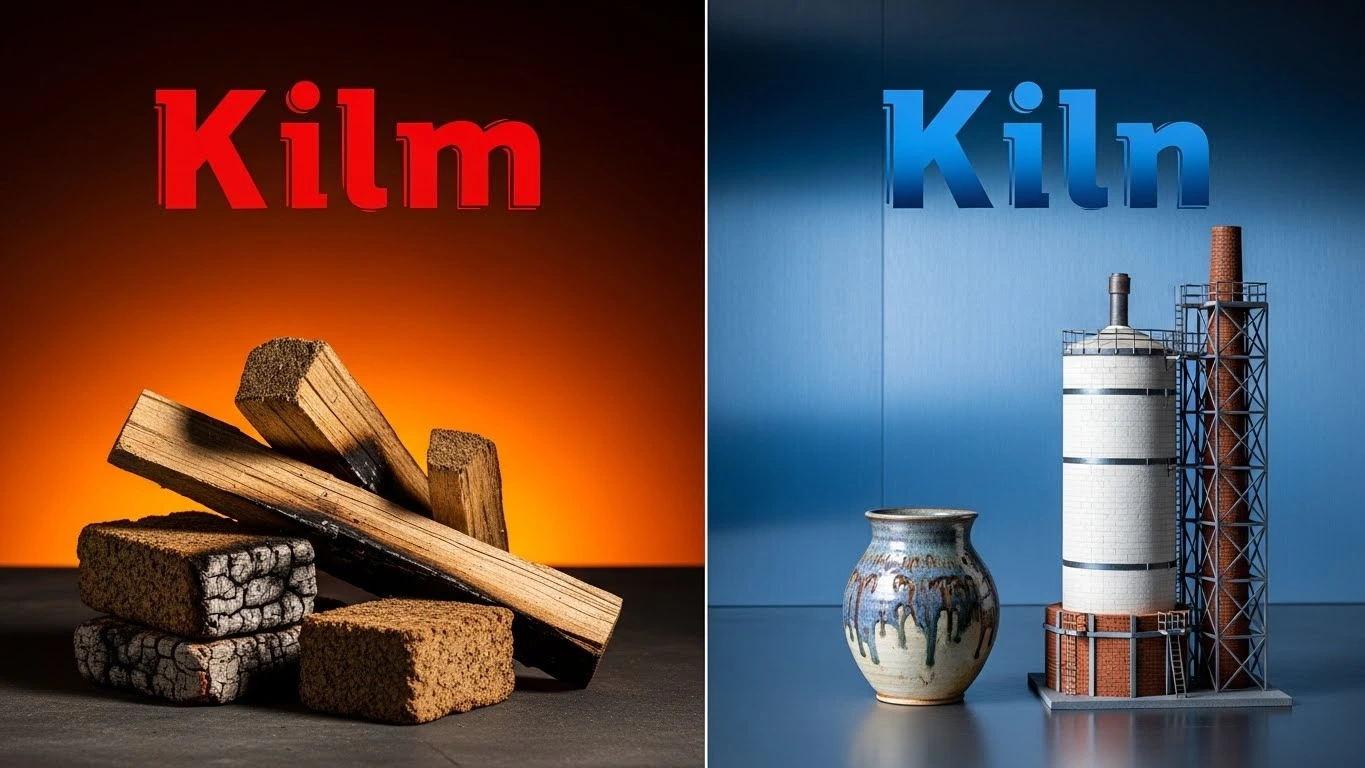
Many people search for “kilm or kiln” because they have seen both spellings and want a quick, clear answer. This confusion often appears when writing about pottery, ceramics, brick-making, or even metaphorical uses in writing. One spelling looks right, the other looks like a typo—but which one is correct?
The problem comes from pronunciation and spelling habits. The word is spoken as “kiln” (often sounding like “kil”), which makes people think “kilm” might be acceptable. Autocorrect, fast typing, and unfamiliarity with the term make the confusion worse. Students, professionals, bloggers, and even journalists commonly pause before using it.
This article solves that problem fully. You’ll get a quick answer, the history behind the word, British vs American spelling rules, and clear advice on which spelling to use. You’ll also see real-life examples, common mistakes, and usage trends. By the end, you’ll know exactly which word is correct—and why—so you can write with confidence every time.
Read more about;
Pheonix or Phoenix
Weren’t or Wasn’t
Kilm or Kiln – Quick Answer
Kiln is the correct spelling.
Kilm is incorrect and considered a spelling error.
A kiln is a high-heat oven used to fire clay, pottery, bricks, or glass.
Example:
- Correct: The potter fired the bowls in a kiln.
- Incorrect: The potter fired the bowls in a kilm.
There is no accepted context where kilm is correct in standard English.
The Origin of Kiln
The word kiln comes from Old English cyln, which came from the Latin word culina, meaning “kitchen” or “cooking place.” Over time, the spelling changed, but the meaning stayed linked to heat and firing.
The silent “n” at the end of kiln causes confusion. English kept the letter in spelling but softened it in speech. This mismatch between spelling and pronunciation is common in English and explains why people sometimes write kilm instead.
The spelling difference exists because English spelling evolved slowly, while pronunciation changed faster.
British English vs American English Spelling
There is no spelling difference between British and American English for this word.
Both use kiln.
| Variant | British English | American English |
| Correct spelling | kiln | kiln |
| Alternative form | ❌ kilm | ❌ kilm |
| Pronunciation | “kil” | “kil” |
Unlike words such as colour/color, kiln stays the same worldwide.
Which Spelling Should You Use?
Use kiln in all cases.
- US audience: Use kiln
- UK & Commonwealth: Use kiln
- Global or academic writing: Use kiln
If you use kilm, it will appear unprofessional and may hurt clarity, SEO, and credibility.
Common Mistakes with Kilm or Kiln
Here are frequent errors people make:
- Writing kilm instead of kiln
- Removing the silent “n”
- Assuming kilm is a British variant
- Trusting autocorrect errors
Correction tip:
Remember: It looks harder than it sounds.
Kilm or Kiln in Everyday Examples
Emails
- ✔️ The tiles will be ready after the kiln cycle.
- ❌ The tiles will be ready after the kilm cycle.
News
- ✔️ The artist rebuilt her kiln after the fire.
Social Media
- ✔️ Just unloaded my first pottery kiln!
Formal Writing
- ✔️ Ceramic strength depends on kiln temperature.
Kilm or Kiln – Google Trends & Usage Data
Search data shows that “kiln” is widely used and correctly spelled across the US, UK, Canada, and Australia. Searches for “kilm” usually come from spelling checks or mistakes.
Kiln is most popular in:
- Pottery and ceramics
- Construction and brick-making
- Art education
- Metaphorical writing (e.g., “a kiln of ideas”)
Kilm appears almost only as an error or clarification search.
Comparison Table: Kilm vs Kiln
| Feature | Kilm | Kiln |
| Correct English word | ❌ No | ✅ Yes |
| Dictionary accepted | ❌ No | ✅ Yes |
| Used in US English | ❌ | ✅ |
| Used in UK English | ❌ | ✅ |
| Professional writing | ❌ | ✅ |
FAQs
1. Is “kilm” ever correct?
No. It is always a spelling mistake.
2. Why is the “n” silent in kiln?
English kept the letter but softened the sound over time.
3. Do Americans and British spell kiln differently?
No. Both use kiln.
4. Is kiln hard to spell for learners?
Yes. Silent letters often cause confusion.
5. Can kiln be used metaphorically?
Yes. It can describe intense pressure or creation.
6. Does autocorrect cause the kilm error?
Sometimes, especially on mobile devices.
7. Is kiln a technical word?
Yes, but it’s common in art, construction, and education.
Conclusion
The confusion around kilm or kiln is simple but very common. The correct spelling is kiln, and it applies everywhere—American English, British English, and global writing. The mistake comes from pronunciation and silent letters, not from different language rules.
Understanding the origin of the word helps explain why it looks unusual. Knowing that there is no regional spelling difference removes doubt. Using kiln consistently improves clarity, professionalism, and trust in your writing.
Whether you are writing an email, an academic paper, a blog post, or a social media caption, choosing the correct spelling matters. When in doubt, remember this rule: if it fires clay or bricks, it’s a kiln—never a kilm.
With this knowledge, you can write confidently and avoid a mistake many others still make.

I am an Emily Carter Brooks U.S.A based linguistics writer known for my clear, reader-friendly explanations of English grammar and vocabulary differences. I have contributed to multiple online language resources and specializes in spelling variations, pronunciation confusion, and British vs American English comparisons. I believes that learning English should be practical, engaging, and stress-free.