Have you ever paused while writing “gem” and wondered if it should be spelled “jem” instead? This confusion is more common than you think. Words with silent letters or unusual pronunciations often spark debates over correct spelling.
Many English learners, writers, and even native speakers search for “gem or jem” to ensure they’re using the right form in emails, articles, or social media posts. Understanding the correct spelling can improve clarity and professionalism.
In this article, we will quickly clarify the difference between gem and jem, explore the origin of the word, compare British and American English spellings, show you common mistakes, and provide practical examples.
By the end, you’ll know exactly when to use each form and why one is standard in English. Whether you’re writing for school, work, or online content, this guide gives a complete answer in simple, easy-to-follow language.
Gem or Jem – Quick Answer
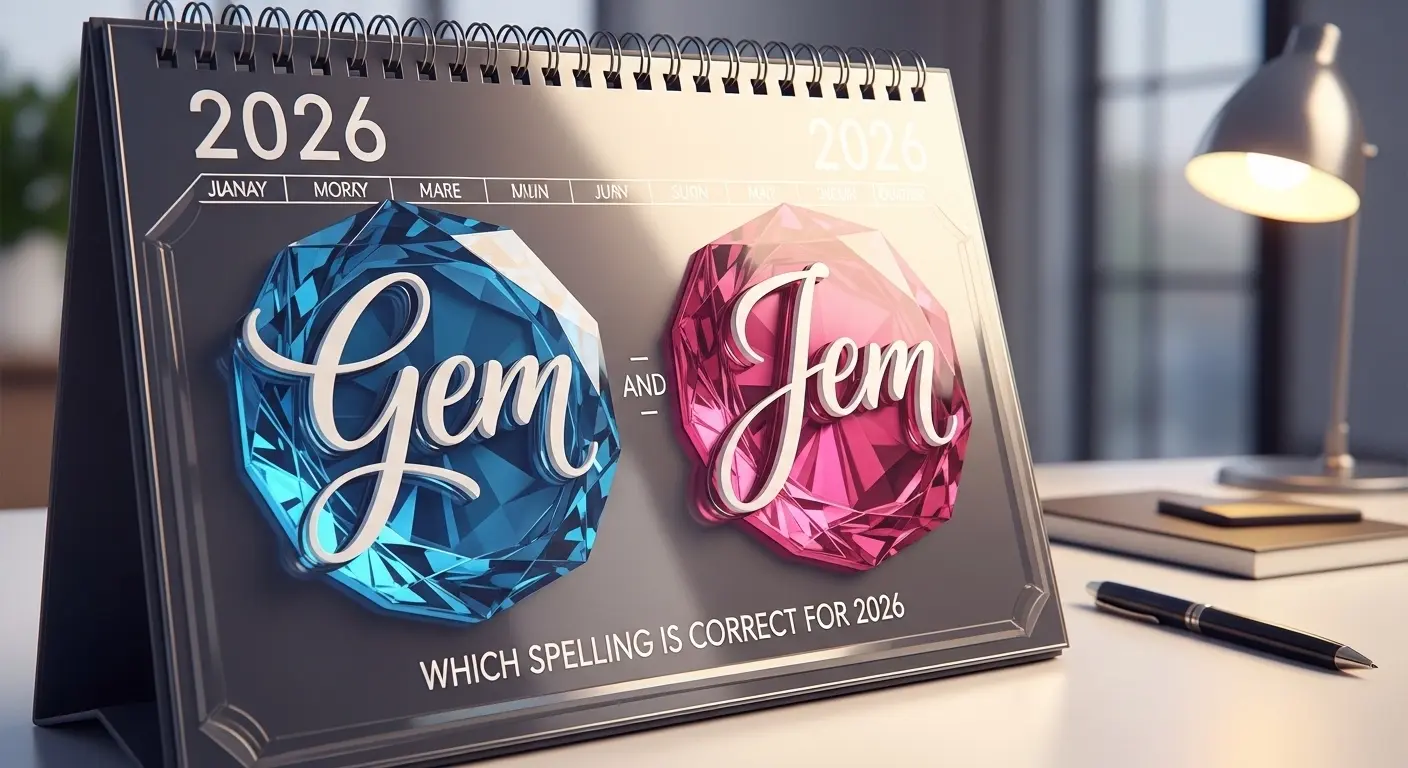
Gem is the correct and standard spelling in English.
- ✅ Gem: Correct
- Example: “She received a beautiful gem as a gift.”
- Example: “She received a beautiful gem as a gift.”
- ❌ Jem: Incorrect
- Example: “She received a beautiful jem as a gift.” ❌
- Example: “She received a beautiful jem as a gift.” ❌
The spelling “jem” is not recognized in standard dictionaries and is considered a misspelling. Sometimes, it appears in informal texts or as a personal/brand name, but it should never be used in formal writing.
The Origin of Gem or Jem
The word gem comes from the Latin “gemma”, meaning “bud” or “precious stone.” Over centuries, it passed through Old French as “gemme”, which influenced the English spelling we use today.
The spelling “jem” likely emerged due to phonetic writing, where people spell words based on pronunciation. While “gem” is pronounced with a soft /dʒ/ sound, some might mistakenly write it as jem because the letter “g” can sometimes sound like “j” in English.
British English vs American English Spelling
Fortunately, this word is simple: both British English and American English use gem. There is no variation in spelling between the two. Unlike words like “colour/color” or “organise/organize,” gem remains consistent worldwide.
| Feature | British English | American English |
| Standard Spelling | gem | gem |
| Common Mistake | jem | jem |
| Usage in Formal Writing | ✅ | ✅ |
So, whether you’re writing in London, New York, or Sydney, gem is always correct.
Which Spelling Should You Use?
For most readers and writers:
- Use gem in all contexts formal, informal, professional, or creative.
- Only consider jem if it is a brand name, nickname, or artistic choice.
Audience-based advice:
- US & UK/Commonwealth: Always use gem.
- Global audience: Gem is universally recognized; avoid jem to prevent confusion.
Common Mistakes with Gem or Jem
Many people make errors with this word, especially beginners learning English. Here are frequent mistakes:
- Jem instead of Gem
- ❌ “I bought a jem ring.”
- ✅ “I bought a gem ring.”
- ❌ “I bought a jem ring.”
- Using Gem as plural incorrectly
- ❌ “She has many gemes.”
- ✅ “She has many gems.”
- ❌ “She has many gemes.”
- Confusing Gem with Jem (name)
- ❌ “Jem is a gem in her class.” (if referring to a stone, not a person named Jem)
- ✅ “Gem is a precious stone.”
- ❌ “Jem is a gem in her class.” (if referring to a stone, not a person named Jem)
Gem in Everyday Examples
Here’s how gem appears in everyday writing:
- Email: “Thank you for sending the gem of advice it helped a lot.”
- News: “The museum displays rare gems from ancient civilizations.”
- Social Media: “Found a hidden gem in my city today!”
- Formal Writing: “Diamonds are considered the most valuable gems in jewelry.”
Notice how jem never appears in professional contexts.
Gem – Google Trends & Usage Data
Analyzing trends shows that gem is overwhelmingly more popular than jem.
- Top countries searching for “gem”: India, USA, UK, Canada
- Top countries searching for “jem”: Mostly brand or character names, not general spelling
- Context of searches: Jewelry, collectibles, idioms like “a hidden gem”
Comparison Table – Keyword Variations
| Keyword | Popularity | Correct Usage | Context |
| Gem | High | ✅ | Jewelry, idioms, formal writing |
| Jem | Low | ❌ | Rare, names, informal |
FAQs:
1. Is “jem” ever correct?
Only as a personal name or brand. Not in standard English spelling.
2. Can I use “gem” in emails?
Yes, it’s professional and widely understood.
3. How do I remember the correct spelling?
Think of G for “Gold” → Gem.
4. Are there similar words with spelling confusion?
Yes, like “jewel” vs “juwel” (incorrect).
5. Is “gems” the plural?
Yes, the plural of gem is gems.
6. Can “gem” be used metaphorically?
Absolutely—“She’s a gem of a person” is common.
7. Is “jem” used in UK English?
No, it’s considered a mistake.
8. Is gem pronounced the same in British and American English?
Yes, both pronounce it as /dʒem/.
9. Are there idioms with “gem”?
Yes, e.g., “hidden gem,” “real gem,” commonly used in writing.
Conclusion:
When in doubt, always choose gem over jem. The word has a clear origin from Latin and French, is spelled consistently across British and American English, and appears frequently in professional, creative, and everyday contexts. Jem is not a standard spelling and should only appear as a proper name or brand.
Using gem correctly enhances clarity, credibility, and reader trust. Whether you’re writing an article, an email, or social media post, this one simple rule gem is the correct spelling will save you confusion and errors. Remember the idiom “hidden gem”: it’s a versatile expression that works in almost any context.
With this guide, you now have the full knowledge to use gem confidently in writing, formal or informal, across any English-speaking country. Stick with gem, avoid jem, and your writing will shine as brightly as the stones the word represents.

I am an Emily Carter Brooks U.S.A based linguistics writer known for my clear, reader-friendly explanations of English grammar and vocabulary differences. I have contributed to multiple online language resources and specializes in spelling variations, pronunciation confusion, and British vs American English comparisons. I believes that learning English should be practical, engaging, and stress-free.