Many English learners and writers often get confused between “either” and “neither.” Both words are used to refer to choices, but they are not interchangeable. Misusing them can change the meaning of your sentence entirely. Understanding the difference is essential, especially in emails, social media posts, and professional writing.
People frequently search for “either or neither” because they want quick clarity. Should you say “I don’t like either option” or “I like neither option”? Knowing the correct usage helps avoid awkward or incorrect sentences. This guide gives you a simple, step-by-step explanation, with examples, common mistakes, and practical advice for using either and neither confidently.
If you are a student, professional, or casual writer, this article will answer your questions, explain the origins of these words, compare British and American usage, and provide everyday examples.
By the end, you’ll know exactly when to use either and neither, and which version fits your audience best.
Either or Neither – Quick Answer
Quick Rule:
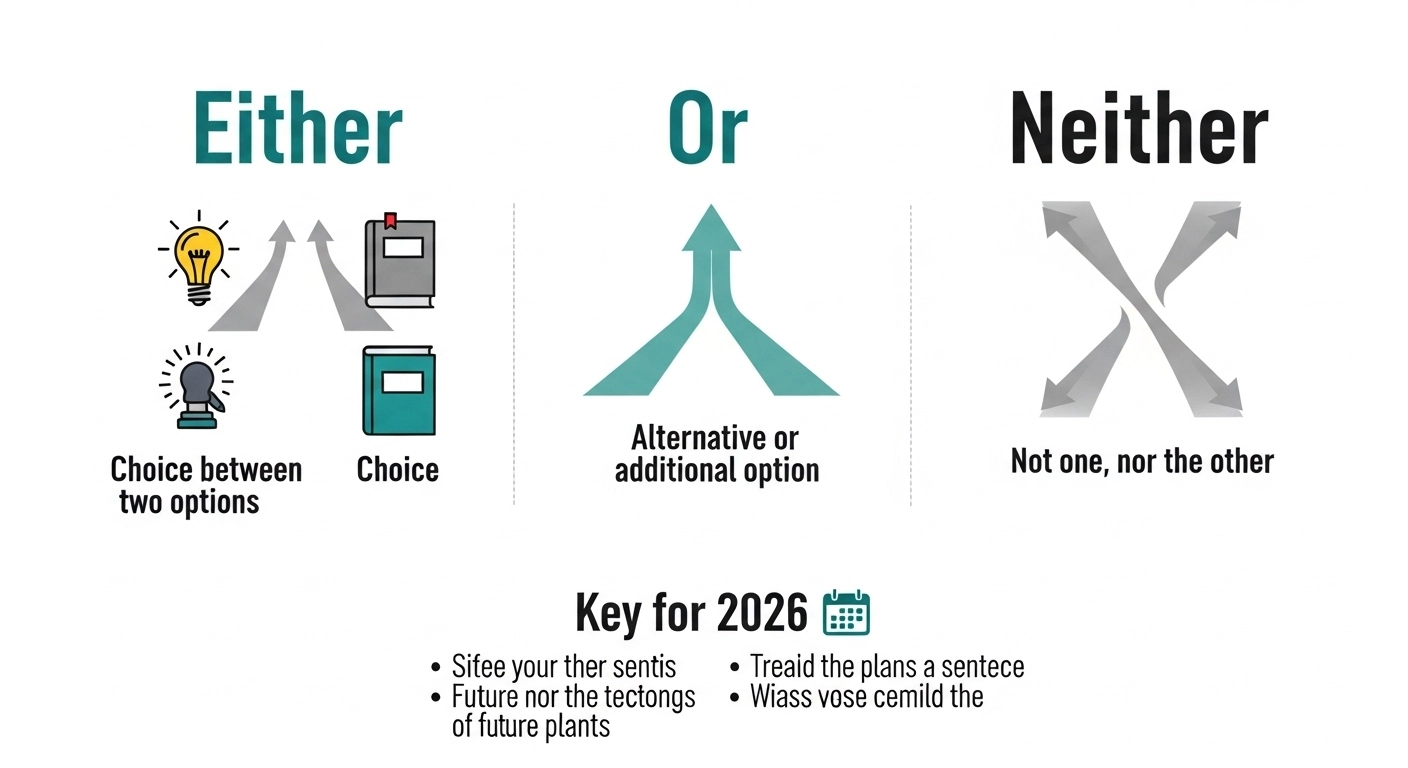
- Either → Refers to one or the other of two options.
- Neither → Refers to not one nor the other of two options.
Examples:
- Either: “You can choose either tea or coffee.” ✅
- Neither: “I like neither tea nor coffee.” ✅
Tips:
- Use either…or for positive choices.
- Use neither…nor for negative choices.
The Origin of Either and Neither
Both words come from Old English:
- Either: From ǣgther, meaning “each of two.”
- Neither: From nāhwæðer, meaning “not either” or “none of the two.”
Over centuries, these words kept their original meaning but evolved in spelling and usage. Either became the standard choice word for positive options, while neither stayed negative.
British English vs American English Usage
Both either and neither are spelled the same in UK and US English, but small usage preferences exist:
| Word | UK Usage Example | US Usage Example |
| Either | “You can take either road to London.” | “You can take either road to New York.” |
| Neither | “Neither of the solutions works.” | “Neither of the solutions works.” |
Key Difference:
In British English, sentences sometimes include “neither…nor” more formally, while American English often prefers “neither of the two options” in casual writing.
Which Should You Use?
- US Audience: Either for positive choices, neither for negative choices.
- UK/Commonwealth Audience: Same rules, but “neither…nor” is slightly more formal and common in writing.
- Global Audience: Stick with clear usage and avoid mixing either and neither in the same sentence incorrectly.
Common Mistakes with Either or Neither
- Incorrect: “I don’t like either tea nor coffee.” ❌
Correct: “I like neither tea nor coffee.” ✅ - Incorrect: “Neither of the two options is good, either.” ❌
Correct: “Neither of the two options is good.” ✅ - Incorrect: “Either of the solutions don’t work.” ❌
Correct: “Either of the solutions works.” ✅
Tip: Remember either = one/any, neither = not any.
Either or Neither in Everyday Examples
Emails:
- “You can select either time slot for the meeting.”
- “Neither of the proposed plans seems suitable.”
News:
- “Either candidate may win the election.”
- “Neither side admitted wrongdoing.”
Social Media:
- “You can pick either filter for your photo!”
- “Neither of my favorite shows are airing tonight 😩”
Formal Writing:
- “Either option will satisfy the project requirements.”
- “Neither argument supports the conclusion fully.”
Either or Neither – Google Trends & Usage Data
According to Google Trends:
- Either is slightly more common in global searches than neither.
- US users search more for “either or neither examples.”
- UK users prefer searches like “neither…nor usage.”
Usage Table Comparison:
| Term | Global Popularity | Common Context |
| Either | High | Choices, decisions, positive options |
| Neither | Moderate | Negative statements, exclusions |
Comparison Table – Either vs Neither
| Feature | Either | Neither |
| Meaning | One or the other | Not one or the other |
| Usage | Positive options | Negative options |
| Structure | Either…or | Neither…nor |
| Example | “You can take either route.” | “Neither route is safe.” |
FAQs:
1. Can either and neither be singular or plural?
- Yes. “Either option is good.” / “Neither options are correct.”
2. Is it correct to say “I don’t like either or neither”?
- No. Use only one: “I don’t like either” OR “I like neither.”
3. Can you use either without “or”?
- Yes, but context must make the choice clear. “Either works for me.”
4. Can neither be used in positive sentences?
- No. Neither is negative by definition.
5. Which is more formal, either or neither?
- Neither…nor is slightly more formal, especially in UK English writing.
6. Can either refer to more than two options?
- Traditionally, either is for two options only, though colloquial English may stretch this.
7. Can neither be used alone?
- Yes. Example: “Do you like coffee or tea?” – “Neither.”
8. Is there a pronunciation difference?
- Slight regional accents affect “either” (EE-thur vs AI-thur), but meaning stays the same.
Conclusion:
Using either and neither correctly is essential for clear, professional English. Either expresses a positive choice between two options, while neither shows that both options are not acceptable. Misusing these words can confuse readers, especially in formal emails, social media posts, or academic writing.
Understanding their origins, usage in British vs American English, and common mistakes helps you write with confidence. Always remember the structure: either…or for positive, neither…nor for negative.#
Keep your audience in mind US readers prefer simplicity, UK readers may appreciate formal neither…nor constructions. With practice, these words become second nature, ensuring your sentences are always precise and professional.

I am an Emily Carter Brooks U.S.A based linguistics writer known for my clear, reader-friendly explanations of English grammar and vocabulary differences. I have contributed to multiple online language resources and specializes in spelling variations, pronunciation confusion, and British vs American English comparisons. I believes that learning English should be practical, engaging, and stress-free.