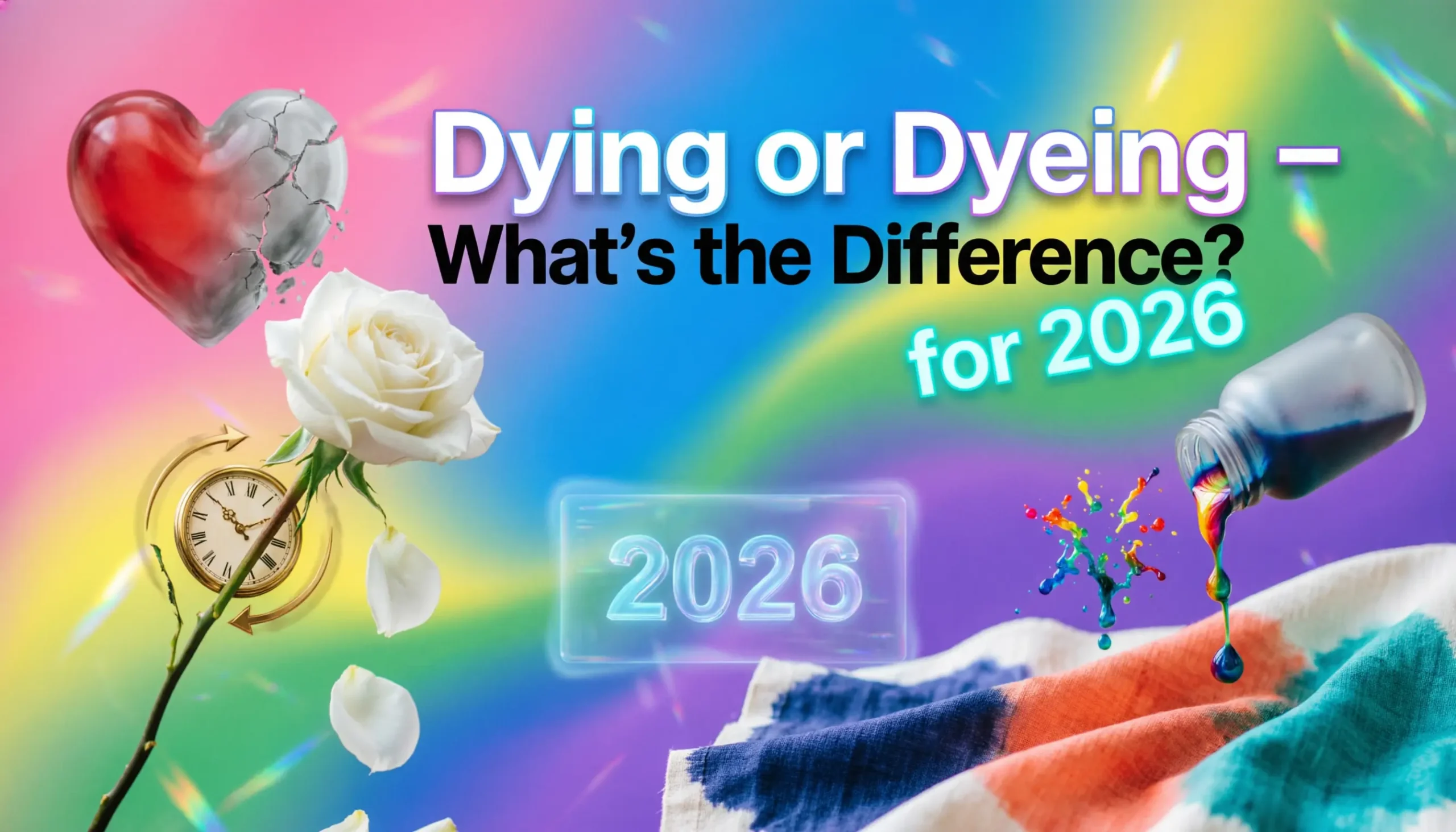
Many people get confused between dying and dyeing, but these two words have very different meanings. Understanding the difference can save you from embarrassing mistakes in writing, emails, or social media posts. While they sound almost identical, dying refers to death or the process of ceasing to live, whereas dyeing relates to coloring fabrics, hair, or other materials.
People often search for “dying or dyeing” because these words are homophones they sound the same but are spelled differently and have distinct meanings. This confusion is common in both casual writing and professional communication. For example, saying “I am dying my hair” instead of “I am dyeing my hair” could change the meaning entirely!
This guide will break down the differences, explain origins, compare British and American spellings, provide examples, and help you choose the right word every time.
By the end, you’ll confidently know which to use in emails, news articles, social media posts, and formal writing.
Dying or Dyeing – Quick Answer
| Word | Meaning | Example |
| Dying | To cease living; approaching death | The flowers are dying because they lack water. |
| Dyeing | Coloring something with dye | She is dyeing her hair red. |
Quick Tip: If it involves life ending → use dying. If it involves color → use dyeing.
The Origin of Dying or Dyeing
Dying comes from the Old English word dīegan, meaning to “pass away” or “fade out.” Its usage has been tied to life and mortality for centuries.
Dyeing, on the other hand, originates from the Old English dēag, which is related to coloring or staining. Over time, this evolved into the modern sense of adding color to fabrics, hair, or other materials.
The confusion occurs because the “y” sound is the same in both words, making them homophones, but context determines meaning.
British English vs American English Spelling
Both dying and dyeing are spelled the same in British and American English. There is no regional spelling difference, but usage context is important.
| Word | British English Usage | American English Usage | Notes |
| Dying | Widely used in all contexts | Widely used in all contexts | Refers to death or fading |
| Dyeing | Same as US | Same as UK | Refers to coloring materials |
Note: Always double-check context; no spelling shortcuts exist.
Which Spelling Should You Use?
- If writing for a UK or US audience: Follow the meaning rules; spelling remains the same.
- Global or international content: Keep dying for death-related topics and dyeing for coloring.
- Professional emails & social media: Double-check meaning to avoid embarrassing errors.
Common Mistakes with Dying or Dyeing
| Mistake | Correction | Explanation |
| I am dying my shirt. | I am dyeing my shirt. | “Dyeing” is for coloring. |
| The plant is dyeing slowly. | The plant is dying slowly. | “Dying” refers to the plant losing life. |
| She loves dying her hair. | She loves dyeing her hair. | Coloring is the action, not death. |
| He is dying the fabric. | He is dyeing the fabric. | Fabric coloring requires “dyeing.” |
| They are dying the eggs. | They are dyeing the eggs. | For Easter eggs or crafts → “dyeing.” |
Dying or Dyeing in Everyday Examples
Emails:
- Correct: “The team is concerned about the dying plants in the office.”
- Correct: “We are dyeing the uniforms blue for the event.”
News Articles:
- “Thousands of trees are dying due to drought.”
- “Local artists are dyeing fabrics naturally for the festival.”
Social Media:
- “Dyeing my hair pink today! #HairGoals”
- “Feeling like my motivation is dying… 😅”
Formal Writing:
- “The dying population of bees is a global concern.”
- “Natural fibers can be dyed with eco-friendly dyes.”
Dying or Dyeing – Google Trends & Usage Data
Search trends indicate that dying is more commonly searched due to general use in health, environment, and emotional contexts. Dyeing spikes during seasonal events (like Easter eggs), fashion, and hair coloring trends.
| Keyword | Peak Searches | Common Context |
| Dying | High | Death, plants, emotions |
| Dyeing | Moderate | Hair, clothes, crafts |
Comparison Table – Dying vs Dyeing
| Feature | Dying | Dyeing |
| Meaning | To die, to stop living | To color or stain materials |
| Part of Speech | Verb (also participle) | Verb (also participle) |
| Common Uses | Plants, animals, people | Hair, fabrics, Easter eggs |
| Homophone | Yes | Yes |
| Spelling Diff | None | None |
FAQs:
1. Can “dying” ever mean coloring?
No. Use dyeing for coloring anything.
2. Is “dyeing” used in biology?
Yes, in staining cells or samples under a microscope.
3. Are there regional differences in pronunciation?
Slight accent differences exist, but they remain homophones globally.
4. Can “dying” be used metaphorically?
Yes. “I am dying of laughter” is correct.
5. How do I remember the difference?
“Dye” = color → dyeing. “Die” = life ends → dying.
6. Is “dying hair” ever correct?
No, unless you are humorously implying death. Always use dyeing.
7. Is there a noun form for dyeing?
Yes. “The dyeing of silk requires skill.”
8. Can I use “dying” for flowers?
Yes. “The roses are dying because they were not watered.”
9. Is this confusion common online?
Very common, especially on social media and casual writing.
Conclusion:
Confusing dying and dyeing is common, but understanding their meanings makes writing precise and professional. Remember: dying involves death or fading, while dyeing involves adding color to fabrics, hair, or other materials. Context is crucial, and the spelling does not change between British and American English. Using the wrong word can lead to miscommunication, especially in formal or online writing.
By following this guide, you can confidently write emails, social media posts, news articles, and formal documents without errors. Always check whether you are discussing life or color before typing. Quick rules: if it relates to life ending → dying; if it relates to color → dyeing. Over time, this distinction will become second nature.
With proper usage, you ensure clarity, professionalism, and accuracy, saving yourself from embarrassing mistakes while communicating effectively.

I am an Emily Carter Brooks U.S.A based linguistics writer known for my clear, reader-friendly explanations of English grammar and vocabulary differences. I have contributed to multiple online language resources and specializes in spelling variations, pronunciation confusion, and British vs American English comparisons. I believes that learning English should be practical, engaging, and stress-free.