English is full of word pairs that look similar but mean completely different things. “Dual or duel” is one of the most confusing examples. A single letter changes everything from two things working together to two people fighting each other. Because they sound alike when spoken, many writers pause and ask: Is it dual or duel?
People search for “dual or duel” because they want a quick, confident answer. Students worry about exam mistakes, professionals want error-free emails, and content writers need accuracy for and credibility. A small spelling error can change the meaning of a sentence and make your writing look careless.
This guide clears up that confusion once and for all. You’ll learn the exact meaning of each word, where they come from, and how they are used in British and American English. You’ll also see real-life examples, common mistakes to avoid, and practical advice on which spelling to use depending on your audience.
By the end of this article, you’ll never mix up dual and duel again and you’ll be able to explain the difference to others with confidence.
Dual or Duel – Quick Answer
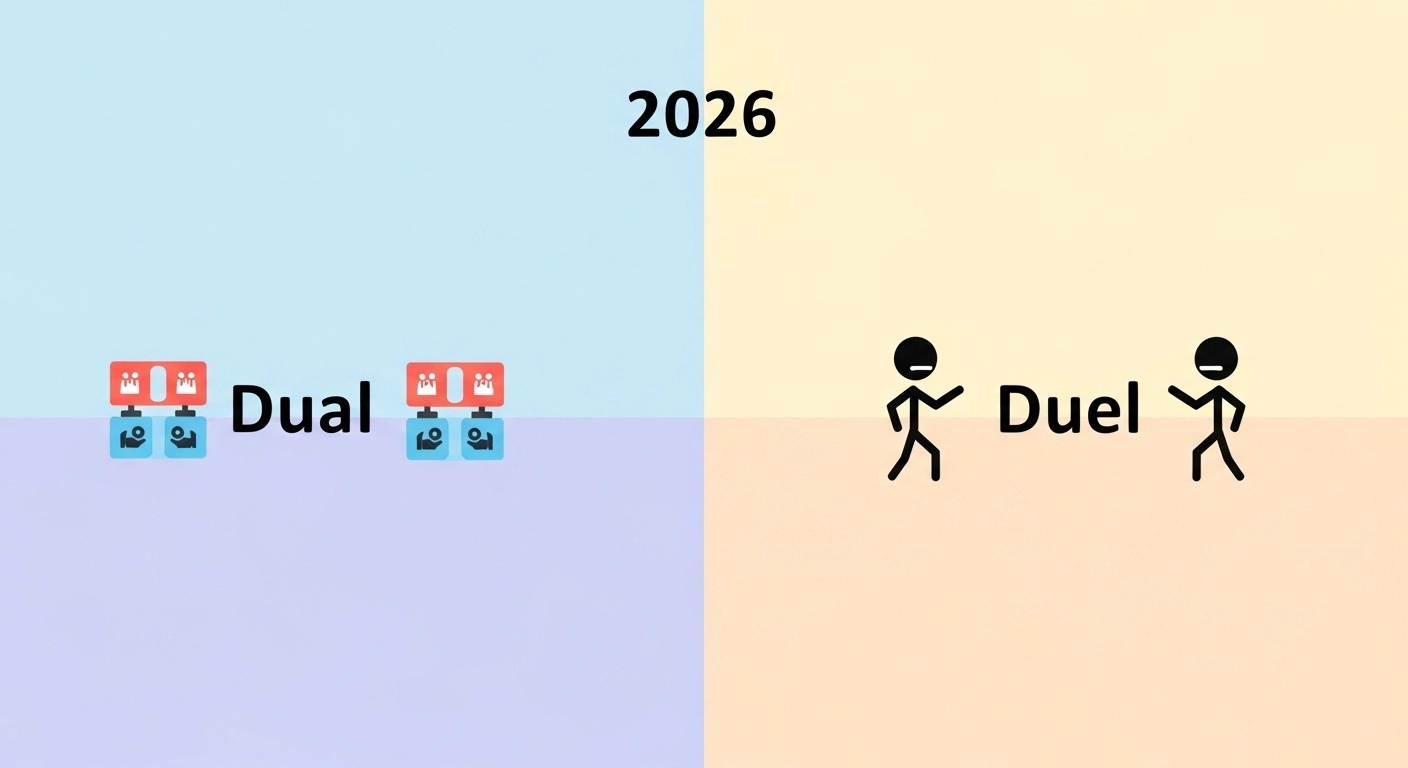
Dual means having two parts, functions, or roles.
Duel means a fight or contest between two people.
Examples
- She has a dual role as manager and trainer.
- The movie shows a dramatic duel between rivals.
- The phone supports dual SIM cards.
- The knights prepared for a sword duel.
Quick tip:
If it means two things, use dual.
If it means a fight, use duel.
The Origin of Dual or Duel
The confusion between dual and duel comes from their similar pronunciation, not their origin.
Origin of Dual
- Comes from Latin “dualis”, meaning twofold.
- Entered English in the early 17th century.
- Always related to the number two.
Origin of Duel
- Comes from Latin “duellum”, meaning war or combat.
- Popular in Europe during the age of formal one-on-one fights.
- Refers to conflict, not numbers.
Why the Spelling Difference Exists
Although both words relate to “two,” their meanings evolved differently. Dual stayed mathematical and functional, while duel became associated with honor, fighting, and competition.
British English vs American English Spelling
Good news: there is no spelling difference between British and American English for dual or duel.
Key Point
- Dual = same spelling and meaning in UK and US
- Duel = same spelling and meaning in UK and US
The confusion is not regional—it’s semantic.
Comparison Table
| Word | Meaning | British English | American English |
| Dual | Two parts or functions | Dual | Dual |
| Duel | A fight between two | Duel | Duel |
Which Spelling Should You Use?
Use the meaning not location to decide.
For US Audiences
- Use dual for features, roles, systems.
- Use duel for fights, debates, or contests.
UK & Commonwealth Audiences
- Same rule applies.
- No spelling changes needed.
Global Writing
- Choose based on context, not region.
- Always re-read the sentence and ask: Is this about two things or a fight?
Common Mistakes with Dual or Duel
Here are the most frequent errors:
❌ The app has a duel purpose.
✅ The app has a dual purpose.
❌ They entered a dual at dawn.
✅ They entered a duel at dawn.
Memory Trick
- Dual → U like two uses
- Duel → E like enemy
Dual or Duel in Everyday Examples
Emails
- “This position has a dual responsibility.”
- “Their rivalry led to a public duel of words.”
News
- “The phone offers dual camera technology.”
- “The politicians faced a verbal duel.”
Social Media
- “Love this dual tone feature!”
- “That comment section turned into a duel.”
Formal Writing
- “The system serves a dual function.”
- “The novel centers on a fatal duel.”
Dual or Duel – Google Trends & Usage Data
Search data shows dual is more common in:
- Technology
- Business
- Education
- Product descriptions
Duel is searched more in:
- Gaming
- Movies
- History
- Sports and debates
Regional Insight
- Dual is popular globally due to tech terms like dual SIM.
- Duel spikes during movie releases, games, or historical topics.
User intent usually depends on context, not geography.
Dual vs Duel – Side-by-Side Comparison
| Feature | Dual | Duel |
| Meaning | Two parts or roles | A fight between two |
| Context | Tech, work, design | Conflict, battle |
| Part of Speech | Adjective | Noun / Verb |
| Example | Dual purpose | Sword duel |
| Common Error | Used instead of duel | Used instead of dual |
FAQs:
1. Are dual and duel homophones?
Yes, they sound the same but have different meanings.
2. Can dual ever mean a fight?
No. Only duel means a fight.
3. Is “dual purpose” correct?
Yes. It means serving two purposes.
4. Is “verbal duel” correct?
Yes. It means a heated exchange of words.
5. Do British and American English use different spellings?
No. Both use dual and duel the same way.
6. Which word is more common in modern English?
Dual, due to technology and business use.
7. Can duel be used as a verb?
Yes. Example: They will duel at sunrise.
8. Is “dual duel” ever correct?
Only in rare contexts, like a duel with dual weapons.
Conclusion:
The difference between dual or duel is simple once you focus on meaning. Dual always relates to two parts, roles, or functions. Duel always refers to a fight, contest, or confrontation between two people. The confusion happens because they sound alike not because English rules are unclear.
There is no British or American spelling difference, which means writers worldwide must rely on context, not location. If your sentence is about technology, responsibilities, or features, dual is almost always the right choice. If it involves rivalry, combat, or debate, duel is the correct word.
Remember the quick test:
Two things? → Dual.
A fight? → Duel.
Master this pair, and your writing becomes sharper, clearer, and more confident.

I am an Emily Carter Brooks U.S.A based linguistics writer known for my clear, reader-friendly explanations of English grammar and vocabulary differences. I have contributed to multiple online language resources and specializes in spelling variations, pronunciation confusion, and British vs American English comparisons. I believes that learning English should be practical, engaging, and stress-free.