“Drunk or drank?” It’s a small question, but it causes big confusion. Many English learners and even native speakers pause when choosing between these two words. You may have heard sentences like “I have drank coffee” or “He was drunk tea” and wondered why they sound wrong. This confusion usually comes from mixing up verb tenses and grammar roles, not spelling.
People search for drunk or drank because both words come from the same verb drink, yet they are used in different ways. One is a simple past verb, while the other is a past participle. The problem? English often uses the past participle with helper verbs like have, has, or had, which makes things tricky.
This article solves that confusion step by step. You’ll get a quick answer, clear examples, grammar rules, British vs American usage, common mistakes, and real-life examples from emails, news, and social media. We’ll also look at usage trends and answer popular FAQs.
By the end, you’ll know exactly when to use drunk and when to use drank with confidence.
Drunk or Drank – Quick Answer
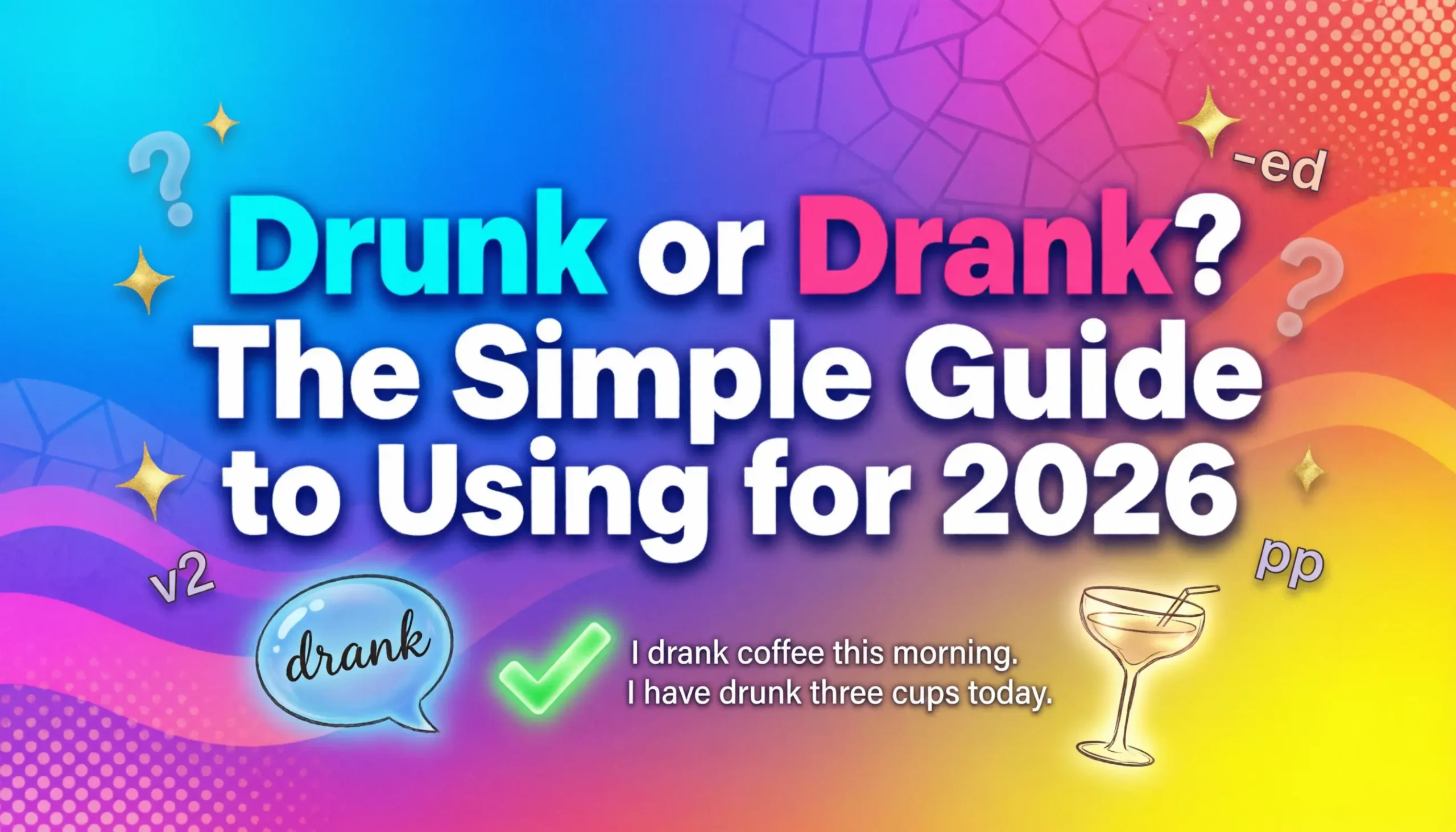
Drank is the simple past tense of drink.
Drunk is the past participle of drink.
Examples
- ✅ I drank water this morning.
- ✅ I have drunk water already.
- ❌ I have drank water. (Incorrect)
Rule to remember:
- Use drank alone (past action).
- Use drunk with have / has / had.
The Origin of Drunk or Drank
The verb drink comes from Old English drincan. Like many strong verbs, it changes its vowel to show tense:
- Present: drink
- Past: drank
- Past participle: drunk
This vowel shift is why English has forms like sing–sang–sung and drink–drank–drunk. The differences are not about spelling style, but about grammar history. Over time, English kept these forms instead of regular -ed endings.
British English vs American English Spelling
Good news: there is no spelling difference between British and American English for drank and drunk. The rules are exactly the same.
Comparison Table
| Form | British English | American English | Example |
| Present | drink | drink | I drink tea daily |
| Past | drank | drank | I drank tea |
| Past participle | drunk | drunk | I have drunk tea |
The confusion is grammatical, not regional.
Which Spelling Should You Use?
Choose based on sentence structure, not location.
- US audience: Follow standard grammar (drank vs drunk).
- UK/Commonwealth: Same rule applies.
- Global audience: Use correct tense for clarity and professionalism.
If your sentence includes have/has/had, drunk is almost always the right choice.
Common Mistakes with Drunk or Drank
❌ I have drank coffee.
✅ I have drunk coffee.
❌ She drunk all the juice yesterday.
✅ She drank all the juice yesterday.
Tip: If you can remove have/has/had, you probably need drank.
Drunk or Drank in Everyday Examples
Emails
- I drank too much coffee before the meeting.
- I have drunk the water you left for me.
News
- The driver admitted he had drunk alcohol.
- Witnesses said he drank heavily that night.
Social Media
- Just drank my third cup of tea ☕
- I’ve drunk enough coffee for today.
Formal Writing
- Participants who had drunk alcohol were excluded from the study.
Drunk or Drank – Google Trends & Usage Data
Search data shows that “drunk or drank” is most popular in:
- English-learning countries
- Exam-focused regions
- Professional writing and ESL contexts
People often search this keyword after seeing corrections online or being unsure in writing emails and posts. Drank appears more in storytelling, while drunk is common in formal and completed actions.
Comparison Table: Drunk vs Drank
| Word | Grammar Role | Used With Helper Verb? | Example |
| drank | Simple past | No | I drank water |
| drunk | Past participle | Yes | I have drunk water |
FAQs:
1. Is “I have drank” ever correct?
No. It should be I have drunk.
2. Can drunk mean alcohol only?
No. It’s a verb form, not just an adjective.
3. Is drank informal?
No. It’s grammatically correct in past tense.
4. Why does English have both forms?
Because drink is an irregular verb.
5. Do British people say drank differently?
No. The rule is the same everywhere.
6. Which is correct: “had drank” or “had drunk”?
Had drunk is correct.
7. Is “drunk water” wrong?
No. I have drunk water is correct.
Conclusion:
The confusion between drunk or drank comes from grammar not spelling, accent, or country. Drank is used for simple past actions, while drunk works as a past participle with helper verbs like have, has, or had. Once you understand this difference, choosing the right word becomes easy.
Remember:
- Past action alone → drank
- Completed action with helper verb → drunk
Both British and American English follow the same rule, so you don’t need to change usage based on audience only structure. Avoid common mistakes, especially “have drank”, and your writing will instantly sound more professional.
Master this pair, and your English will feel cleaner, clearer, and more confident.

I hold a degree in English Literature and Linguistics and have worked extensively on educational blogs, comparison websites, and digital learning platforms. My writing focuses on simplifying complex language rules, highlighting British vs American English differences, and providing practical examples for everyday usage.