Have you ever paused while writing and wondered whether to use drily or dryly? You’re not alone. This small spelling difference confuses many writers, students, and even professionals. Both words look correct, both sound the same, and both appear in dictionaries so which one should you actually use?
People often search for “drily or dryly” because they want a quick answer for writing emails, essays, or online posts. The confusion usually comes from English spelling rules, which are not always consistent. Some words follow patterns, while others break them. That’s exactly what happens here.
The good news is simple: both spellings are correct. But they are not used equally. One is more common in modern writing, while the other is more traditional. Knowing when to use each can make your writing clearer and more professional.
In this guide, you’ll get a quick answer, examples, spelling rules, and tips. By the end, you’ll know exactly which version to use and why.
Drily or Dryly – Quick Answer
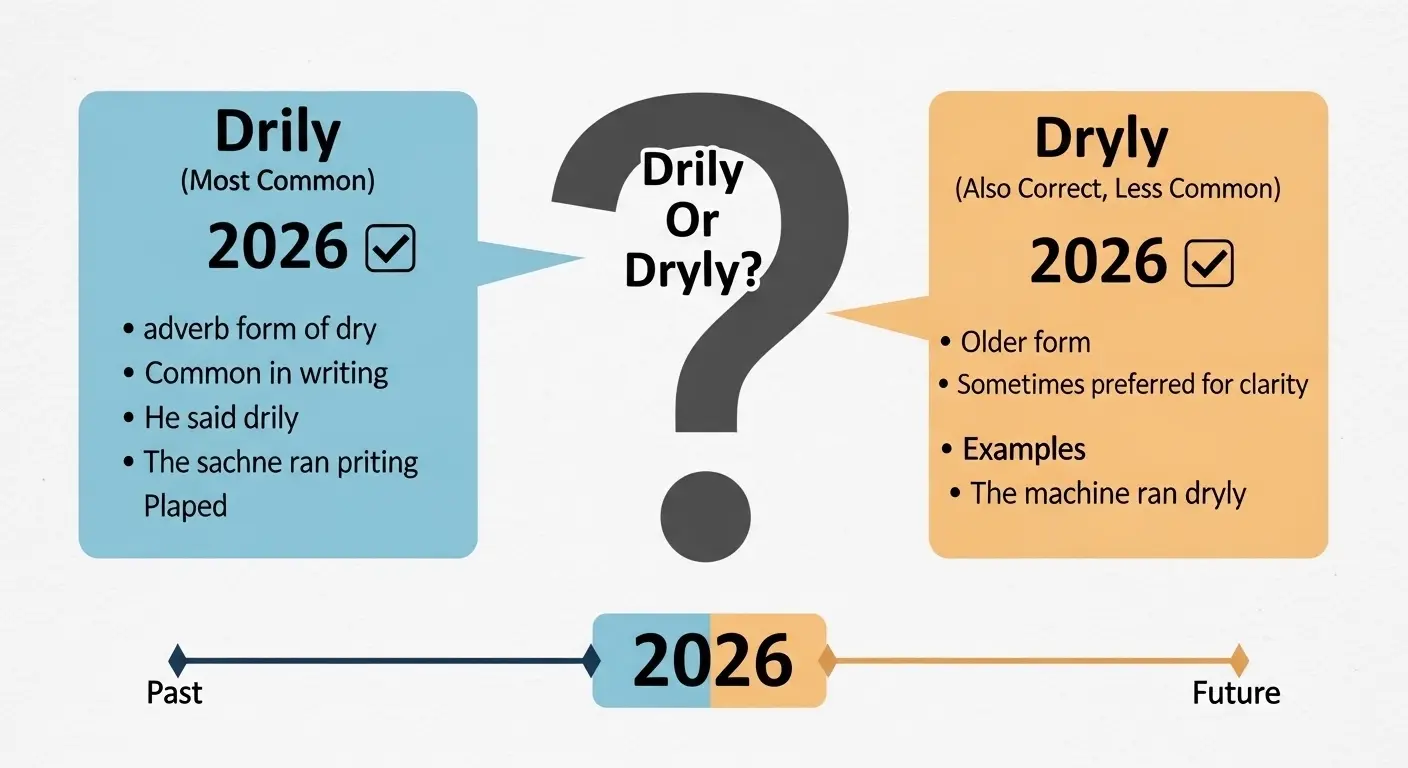
Both drily and dryly are correct spellings. They mean the same thing:
in a dry, dull, or slightly sarcastic way.
However:
- Dryly → more common and modern
- Drily → older and less used
Examples:
- She spoke dryly about the issue.
- He smiled drily at the joke.
👉 In most cases, you should use dryly.
The Origin of Drily or Dryly
The word comes from the adjective “dry.” When turning adjectives into adverbs, English usually adds -ly.
So:
- dry → dry + ly = dryly
But English has a history of spelling changes. In older forms of English, writers sometimes dropped letters or changed patterns. This led to the alternative spelling:
- dry → dri + ly = drily
This variation followed a pattern where the “y” changes to “i” before adding “-ly.” This rule appears in words like:
- happy → happily
- easy → easily
Because of this rule, drily became acceptable. Over time, both spellings stayed in use.
Today, dryly follows the more direct and modern pattern, so it is more popular.
British English vs American English Spelling
Both British and American English accept drily and dryly. However, usage trends differ slightly.
- Dryly is more common worldwide
- Drily appears more in older or formal texts
Comparison Table
| Feature | Dryly | Drily |
| Meaning | Same | Same |
| Usage frequency | High | Low |
| Modern writing | Preferred | Rare |
| British English | Common | Less common |
| American English | Very common | Rare |
👉 Both are correct, but dryly is safer in all regions.
Which Spelling Should You Use?
Choosing between drily and dryly depends on your audience.
Use “dryly” if:
- You are writing for a global audience
- You want modern, clear writing
- You are writing emails, blogs, or articles
Use “drily” if:
- You prefer traditional or literary style
- You are writing historical or formal texts
Simple advice:
- 🇺🇸 US audience → dryly
- 🇬🇧 UK/Commonwealth → dryly (still preferred)
- 🌍 Global writing → dryly
👉 Best choice: dryly in almost all cases.
Common Mistakes with Drily or Dryly
Here are some common errors and how to fix them:
1. Thinking one spelling is wrong
❌ “Drily is incorrect.”
✔ Both are correct.
2. Mixing styles in one document
❌ Using dryly and drily together
✔ Stick to one spelling (preferably dryly)
3. Overthinking the rule
❌ Trying to apply strict grammar rules
✔ Accept both, choose the common one
4. Using the wrong tone
❌ “He spoke dryly” (when meaning “seriously”)
✔ Use it for sarcasm or dull tone
Drily or Dryly in Everyday Examples
Here’s how the word appears in real-life writing:
Emails
- She replied dryly, “Noted.”
News
- The minister dryly dismissed the claim.
Social Media
- He dryly joked about the situation.
Formal Writing
- The author dryly comments on the issue.
Casual Conversation
- She said dryly, “That was fun,” but she looked bored.
👉 In all these cases, dryly sounds natural and modern.
Drily or Dryly – Google Trends & Usage Data
Search and usage data show a clear pattern:
- Dryly is searched more often worldwide
- Drily appears less in modern searches
- Writers prefer dryly in blogs, articles, and media
Popularity by Region:
- United States → dryly dominates
- United Kingdom → dryly more common
- Global usage → strong preference for dryly
👉 Conclusion: dryly is the dominant spelling today.
Comparison Table: Drily vs Dryly
| Aspect | Dryly | Drily |
| Correct spelling | Yes | Yes |
| Meaning | In a dull or sarcastic way | Same |
| Popularity | Very high | Low |
| Modern usage | Preferred | Rare |
| Ease of use | Simple | Less familiar |
| Recommended | ✅ Yes | ⚠️ Only in special cases |
FAQs:
1. Is “drily” wrong?
No, it is correct. It is just less common today.
2. Which is more popular: drily or dryly?
Dryly is much more popular in modern English.
3. Do both words mean the same thing?
Yes, they have exactly the same meaning.
4. Why are there two spellings?
English spelling rules and history created both forms.
5. Is “dryly” American and “drily” British?
Not exactly. Both are used in both regions, but dryly is more common everywhere.
6. Which spelling should I use in essays?
Use dryly for clarity and modern style.
7. Can I use “drily” in formal writing?
Yes, but it may sound old-fashioned.
8. Is “dryly” easier to understand?
Yes, most readers recognize dryly faster.
Conclusion:
The choice between drily and dryly may seem small, but it matters for clear writing. Both spellings are correct and have the same meaning: describing something said in a dull, serious, or slightly sarcastic way. The difference lies in usage and style.
Dryly is the modern, widely accepted spelling. It appears more often in everyday writing, online content, and professional communication. On the other hand, drily is older and less common. While still correct, it may feel outdated or unfamiliar to many readers.
If your goal is clear and effective communication, the best choice is simple: use dryly. It works well for emails, articles, social media, and formal writing. It also avoids confusion for global audiences.
Understanding small differences like this helps improve your writing skills. It also builds confidence when choosing the right words. So next time you hesitate, remember: both are correct but dryly is the better choice in most cases.

I hold a degree in English Literature and Linguistics and have worked extensively on educational blogs, comparison websites, and digital learning platforms. My writing focuses on simplifying complex language rules, highlighting British vs American English differences, and providing practical examples for everyday usage.