Have you ever typed “a or an” into Google and wondered why it looks strange? You are not alone. Many people search this phrase because they are confused about English articles like “a” and “an.” Sometimes, typing mistakes or autocorrect turn “an” into “anr,” which adds more confusion.
The real question most users want answered is simple: When do we use “a,” and when do we use “an”? This small grammar rule can change how professional your writing looks. It matters in emails, exams, blog posts, and even social media captions.
If English is not your first language, this rule may seem tricky. Even native speakers make mistakes. The good news? The rule is simple once you understand it.
In this complete guide, you will get:
- A quick and clear answer
- The origin of “a” and “an”
- British vs American usage
- Common mistakes
- Real-world examples
- Google Trends insights
- FAQs and expert advice
Let’s make it easy.
A or Anr – Quick Answer
The correct phrase is “a or an.”
“Anr” is not a word in English. It is usually a typing mistake.
The Simple Rule:
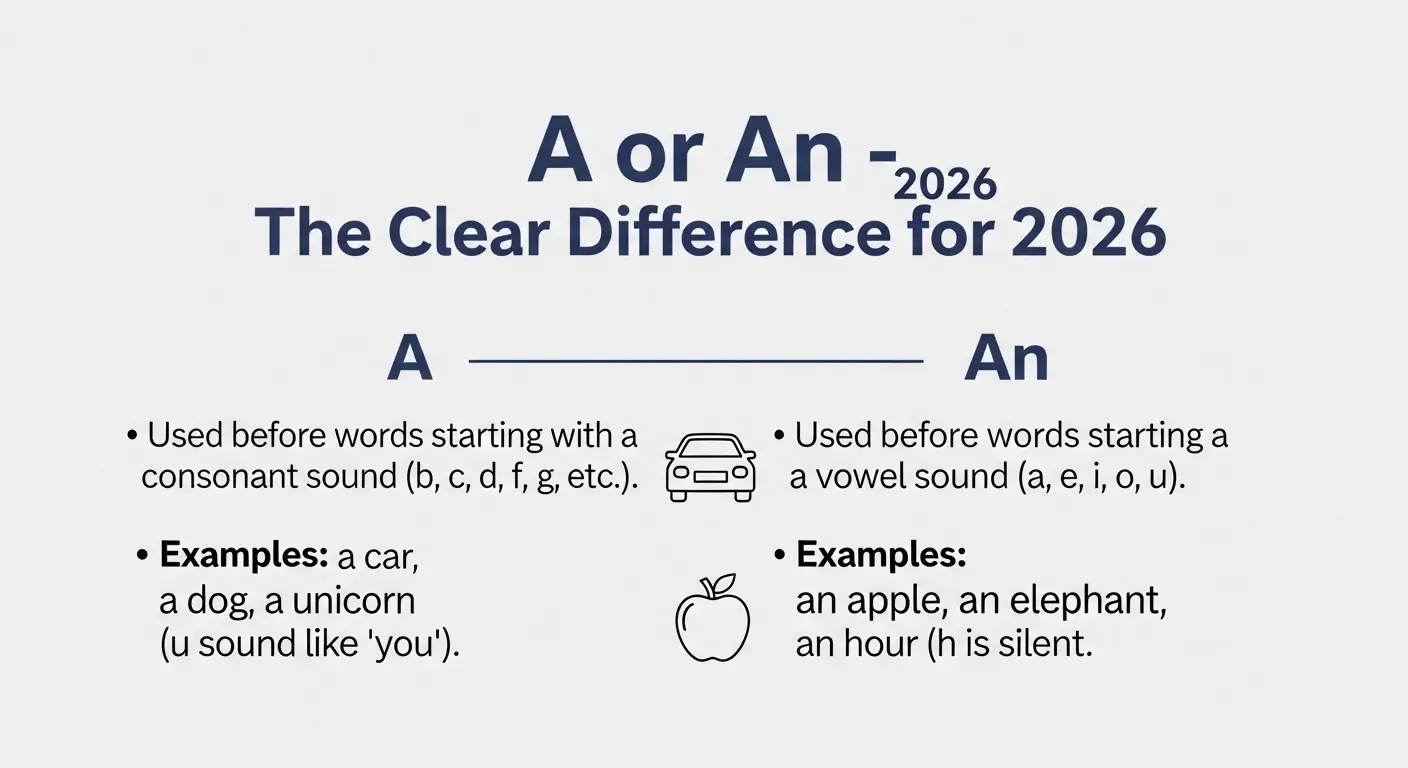
- Use “a” before words that start with a consonant sound.
- Use “an” before words that start with a vowel sound.
Examples:
- a cat
- a book
- a university (because it sounds like “you”)
- an apple
- an hour (the “h” is silent)
- an umbrella
It is about sound, not just spelling.
❌ Incorrect: an university
❌ Incorrect: a apple
❌ Incorrect: anr apple
✅ Correct: a university
✅ Correct: an apple
That’s the quick answer.
The Origin of A or Anr
The words “a” and “an” come from the Old English word “ān,” which meant “one.”
Over time:
- “ān” changed into “an.”
- Later, speakers dropped the “n” sound before consonants.
- That created two forms: “a” and “an.”
Why Does “Anr” Exist?
“Anr” does not come from history. It appears because of:
- Typing errors
- Fast mobile typing
- Autocorrect mistakes
- Voice-to-text errors
There is no dictionary meaning for “anr.” It is not British or American spelling. It is simply an error.
British English vs American English Spelling
Good news: There is no difference between British and American English for “a” and “an.” Both use the same rule.
Countries like the United Kingdom and the United States follow the same grammar rule.
Rule in Both Versions:
Use “a” before consonant sounds.
Use “an” before vowel sounds.
Comparison Table
| Situation | British English | American English |
| Before consonant sound | a car | a car |
| Before vowel sound | an orange | an orange |
| Silent “h” word | an hour | an hour |
| “U” with “you” sound | a university | a university |
| “Anr” spelling | Incorrect | Incorrect |
As you can see, there is no spelling difference.
Which Spelling Should You Use?
You should always use:
- “A”
- “An”
Never use “anr.”
If Your Audience Is in the US
Follow standard American grammar rules. Use “a” and “an” based on sound.
If Your Audience Is in the UK or Commonwealth
Use the same rule. There is no change.
If You Write for a Global Audience
Stick to standard grammar. Everyone understands “a” and “an.”
Avoid typing errors like “anr.”
Professional tip: If you see “anr” in your writing, correct it immediately.
Common Mistakes with A or Anr
Here are frequent mistakes people make:
1. Focusing on Letters Instead of Sound
❌ a apple
✅ an apple
2. Forgetting Silent Letters
❌ a hour
✅ an hour
3. Misunderstanding “U” Words
❌ an university
✅ a university
Why? Because it sounds like “you-niversity.”
4. Writing “Anr” by Mistake
❌ anr example
✅ an example
5. Using “An” Before Acronyms Incorrectly
It depends on pronunciation:
- an MBA (because it sounds like “em-bee-ay”)
- a NASA scientist (because it sounds like “nah-suh”)
Remember: It is about sound.
A or Anr in Everyday Examples
Here is how you use them in daily writing.
In Emails
- I need a report by Monday.
- She is an expert in marketing.
In News Headlines
- A new law was passed.
- An accident happened downtown.
On Social Media
- I bought an amazing book today!
- That was a great movie.
In Formal Writing
- This is an important issue.
- He gave a clear explanation.
Never write “anr” in professional content. It reduces credibility.
A or Anr – Google Trends & Usage Data
Search data shows that many users type “a or anr” when they mean “a or an.”
This usually happens in:
- Countries where English is a second language
- Mobile searches
- Quick grammar checks
In countries like:
- India
- Pakistan
- Philippines
Users often search basic grammar rules.
In English-speaking countries, searches focus more on tricky cases like:
- a historic vs an historic
- a hotel vs an hotel
The popularity of this keyword shows that people want:
- Quick grammar help
- Clear rules
- Simple explanations
And now you have it.
Comparison Table: A vs An vs Anr
| Word Form | Meaning | Correct? | When to Use |
| A | Indefinite article | ✅ Yes | Before consonant sound |
| An | Indefinite article | ✅ Yes | Before vowel sound |
| Anr | Not a word | ❌ No | Never |
Keep this table in mind.
FAQs:
1. Is “anr” a real English word?
No. It is a typing mistake.
2. What is the rule for “a” and “an”?
Use “a” before consonant sounds and “an” before vowel sounds.
3. Do British and American English differ here?
No. Both follow the same rule.
4. Why do people search “a or anr”?
Because of typing errors and confusion about articles.
5. Is it “a historic” or “an historic”?
Modern English usually prefers “a historic.”
Some British speakers say “an historic,” but it is less common now.
6. Is it “a MBA” or “an MBA”?
Correct: an MBA (because it sounds like “em-bee-ay”).
7. Is it “a hour” or “an hour”?
Correct: an hour (silent “h”).
8. Is it based on spelling or sound?
It is based on sound.
Conclusion:
The confusion around “a or an” is easy to solve. The correct phrase is “a or an.” The word “anr” is not real English. It appears because of typing mistakes or autocorrect errors.
The rule is simple and works the same in both British and American English. Use “a” before consonant sounds and “an” before vowel sounds. Focus on pronunciation, not just the first letter.
This small rule has a big impact. Correct article usage makes your writing clear, smooth, and professional. It improves emails, essays, blog posts, and social media content.
If you remember only one thing, remember this:
Listen to the sound of the word that follows.

I am an Emily Carter Brooks U.S.A based linguistics writer known for my clear, reader-friendly explanations of English grammar and vocabulary differences. I have contributed to multiple online language resources and specializes in spelling variations, pronunciation confusion, and British vs American English comparisons. I believes that learning English should be practical, engaging, and stress-free.