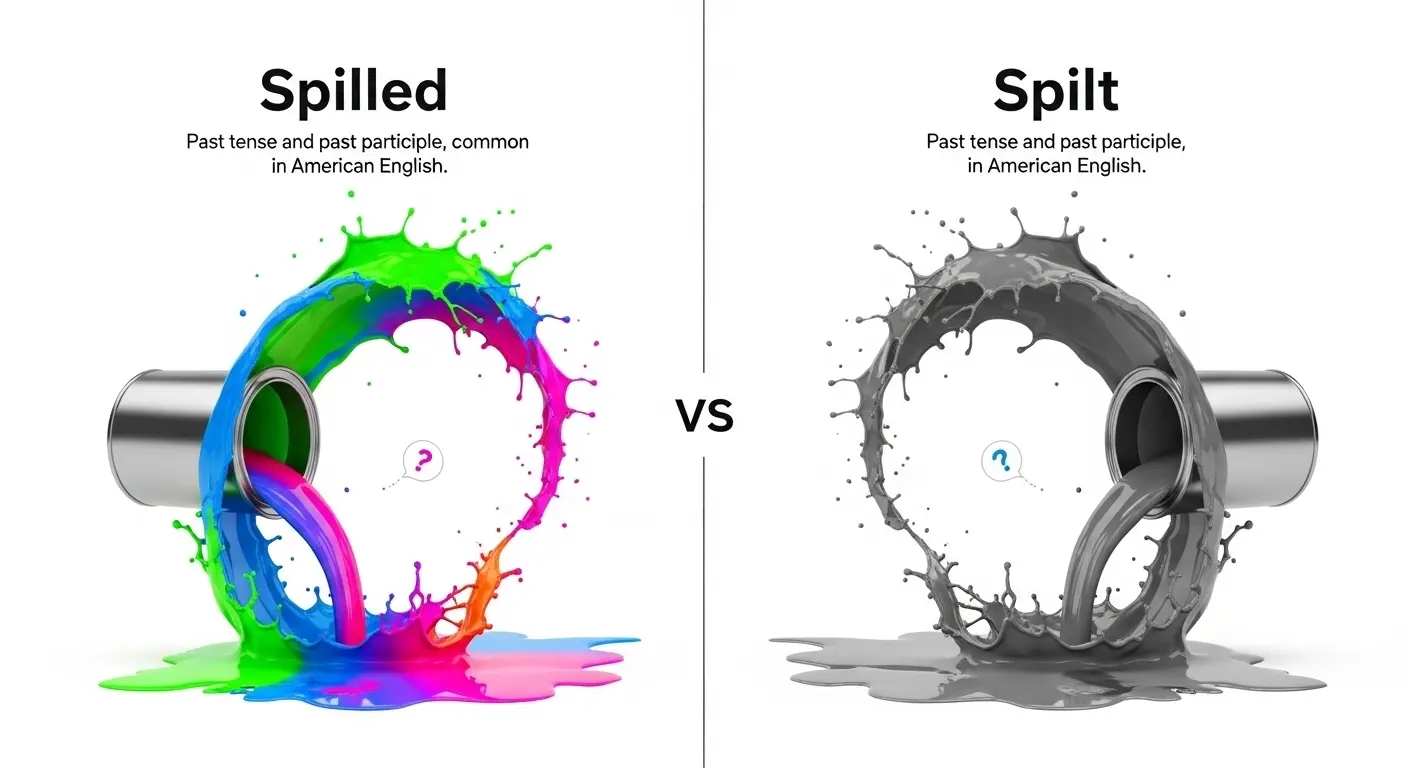
Choosing between spilled and spilt can confuse many English speakers. Both are past tense forms of the verb spill, but their usage depends on geography, style, and context. People often search for this distinction when writing emails, articles, or social media posts and want to ensure they use the correct form.
This guide clears up the confusion with simple explanations, examples, and professional advice. By the end, you’ll know when to use spilled and when spilt works best.
Understanding this difference also helps with reading comprehension. British and American English treat these words differently, so knowing the rules can improve clarity and credibility.
If you’re a student, professional, or writer, this guide ensures your writing is polished, accurate, and regionally appropriate. Let’s dive into the details.
Spilled or Spilt – Quick Answer
- Spilled The standard past tense and past participle in American English.
Example: She spilled her coffee on the table. - Spilt Mostly used in British English, often in literary or informal contexts.
Example: He spilt the beans about the surprise party.
Key tip: In everyday writing for a global audience, spilled is safer.
The Origin of Spilled or Spilt
The verb spill comes from Old English spillan, meaning “to destroy or waste.” Over time, English developed two forms for its past tense:
- Spilled follows the regular past tense pattern by adding -ed.
- Spilt an irregular variant, similar to other past tense forms like felt or built.
The divergence in spelling grew stronger between American and British English during the 18th and 19th centuries. While Americans favored spilled, British writers often chose spilt, especially in poetry and novels.
British English vs American English Spelling
| Form | Region | Usage Example |
| Spilled | American | I accidentally spilled juice on my desk. |
| Spilt | British | She spilt her tea all over the carpet. |
Rule of thumb:
- Use spilled in professional American writing.
- Spilt works for British English in informal or literary settings.
Which Spelling Should You Use?
- For US audiences: Always use spilled.
- For UK/Commonwealth audiences: Spilt is acceptable, but spilled is also widely understood.
- Global audiences: Spilled is safer for clarity in international communications.
Common Mistakes with Spilled or Spilt
- Incorrect: She spilted the milk.
Correct: She spilt the milk. - Incorrect: He spilt his keys yesterday. (in US English)
Correct: He spilled his keys yesterday. - Using spilt in formal US business writing can appear outdated or overly British.
- Confusing spill with spill over or spill out the past tense still follows the same rule: spilled (US) / spilt (UK).
Spilled or Spilt in Everyday Examples
- Emails:
US: I accidentally spilled coffee on my report.
UK: I spilt tea on the desk during the meeting. - News Headlines:
“Oil Spilled into River” (US)
“Wine Spilt at Gala Dinner” (UK) - Social Media:
“I just spilled my latte 😭” - Formal Writing:
Avoid spilt in US reports; use spilled for clarity.
Spilled or Spilt – Google Trends & Usage Data
- Popularity: Google Trends shows spilled dominates in the US and globally.
- Spilt has higher usage in the UK, Ireland, and Commonwealth countries.
- Context: Spilled appears more in news, blogs, and corporate content. Spilt appears more in literature and informal British writing.
| Keyword | US (%) | UK (%) | Global (%) |
| Spilled | 80 | 55 | 70 |
| Spilt | 20 | 45 | 30 |
FAQs:
1. Can I use spilt in American English?
It’s understood but considered outdated or overly British. Spilled is recommended.
2. Is spilled always correct in the UK?
Yes, it’s widely accepted and avoids confusion.
3. Are there other irregular verbs like spilt?
Yes, verbs like smelt/smelled, dreamt/dreamed follow a similar UK/US difference.
4. Which is more formal: spilled or spilt?
Spilled is more formal and neutral, suitable for professional writing globally.
5. Can spilt be used in idioms?
Yes, e.g., “spill the beans” → “spilt the beans” in UK English.
6. Does it matter in spoken English?
Not much. The difference is mainly in spelling for written communication.
7. Which is safer for global audiences?
Always spilled, to avoid regional confusion.
8. Are there common misspellings?
Yes: spilted, spiled, or confusing with splattered.
Comparison Table: Spilled vs Spilt
| Feature | Spilled | Spilt |
| Region | US, global | UK, Commonwealth |
| Formality | Neutral/formal | Informal/literary |
| Usage Example | She spilled coffee. | She spilt coffee. |
| Recommendation for Writing | ✅ Use globally | ⚠ Use in UK informal/literary contexts |
Conclusion:
The choice between spilled and spilt depends mainly on your audience. Spilled is safe, formal, and universally understood, especially in American English. Spilt carries a British flavor and appears more in literature or informal contexts. When writing for global readers, spilled avoids confusion and maintains clarity. Always double-check your spelling when writing professionally or for publications.
By understanding the origin, usage, and regional preferences, you can confidently select the correct form every time. Remember, the main difference is geographic: Americans use spilled, Britons use spilt, but spilled works almost anywhere. Use these guidelines to improve your writing, ensure readability, and maintain a professional tone across emails, articles, and social media.

I hold a degree in English Literature and Linguistics and have worked extensively on educational blogs, comparison websites, and digital learning platforms. My writing focuses on simplifying complex language rules, highlighting British vs American English differences, and providing practical examples for everyday usage.