In today’s fast-paced digital world, you might often see “op” or “opp” in social media posts, gaming chats, and online forums. But which one is correct? The confusion arises because both terms exist in informal and slang contexts, but they are used differently depending on region, community, or platform.
People search for “op or opp” because they want to write accurately, avoid misunderstandings, and sound up-to-date with internet culture.
Understanding the difference is especially important for teenagers, gamers, content creators, and even professionals who interact online. Using the wrong form can change the meaning of your message or make it seem like you are out of touch.
In this article, we will explore the quick answer, the origin of the words, spelling differences, common mistakes, and examples of how to use them correctly in everyday writing. By the end, you’ll confidently know when to type op and when opp is more appropriate, keeping your communication clear and precise.
Op or Opp – Quick Answer
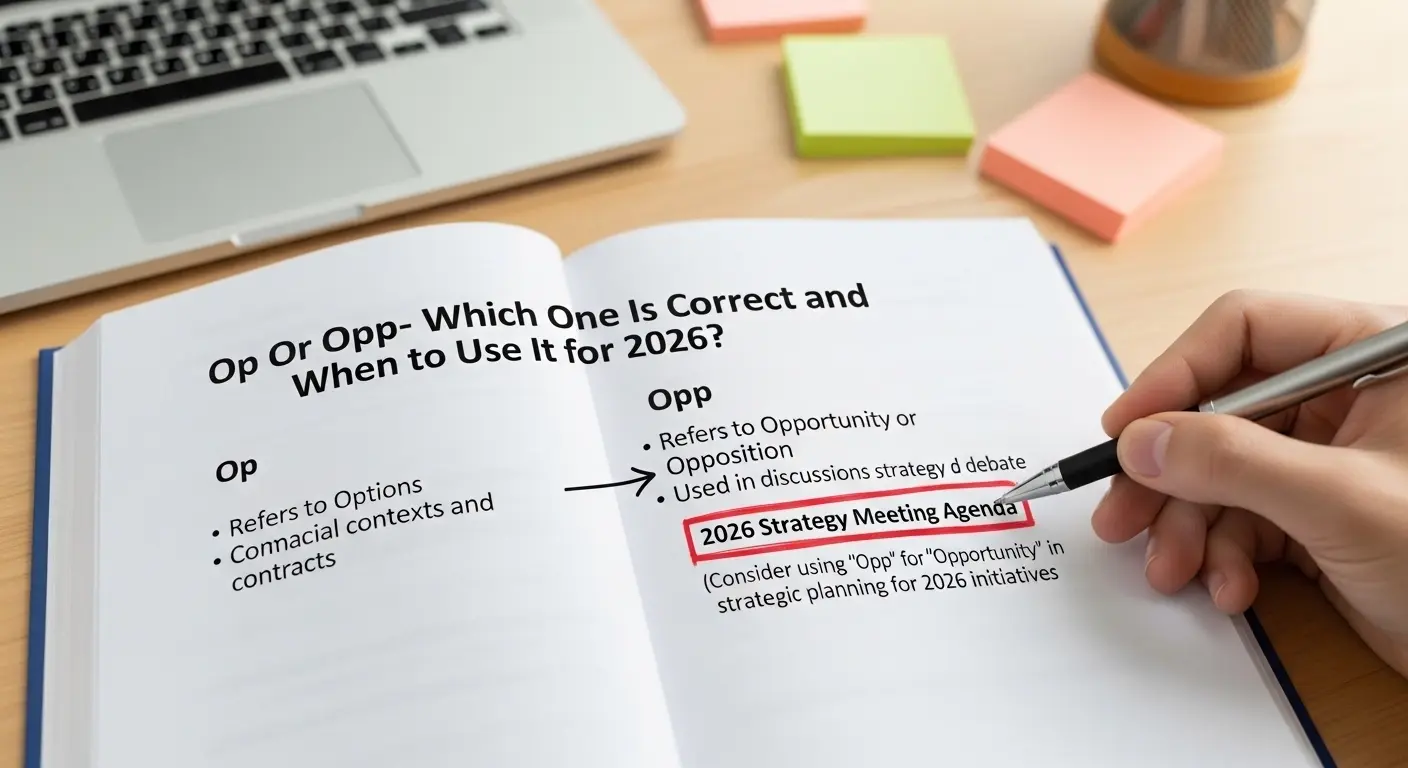
Op is short for “opponent” or “original poster” depending on context:
- Gaming / Fighting Context: “Op” refers to an opponent.
Example: “Watch out for that op in the next round.” - Online Discussions / Forums: “Op” refers to the original poster.
Example: “The op asked a great question about grammar.”
Opp is mainly slang, often used in urban culture, meaning enemy or someone you are against.
Example: “He’s my opp, so I don’t trust him.”
✅ Quick Rule:
- Use op for formal or semi-formal online discussions.
- Use opp in informal slang or hip-hop culture contexts.
The Origin of Op or Opp
- Op: Comes from abbreviating opponent in gaming and online forums. It has been in use since the early 2000s when online gaming became popular. In forums like Reddit, “op” naturally evolved to mean “original poster.”
- Opp: Originates from opposition, shortened and adapted in African American Vernacular English (AAVE) and hip-hop culture. It is widely used in music, social media, and urban slang since the 2010s.
Both forms are derived from English words but serve different social and digital contexts.
British English vs American English Spelling
Interestingly, op and opp do not have traditional British vs American spelling rules because they are slang or abbreviations. However, usage preferences can vary:
| Spelling | Meaning | Typical Region / Context | Example |
| Op | Opponent / Original Poster | US & UK forums, gaming, online discussions | “The op started this thread.” |
| Opp | Enemy, foe, someone opposed | Mainly US (urban slang, hip-hop) | “Don’t mess with my opps.” |
Key Takeaway: “Op” is universally understood online; “opp” is context-specific and culturally tied to US urban slang.
Which Spelling Should You Use?
- For US gamers or forum users: Stick to op unless quoting slang.
- For UK or Commonwealth English users: Use op for clarity; opp may confuse readers.
- Global audience: Prefer op in professional or neutral writing.
Rule of thumb: When in doubt, op is safer. Use opp only in casual, cultural, or music-related contexts.
Common Mistakes with Op or Opp
- Using opp in professional forums instead of op.
❌ Wrong: “The opp asked a question about taxes.”
✅ Correct: “The op asked a question about taxes.” - Confusing op and opp in messaging.
❌ Wrong: “He is my op.” (if referring to an enemy)
✅ Correct: “He is my opp.” - Assuming both words are interchangeable outside slang.
- Spelling errors like oppe or opz – avoid them.
- Using opp in formal writing (reports, emails, news).
Op or Opp in Everyday Examples
Emails / Formal Writing:
- “The op requested further information regarding the project.”
Social Media / Messaging:
- “Don’t trust him; he’s my opp.”
Gaming Chats:
- “Focus on the op near the left corner.”
News Articles / Blogs:
- Rarely uses opp; prefers opponent or op for brevity.
Pop Culture / Music:
- “All my opps can’t touch this” commonly seen in lyrics or TikTok captions.
Op or Opp – Google Trends & Usage Data
- Op shows consistent searches globally for gaming, forums, and online communities.
- Opp spikes in US-based searches linked to music, urban culture, and social media slang.
- Countries like US, UK, Canada, and Australia mainly search for op in gaming or discussion contexts.
Keyword Variations Comparison Table
| Variation | Meaning | Usage Context | Example |
| Op | Opponent / Original Poster | Gaming, forums | “The op needs help.” |
| Opp | Enemy / Rival | Slang, hip-hop | “He’s my opp in the game.” |
| OP | Original Poster (formal) | Forums | “OP asked an interesting question.” |
FAQs:
1. Is “op” the same as “opp”?
No. “Op” can mean opponent or original poster. “Opp” is slang for enemy. Context matters.
2. Can I use “opp” in professional emails?
No. Use op or the full word “opponent” instead.
3. Where did “opp” originate?
It comes from opposition, shortened in urban slang and hip-hop culture.
4. Which is more common online: op or opp?
Globally, op is more common due to gaming and forum use.
5. Can “op” mean original poster in all forums?
Mostly yes, but check the platform rules or community usage.
6. Is “opp” used outside the US?
Rarely; mostly in American music, social media, and youth culture.
7. Should I always use lowercase?
Yes. Both op and opp are lowercase in informal use; OP is acceptable for “Original Poster” in forums.
8. Can “op” refer to a positive person?
It usually means neutral (poster) or opponent, not positive/negative inherently.
Conclusion:
Understanding the difference between op and opp is crucial for clear online communication. Op is versatile, safe for gaming, forums, and professional discussions, while opp is culturally specific, slang-heavy, and mainly used in the US for rivals or enemies. Using the wrong term can confuse readers or signal unfamiliarity with internet culture.
When writing for a global or professional audience, op is the preferred choice. For casual, music, or youth slang contexts, opp fits naturally. Paying attention to context, audience, and region ensures your writing is accurate, relevant, and culturally aware. Remember, mastering small distinctions like these improves your credibility, whether in gaming, social media, or professional communication. By following the guidelines here, you can confidently navigate online conversations, understand trends, and avoid common mistakes.

I hold a degree in English Literature and Linguistics and have worked extensively on educational blogs, comparison websites, and digital learning platforms. My writing focuses on simplifying complex language rules, highlighting British vs American English differences, and providing practical examples for everyday usage.