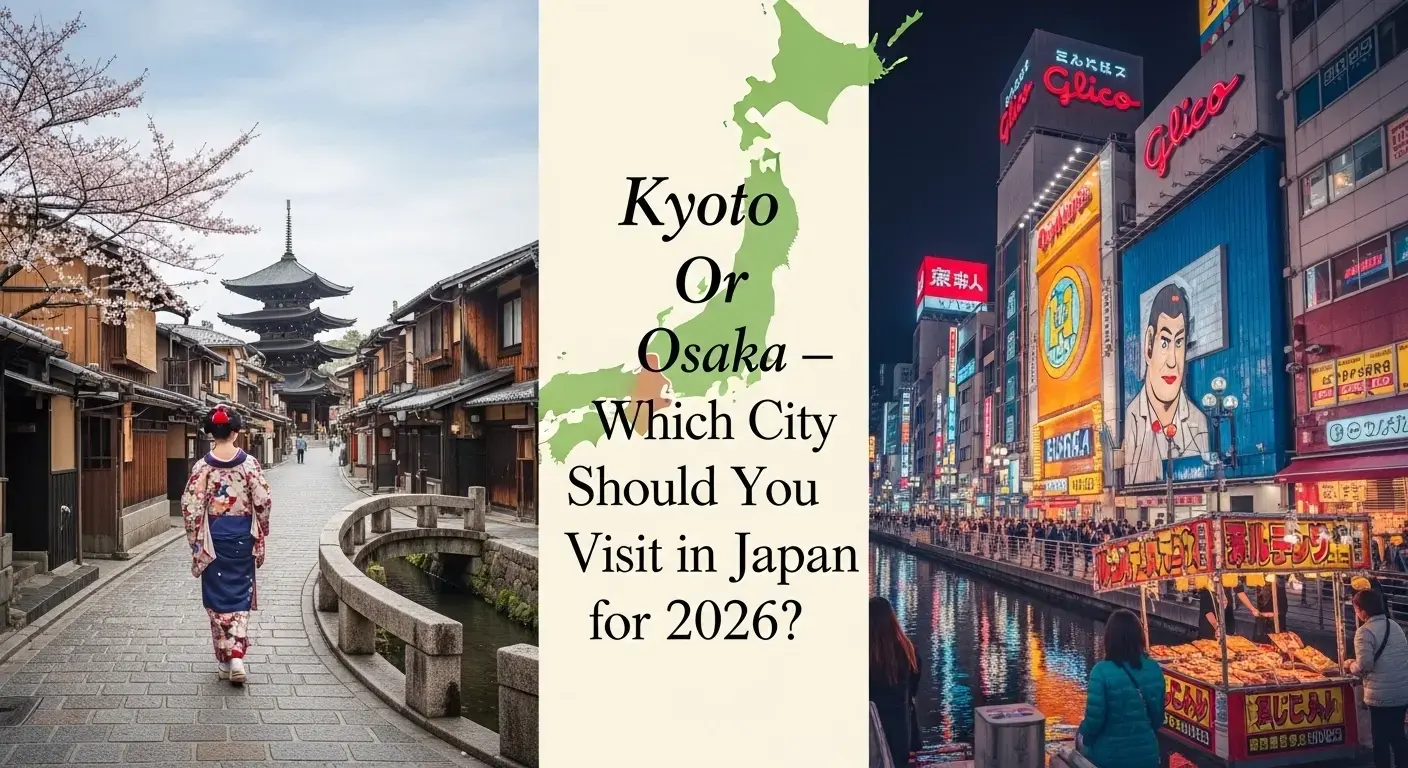
When planning a trip to Japan, many travellers face a common dilemma: Kyoto or Osaka? Both cities are iconic, but they offer very different experiences. Kyoto is known for its serene temples, traditional tea houses, and historic streets, while Osaka is famous for its energetic nightlife, street food, and modern attractions.
People search for “Kyoto or Osaka” because they want to make the most of limited travel time. Choosing the right city can define a holiday, whether you’re seeking culture, food, shopping, or entertainment.
This guide clears the confusion and gives a quick yet detailed answer so you can plan your trip wisely.
In this article, we’ll explore the origins, differences, common mistakes, usage in travel guides and social media, and give advice on which city to pick. By the end, you’ll know exactly whether Kyoto or Osaka suits your travel style.
Kyoto or Osaka – Quick Answer
Kyoto: Traditional, historic, calm. Perfect for culture lovers and those who enjoy temples, shrines, and gardens.
Osaka: Modern, vibrant, lively. Ideal for foodies, nightlife enthusiasts, and shoppers.
Example:
- Want to visit a 1,000-year-old temple? Head to Kyoto.
- Craving street food like takoyaki or okonomiyaki? Go to Osaka.
Tip: Many travellers combine both cities on the same trip since they are only 15 minutes apart by Shinkansen.
The Origin of Kyoto and Osaka
Kyoto: The name “Kyoto” means “capital city” in Japanese. It was the imperial capital for over 1,000 years, which explains its wealth of temples and shrines.
Osaka: “Osaka” translates to “large hill” or “great slope.” Historically, it developed as a major commercial hub, giving it a lively, bustling atmosphere.
Why the Confusion?
People often confuse which city is better for sightseeing or culinary experiences. Kyoto’s charm is historic, while Osaka’s appeal is modern and social.
British English vs American English Spelling
Interestingly, spelling differences exist mainly for foreign city names in travel writing.
| Feature | British English | American English |
| City names | Kyoto, Osaka | Kyoto, Osaka |
| Travel guides | Favour historic context | Favour practical info (food, nightlife) |
| Articles & blogs | Use full traditional names | Often abbreviate or simplify names |
Example:
- UK blog: “Exploring the temples of Kyoto…”
- US blog: “Eating street food in Osaka…”
Note: The city names themselves don’t change, but writing style differs by region.
Which City Should You Use?
- US readers: Focus on practical experiences. Highlight Osaka for food and nightlife, Kyoto for cultural exploration.
- UK/Commonwealth readers: Emphasise historical significance, tradition, and scenic beauty.
- Global audience: Both cities are equally recognised; combine them for broader appeal.
Advice: If your content is travel-oriented, mention both with their key features.
Common Mistakes with Kyoto or Osaka
- Mixing the cities up Don’t say “Kyoto is famous for street food.” That’s Osaka.
- Assuming Kyoto is boring It has vibrant districts like Gion.
- Ignoring travel logistics Both cities are connected by Shinkansen, so a day trip is possible.
- Incorrect spelling Kyoto and Osaka are standard; avoid “Kioto” or “Oosaka.”
Kyoto or Osaka in Everyday Examples
- Emails: “I’ll be visiting Kyoto or Osaka next month. Any recommendations?”
- News articles: “Tourists often struggle to choose between Kyoto or Osaka.”
- Social media: “Kyoto or Osaka? Can’t decide where to eat sushi tonight!”
- Formal writing: “The cultural heritage of Kyoto or the commercial vitality of Osaka exemplifies Japan’s diversity.”
Kyoto or Osaka – Google Trends & Usage Data
Search trends show both cities are popular globally, but interest depends on context:
| Region | Preferred Search | Context |
| US | Osaka | Food, nightlife |
| UK | Kyoto | Cultural tourism, historic sites |
| Australia | Kyoto | Temples, scenic tours |
| Japan | Both | Domestic tourism and short trips |
Google Trends indicate “Kyoto or Osaka” searches spike during spring (cherry blossom season) and autumn (fall foliage).
Keyword Comparison Table
| Feature | Kyoto | Osaka |
| Culture | Temples, shrines, gardens | Urban life, entertainment |
| Food | Kaiseki, tea ceremonies | Takoyaki, okonomiyaki |
| Atmosphere | Calm, traditional | Vibrant, modern |
| Nightlife | Quiet streets, tea houses | Bars, clubs, street stalls |
| Best season | Spring & autumn | Year-round, summer festivals |
FAQs:
1. Can I visit both cities in one trip?
Yes, they are only 15 minutes apart by bullet train. Many travellers do day trips.
2. Which city is cheaper to stay in?
Osaka generally has more budget-friendly hotels and hostels.
3. Is Kyoto better for families?
Yes, Kyoto’s temples and parks are more family-friendly.
4. Which city is best for nightlife?
Osaka is famous for its energetic nightlife and street food.
5. Should I visit Kyoto in summer?
It can be hot, but festivals and gardens are beautiful.
6. Can I find English-speaking guides in both cities?
Yes, but Kyoto tends to have more cultural tour guides.
7. Which city is more photogenic?
Kyoto has traditional temples and scenic streets, ideal for photography.
8. Are there day trips from these cities?
Yes. From Kyoto: Nara; from Osaka: Kobe and Universal Studios Japan.
9. Which city is safer for tourists?
Both are very safe, but Kyoto is quieter and less crowded.
Conclusion:
Choosing between Kyoto or Osaka depends on your travel style. If you love history, serene temples, and traditional culture, Kyoto is the perfect choice. If your goal is food, nightlife, and modern attractions, Osaka will not disappoint.
Many travelers combine both cities in a single trip because they are close and offer complementary experiences. Understanding the unique characteristics of each city ensures your trip is memorable and stress-free. Remember, Kyoto embodies Japan’s timeless traditions, while Osaka brings its lively, modern spirit to life.
By using the city names correctly and highlighting their strengths, you can plan your itinerary or write travel content that resonates globally.

I hold a degree in English Literature and Linguistics and have worked extensively on educational blogs, comparison websites, and digital learning platforms. My writing focuses on simplifying complex language rules, highlighting British vs American English differences, and providing practical examples for everyday usage.