Have you ever paused while writing and wondered whether to use ingenuine or ungenuine? You’re not alone. Many people search for this keyword because both words sound correct but only one is widely accepted in modern English.
This confusion often appears in emails, essays, and even professional writing, where choosing the wrong word can affect clarity and credibility.
The problem is simple: English has many prefixes like in- and un- that both mean “not.” So it’s easy to assume they work the same way with every word. But they don’t. Some combinations are standard, while others are rare or outdated.
This article will give you a quick answer, explain the origin of these words, compare British and American usage, and help you choose the right spelling with confidence. You’ll also see examples, common mistakes, and real-world usage tips. By the end, you’ll never hesitate between ingenuine and ungenuine again.
Ingenuine or Ungenuine – Quick Answer
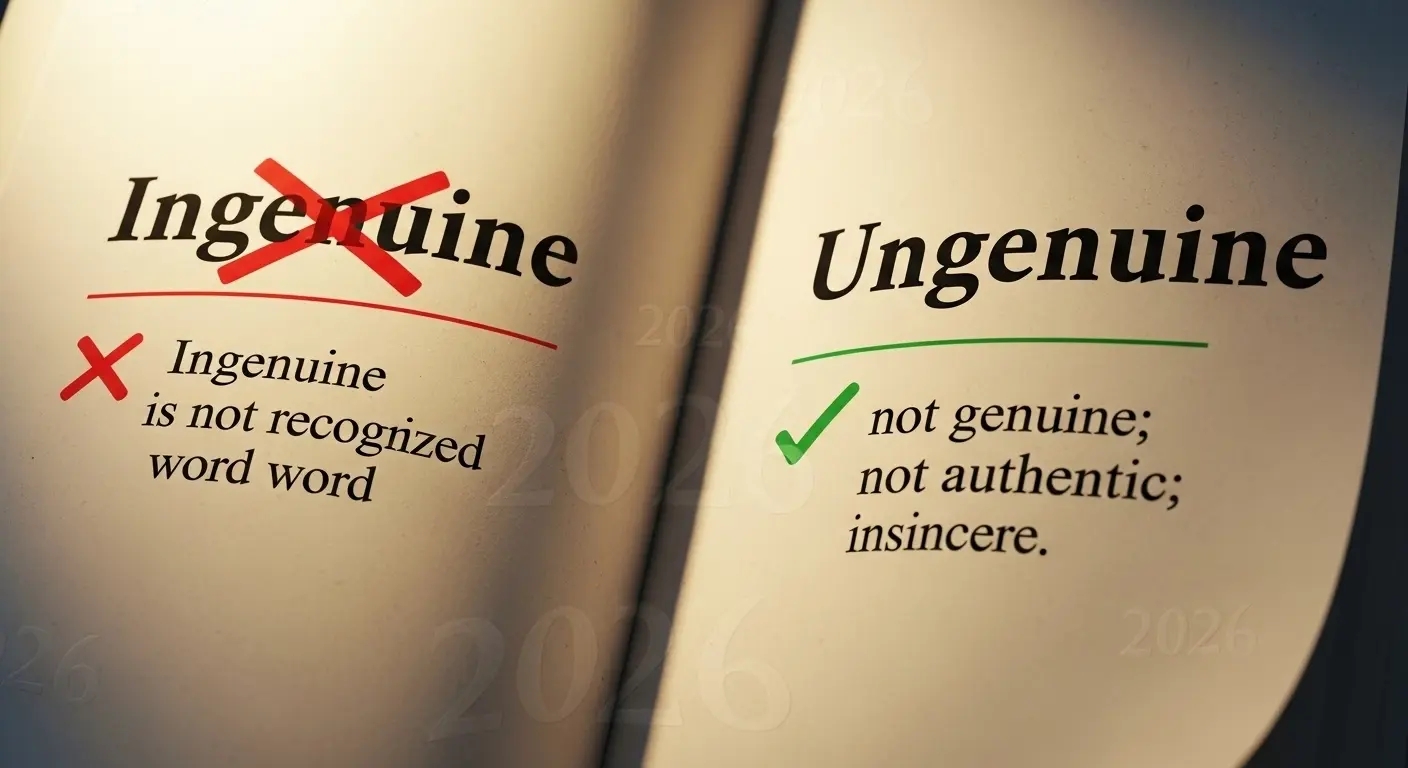
Correct word: Ungenuine
Incorrect or very rare: Ingenuine
- Ungenuine means not genuine, fake, or insincere.
- Example: His apology felt ungenuine.
- Ingenuine is not standard English and is rarely used. It may confuse readers.
👉 Simple rule: Always use ungenuine.
The Origin of Ingenuine or Ungenuine
To understand the difference, we need to look at prefixes.
- The word genuine comes from Latin genuinus, meaning “real” or “true.”
- The prefix un- is commonly used in English to mean “not.”
- The prefix in- also means “not,” but it is usually used with words of Latin origin in specific patterns (like incomplete, incorrect).
So why not ingenuine?
Because English usage developed differently over time. Native speakers naturally adopted ungenuine as the correct negative form of genuine. The form ingenuine never became standard and is now considered incorrect or obsolete.
👉 In short:
- Ungenuine = natural and accepted
- Ingenuine = awkward and unused
British English vs American English Spelling
Good news: there is no difference between British and American English for this word.
Both regions agree:
- ✅ Ungenuine = correct
- ❌ Ingenuine = incorrect
Comparison Table
| Feature | British English | American English |
| Correct spelling | Ungenuine | Ungenuine |
| Incorrect spelling | Ingenuine | Ingenuine |
| Usage frequency | Common | Common |
| Formal writing | Accepted | Accepted |
👉 Unlike words like colour/color, this spelling does not change across regions.
Which Spelling Should You Use?
Your choice is simple.
- For US audience: Use ungenuine
- For UK or Commonwealth audience: Use ungenuine
- For global writing (blogs, SEO, business): Use ungenuine
Avoid ingenuine in all cases.
Professional Tip
If you want to sound more natural, you can also use synonyms like:
- Fake
- Insincere
- Artificial
- False
Example:
- His smile seemed ungenuine.
- His smile seemed fake. (more common)
Common Mistakes with Ingenuine or Ungenuine
Here are mistakes people often make:
❌ Mistake 1: Using “ingenuine”
- Wrong: Her reaction felt ingenuine.
- Correct: Her reaction felt ungenuine.
❌ Mistake 2: Confusing with “ingenious”
- Ingenious means clever, not fake.
- Wrong: That idea is ingenuine.
- Correct: That idea is ingenious.
Ingenuine or Ungenuine in Everyday Examples
1. Emails
- The message felt ungenuine and rushed.
- Your apology seems ungenuine.
2. News Writing
- Critics called the statement ungenuine.
- The brand faced backlash for ungenuine marketing.
3. Social Media
- That influencer seems ungenuine.
- People can tell when content is ungenuine.
4. Formal Writing
- The response appeared ungenuine and lacked sincerity.
- His actions were seen as ungenuine by the public.
👉 Tip: In formal contexts, replace with insincere for better tone.
Ingenuine or Ungenuine – Google Trends & Usage Data
Search data shows clear patterns:
- Ungenuine is searched and used more often worldwide.
- Ingenuine has very low search volume and is often searched only due to confusion.
Usage by Region
- United States: Strong use of ungenuine
- United Kingdom: Same pattern
- India & Pakistan: High confusion, frequent searches for both terms
Context of Usage
People search this keyword when:
- Writing essays or emails
- Preparing for exams
- Creating SEO content
- Learning English grammar
👉 Conclusion:
Ingenuine exists mainly because people guess the spelling, not because it’s correct.
Comparison Table: Ingenuine vs Ungenuine
| Feature | Ingenuine | Ungenuine |
| Correct spelling | ❌ No | ✅ Yes |
| Meaning | Not standard | Not genuine |
| Usage | Rare / incorrect | Common |
| Formal writing | Not used | Acceptable |
| SEO relevance | Low | High |
FAQs:
1. Is “ingenuine” a real word?
No, it is not standard English. It is rarely used and considered incorrect.
2. What does “ungenuine” mean?
It means not real, fake, or insincere.
3. Why do people confuse ingenuine and ungenuine?
Because both prefixes (in- and un-) mean “not,” but they are not interchangeable.
4. Is “ungenuine” formal?
It is acceptable, but words like insincere are more formal.
5. Can I use “ingenuine” in academic writing?
No. Avoid it completely.
6. What is a better synonym for ungenuine?
Use fake, false, or insincere depending on context.
7. Is there a British vs American difference?
No. Both use ungenuine.
8. Which word is better for content?
Ungenuine is better because it is the correct and commonly searched term.
Conclusion
Choosing between ingenuine and ungenuine is easier than it seems. Only one of these words is correct in modern English, and that is ungenuine. While both prefixes “in-” and “un-” can mean “not,” English usage has settled on ungenuine as the proper form. The word ingenuine may look logical, but it is not accepted and can confuse readers.
This distinction matters in both casual and professional writing. Using the wrong word can make your content seem less polished or even incorrect. Whether you are writing emails, blog posts, or academic papers, sticking with ungenuine ensures clarity and accuracy.
Also, remember that language is about communication. Sometimes, simpler words like fake or insincere may work better depending on your audience. Always choose words that sound natural and fit the tone of your message.
In the end, the rule is simple: avoid ingenuine and ungenuine with confidence. This small choice can improve your writing and help you communicate more effectively.

I am an Emily Carter Brooks U.S.A based linguistics writer known for my clear, reader-friendly explanations of English grammar and vocabulary differences. I have contributed to multiple online language resources and specializes in spelling variations, pronunciation confusion, and British vs American English comparisons. I believes that learning English should be practical, engaging, and stress-free.