Choosing between fiance and fiancee can be confusing, especially for English learners, writers, and professionals. These words sound alike and are related to engagement, but the difference is subtle yet important.
People often search this phrase to avoid embarrassing mistakes in emails, invitations, social media posts, or formal writing. Using the wrong form can make your sentence grammatically incorrect or culturally awkward.
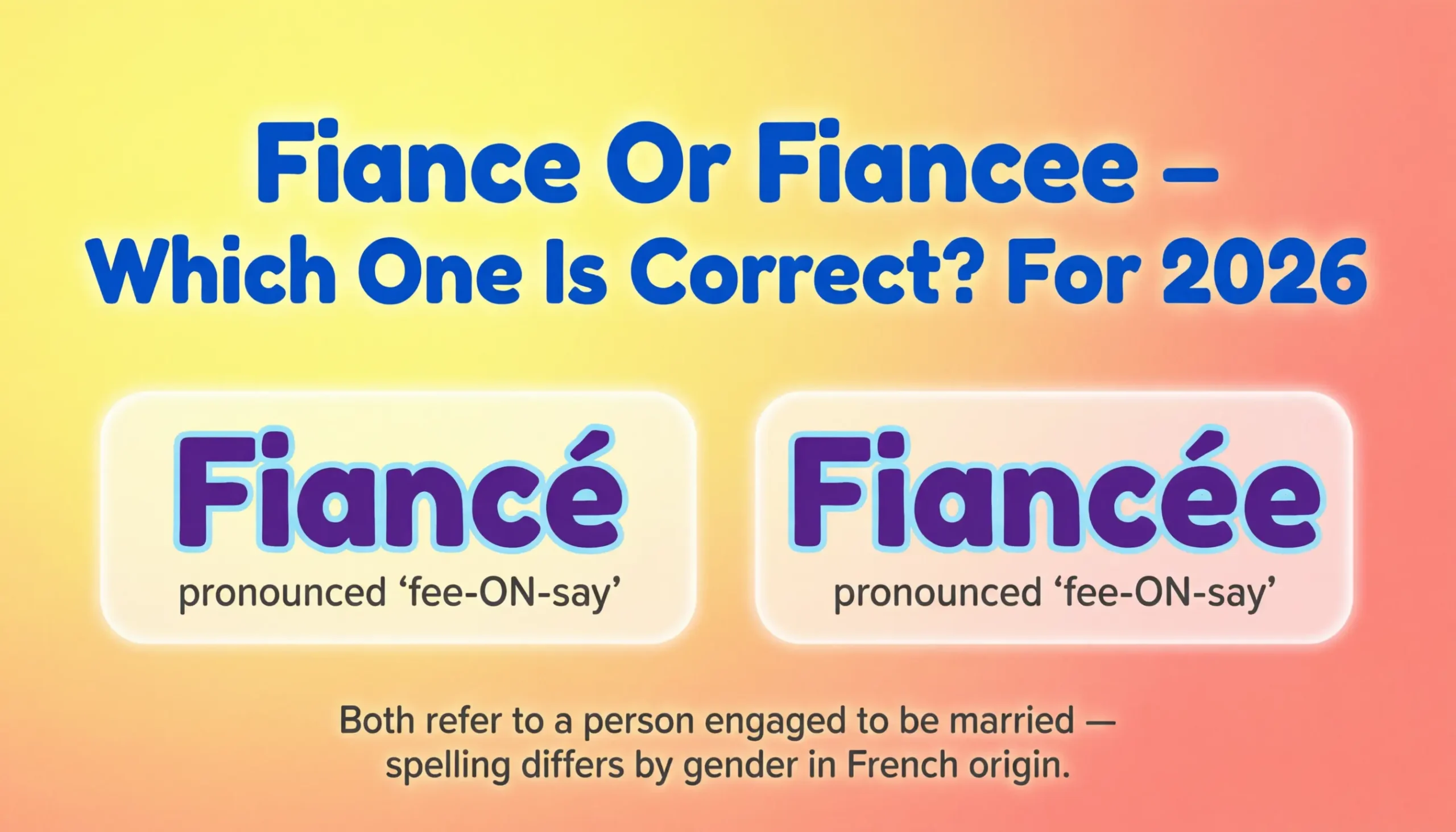
In English, one word refers to a man who is engaged to be married, while the other refers to a woman. Misunderstanding the gender-specific usage can confuse your readers or even create misunderstandings in formal communication
If you are sending an announcement, writing an article, or posting on social media, knowing which form to use ensures clarity and professionalism.
This article breaks down the difference between fiance and fiancee, explores their origin, highlights British vs American spelling, shares everyday usage examples, and provides practical advice so you always choose the correct form.
Fiance or Fiancee – Quick Answer
Quick Answer:
- Fiance – refers to a man engaged to be married.
Example: “Her fiance will meet us for dinner tonight.” - Fiancee – refers to a woman engaged to be married.
Example: “She introduced her fiancee at the party.”
Tip: The extra “e” at the end signals feminine gender, following French grammar influence.
The Origin of Fiance and Fiancee
Both words come from French, where fiancé (masculine) and fiancée (feminine) mean “engaged.” English borrowed them in the 19th century. In French, accents indicate pronunciation and gender, but in English, accents are often omitted.
- Fiance → masculine, originally “engaged man.”
- Fiancee → feminine, originally “engaged woman.”
The spelling difference comes from French gender rules. Adding the “e” at the end signals feminine nouns in French, which English kept for clarity.
British English vs American English Spelling
In British English, the use of accents is more common in formal writing: fiancé / fiancée.
In American English, accents are often dropped: fiance / fiancee. Despite this, gender distinction remains: one “e” for men, two “e”s for women.
Comparison Table:
| Aspect | American English | British English | Example (Male) | Example (Female) |
| Spelling | fiance | fiancé | Her fiance is lovely. | His fiancee is lovely. |
| Feminine marker | e at the end | e at the end | – | e at the end |
| Accent usage | Rare | Common | fiancé | fiancée |
Which Spelling Should You Use?
- US Audience: Use fiance / fiancee without accents.
- UK / Commonwealth: Using fiancé / fiancée is acceptable and more formal.
- Global Writing: If your audience is international, fiance / fiancee without accents is safest.
Pro Tip: Focus on gender accuracy first; accent marks are secondary unless writing formal invitations or newspapers.
Common Mistakes with Fiance / Fiancee
- Using fiance for a woman → ❌ “She met her fiance yesterday.”
✅ Correct: “She met her fiancee yesterday.” - Dropping extra “e” for women → ❌ “Her fiance is very kind.”
✅ Correct: “Her fiancee is very kind.” - Confusing fiancé and fiancée → ❌ “He is her fiancée.”
✅ Correct: “He is her fiance.” - Misplacing accents → Usually okay to omit, but avoid “fianc” → ❌.
- Using interchangeably → Gender matters; always check.
Fiance / Fiancee in Everyday Examples
Emails:
- “Please RSVP with your fiancee by Friday.”
Social Media:
- “Excited to announce I’m engaged! Meet my fiance.”
News Articles:
- “The actress and her fiancee attended the charity gala.”
Formal Writing:
- “Kindly include the names of both the bride and fiance in the registry.”
Text Messaging:
- “Dinner with my fiancee tonight!”
Fiance or Fiancee – Google Trends & Usage Data
Search data shows:
- “Fiance” and “fiancee” peak in searches during wedding seasons (May–September).
- US searches favor fiance / fiancee without accents.
- UK and France often include accents in formal contexts.
- Global usage favors gender accuracy over accents.
Fiance vs Fiancee Comparison Table
| Feature | Fiance | Fiancee |
| Gender | Male | Female |
| US Spelling | fiance | fiancee |
| UK Spelling | fiancé | fiancée |
| Usage Example | Her fiance is a doctor. | His fiancee is a lawyer. |
| Common Mistake | Using for a woman | Using for a man |
FAQs:
- Is there a plural form?
Yes: fiances (men) / fiancees (women). - Do you need accents in English?
Not necessary, but preferred in formal UK writing. - Can you use ‘fiance’ for women?
No, it is male-specific. Always use fiancee for women. - Is it pronounced differently?
Slightly. Fiance → /fiˈɑːn.seɪ/, Fiancee → /fiˌɑːnˈseɪ/. - Can I just write ‘engaged partner’?
Yes, for gender-neutral writing. - What about informal writing?
Fiance / Fiancee works fine in texts, posts, or casual emails. - Are these words formal?
They are formal enough for invitations, announcements, and journalism. - Should I capitalize it in sentences?
Only capitalize if starting a sentence or in titles. - Are there regional differences besides spelling?
Minor pronunciation differences exist, but gender distinction is universal.
Conclusion:
Understanding the difference between fiance and fiancee is simple but crucial for clear communication. Remember: fiance is male, fiancee is female. Accents are optional in American English but common in British English. Always check your audience US, UK, or global before deciding on spelling. Avoid the most common mistakes: gender swap, dropping the extra “e,” or misplacing accents.
Using these words correctly ensures professionalism in emails, social media, invitations, and formal writing. For global audiences, gender accuracy is more important than accents.
By following this guide, you can confidently write announcements, news articles, or social media posts without error. Accurate usage of fiance Or fiancee reflects attention to detail and respect for the English language.

I am an Emily Carter Brooks U.S.A based linguistics writer known for my clear, reader-friendly explanations of English grammar and vocabulary differences. I have contributed to multiple online language resources and specializes in spelling variations, pronunciation confusion, and British vs American English comparisons. I believes that learning English should be practical, engaging, and stress-free.