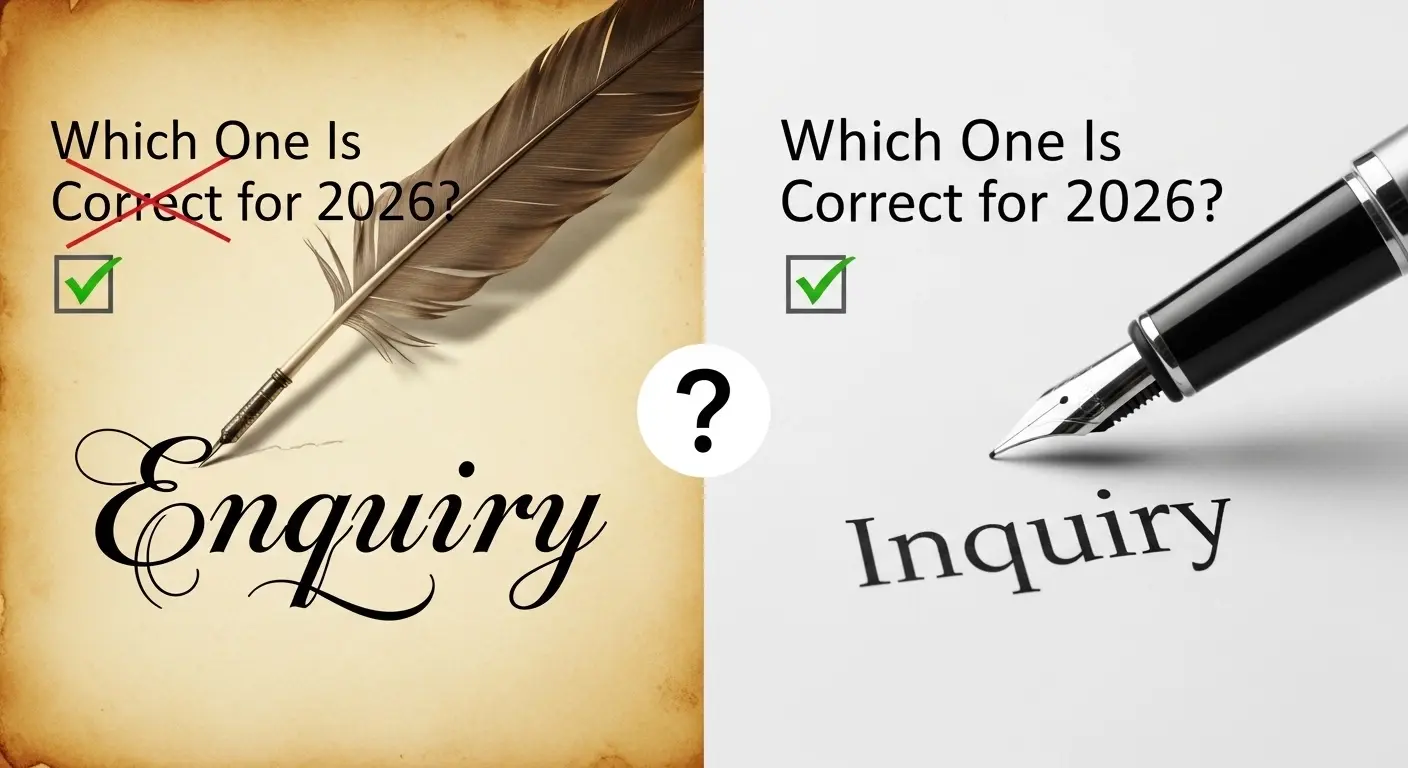
When writing emails, reports, or social media posts, many people stumble over whether to use “enquiry” or “inquiry.” This small difference in spelling can cause confusion, especially for students, professionals, and writers working in global English. Understanding the difference is crucial because using the “wrong” version might make your text appear less polished or locally inaccurate.
People often search for “enquiry or inquiry” to clarify which form is correct in British English versus American English. Some also wonder if the words mean different things or if it’s just a spelling issue.
The good news is that the difference is mostly regional, but subtle distinctions in usage exist. This guide will give you a quick answer, explain the origin, compare British and American spellings, and provide practical advice for everyday writing.
By the end, you’ll know which word to use, avoid common mistakes, and write confidently in professional and casual contexts.
Enquiry or Inquiry – Quick Answer
Quick Answer:
- Inquiry → Mostly used in American English. Refers to an official investigation or formal question.
- Enquiry → Mostly used in British English. Often refers to a general question or request for information.
Examples:
- American English: “The police opened an inquiry into the theft.”
- British English: “I made an enquiry about the train schedule.”
Tip: In casual British English, enquiry is more common; in formal or legal contexts, inquiry is often preferred.
The Origin of Enquiry and Inquiry
Both words stem from the Latin word “inquirere,” meaning “to seek for” or “to ask.” Over time, English borrowed this term and developed two spellings:
- Inquiry → Standardized in American English.
- Enquiry → Retained in British English, keeping the “e” prefix.
The distinction between the two became more pronounced in the 19th century as American English developed its own conventions. Today, the difference is largely regional rather than semantic, though formal contexts sometimes favor inquiry regardless of region.
British English vs American English Spelling
| Word | Region Usage | Context | Example |
| Enquiry | UK, Commonwealth | General question | “I sent an enquiry to the hotel.” |
| Inquiry | US | Formal investigation or question | “The government launched an inquiry.” |
| Inquiry | UK (formal/legal) | Official or formal context | “A public inquiry was held into the crash.” |
Key Rule:
- Use enquiry for everyday questions in the UK.
- Use inquiry for formal investigations in both the US and UK.
Which Spelling Should You Use?
Audience-based Advice:
- United States: Always use inquiry.
- United Kingdom & Commonwealth: Use enquiry for everyday questions, inquiry for formal/legal matters.
- Global/International: If unsure, inquiry is safe in formal writing; enquiry may be preferred in UK-targeted casual contexts.
Pro Tip: When writing for international readers, stick to inquiry for clarity.
Common Mistakes with Enquiry or Inquiry
- Mixing the words randomly: Avoid writing “I opened an enquiry” in US English.
- Wrong context: Using enquiry for a legal or government investigation.
- Spelling inconsistencies: Keep the same style throughout your document.
- Using inquiry in casual UK emails: Can sound overly formal.
- Ignoring audience: US readers may find enquiry odd or archaic.
Enquiry in Everyday Examples
Emails:
- “I am writing to make an enquiry about your services.”
News Articles:
- “The police have launched an inquiry into the fraud case.”
Social Media:
- “Sent an enquiry to customer support and got a reply!”
Formal Writing:
- “A parliamentary inquiry was conducted to assess the policy.”
Enquiry – Google Trends & Usage Data
- US: Searches for inquiry dominate, with very few using enquiry.
- UK: Both are common; enquiry leads in casual contexts.
- Global: Inquiry is the safer choice for formal writing or international readership.
Observation: Professional and educational content often favors inquiry, while customer service and casual questions favor enquiry in the UK.
Keyword Variations Comparison Table
| Variation | Meaning | Region/Context |
| Inquiry | Formal question/investigation | US, formal UK |
| Enquiry | General question/request | UK, Commonwealth (informal) |
| Question | General query | Universal |
| Investigation | Deep examination/official process | Universal/formal |
FAQs:
- Is enquiry a misspelling of inquiry?
No, enquiry is British English, while inquiry is American English. - Can I use inquiry in the UK?
Yes, especially for formal or legal matters. - Which one is better for emails?
Use enquiry for casual UK emails, inquiry for formal or international emails. - Do dictionaries treat them differently?
Most dictionaries note the regional distinction: UK prefers enquiry, US prefers inquiry. - Can enquiry be used in the US?
Technically yes, but it may seem archaic or unusual. - Is inquiry more formal than enquiry?
Yes, inquiry is often used for official investigations or academic contexts. - Which is used in news media?
UK media: enquiry for general questions, inquiry for formal investigations.
US media: inquiry dominates. - How do I remember the difference?
Think: E = Everyday (UK), I = Investigation/International. - Are there synonyms I can use?
Yes, words like question, investigation, probe, request are often interchangeable depending on context.
Conclusion:
In summary, enquiry and inquiry are closely related but regionally and contextually different. Inquiry dominates American English and is also preferred in formal investigations globally, while enquiry is common in British English for everyday questions. Understanding your audience is key: casual UK writing favors enquiry, US and formal contexts favor inquiry.
By keeping these distinctions in mind, you can write clearly, avoid common mistakes, and maintain professionalism in emails, reports, social media, and formal documents. Remember: if writing for international readers or formal content, inquiry is usually safer. For casual UK communication, enquiry is perfectly acceptable and stylistically appropriate.
Mastering this small nuance ensures your writing is polished, contextually correct, and audience-friendly. Whether you are a student, professional, or content creator, knowing the difference between enquiry and inquiry enhances both clarity and credibility.

I am an Emily Carter Brooks U.S.A based linguistics writer known for my clear, reader-friendly explanations of English grammar and vocabulary differences. I have contributed to multiple online language resources and specializes in spelling variations, pronunciation confusion, and British vs American English comparisons. I believes that learning English should be practical, engaging, and stress-free.