Have you ever paused while typing and wondered: Is it “cancell” or “cancel”? You’re not alone. This is a very common spelling confusion, especially for learners of English and even native speakers. A small extra letter can make a big difference and sometimes lead to embarrassing mistakes in emails, assignments, or professional writing.
The confusion usually comes from similar spelling patterns in English, like “controlled” or “travelling,” where letters double. So, people assume “cancel” might follow the same rule and become “cancell.” But English is not always predictable, and that’s where mistakes happen.
This guide clears up the confusion once and for all. You’ll learn the correct spelling, why the mistake occurs, and how British and American English handle related forms like “cancelled” and “canceled.”
By the end, you’ll know exactly which version to use and when so you never second-guess yourself again.
Cancell or Cancel – Quick Answer
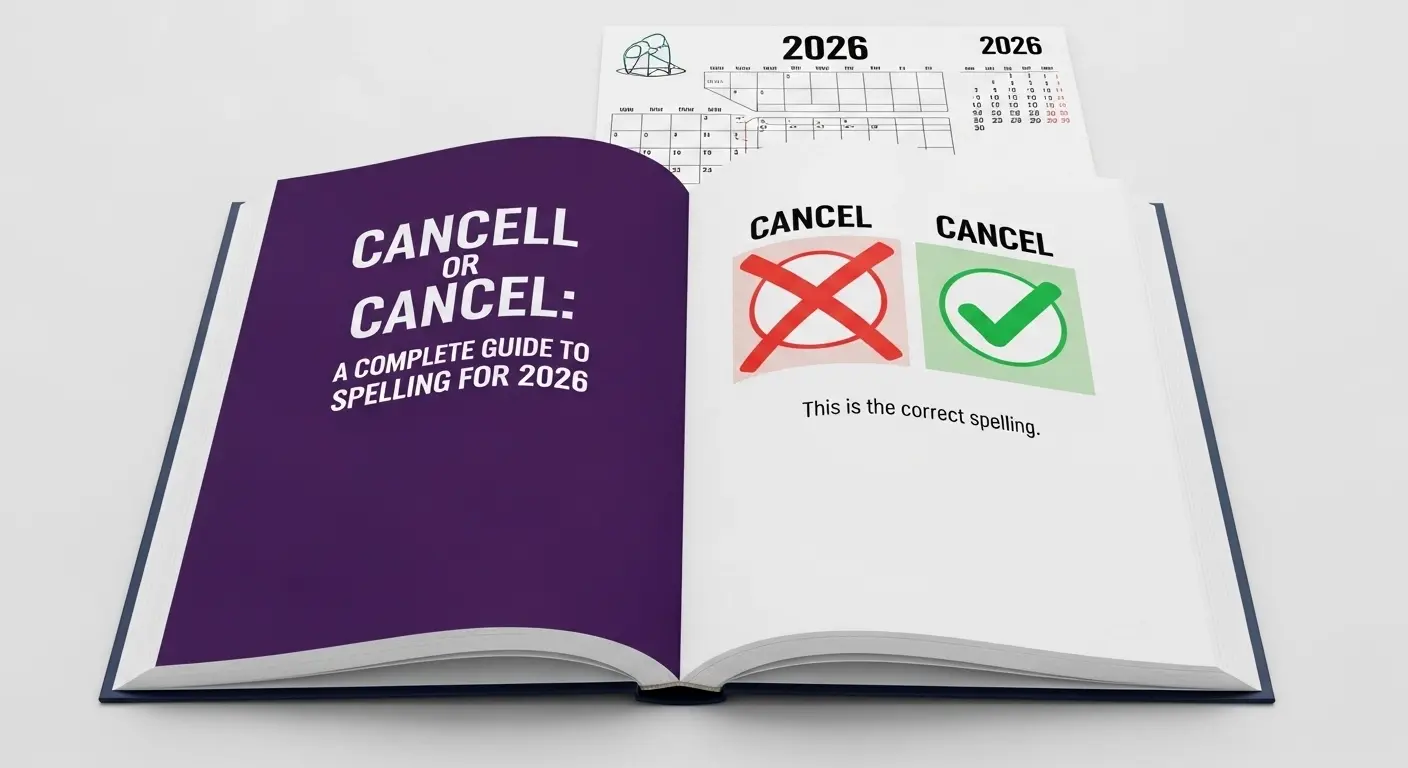
The correct spelling is “cancel.”
❌ Cancell is incorrect and not used in standard English.
Examples:
- ✅ I need to cancel my appointment.
- ✅ They decided to cancel the meeting.
- ❌ Please cancell the order. (Incorrect)
👉 Always use “cancel” with one “l” when writing the base form of the word.
The Origin of Cancell or Cancel
The word “cancel” comes from the Latin word cancellare, which means “to cross out” or “to make something invalid.” It entered English through Old French and has been used for centuries.
Originally, the spelling stayed simple with one “l” in the base form. Over time, English developed variations when adding endings like -ed or -ing, which is where confusion started.
For example:
- Cancel → Cancelled (British English)
- Cancel → Canceled (American English)
This mix of rules makes people think the base word might also have double “l” (cancell), but that is not true.
👉 Important: The root word has always been cancel, not “cancell.”
British English vs American English Spelling
The confusion often comes from how different regions handle word endings.
Key Rule:
- Base form → Always cancel (same everywhere)
- Past tense / continuous → Differences appear
Examples:
- British English: cancelled, cancelling
- American English: canceled, canceling
Comparison Table
| Form | British English | American English |
| Base word | cancel | cancel |
| Past tense | cancelled | canceled |
| Present participle | cancelling | canceling |
| Incorrect form | cancell ❌ | cancell ❌ |
👉 Notice: “cancell” is never correct in any version of English.
Which Spelling Should You Use?
Choosing the right spelling depends on your audience.
1. If you are writing for the US:
Use American English
- canceled
- canceling
2. If you are writing for the UK or Commonwealth countries:
Use British English
- cancelled
- cancelling
3. If your audience is global:
- Stick to cancel (base form is always safe)
- Choose one style and stay consistent
👉 Professional tip: Consistency matters more than the version you choose.
Common Mistakes with Cancell or Cancel
Here are the most common errors people make:
❌ Mistake 1: Adding an extra “l”
- Wrong: I will cancell the meeting
- Correct: I will cancel the meeting
❌ Mistake 2: Mixing styles
- Wrong: cancelled and canceling in same document
- Correct: Pick one style (British or American)
Cancell or Cancel in Everyday Examples
Here’s how “cancel” appears in real-life writing:
📧 Emails
- Please cancel my subscription.
- We had to cancel the meeting due to weather.
📰 News
- The airline decided to cancel all flights.
- The event was cancelled after heavy rain. (British)
📱 Social Media
- They just canceled the show 😢
- Why did they cancel it?
📄 Formal Writing
- The contract may be cancelled under certain conditions.
- You can cancel your order within 24 hours.
Cancell or Cancel – Google Trends & Usage Data
Search data shows that many people type “cancell” by mistake. This happens because:
- People expect double letters in English
- They confuse it with “cancelled”
- Typing errors are common on mobile devices
Popular Usage by Region:
- 🇺🇸 United States → “canceled” more common
- 🇬🇧 UK & Commonwealth → “cancelled” more common
- 🌍 Global searches → “cancel” is dominant
👉 Important insight: “cancell” appears in searches but is not accepted in correct English usage.
Comparison Table (Keyword Variations)
| Word | Correct? | Usage Type |
| cancel | ✅ Yes | Base form |
| cancell | ❌ No | Incorrect |
| cancelled | ✅ Yes | British English |
| canceled | ✅ Yes | American English |
| cancelling | ✅ Yes | British English |
| canceling | ✅ Yes | American English |
FAQs:
1. Is “cancell” ever correct?
No, “cancell” is always incorrect in standard English.
2. Why do people write “cancell”?
Because of confusion with words like “cancelled” and other double-letter patterns.
3. Is “cancel” the same in UK and US English?
Yes, the base word “cancel” is the same everywhere.
4. Which is correct: canceled or cancelled?
Both are correct. It depends on whether you use American or British English.
5. How can I remember the correct spelling?
Think: “Cancel has one L. Cancelled may have two.”
6. Is “canceling” wrong?
No, it’s correct in American English.
7. Which spelling should I use in business writing?
Use the style that matches your audience (US or UK) and stay consistent.
8. Does spellcheck always catch “cancell”?
Not always. Some tools may miss it, so proofreading is important.
Conclusion:
The confusion between “cancell” and “cancel” is simple to fix once you know the rule. The correct spelling is always “cancel” with one “l.” The version “cancell” is never accepted in standard English, no matter where you are writing.
Most of the confusion comes from variations like “cancelled” and “canceled,” where British and American English differ. While these forms can change depending on region, the base word remains the same everywhere. That’s why it’s important to separate the root word from its variations.
To avoid mistakes, focus on consistency. Choose British or American spelling based on your audience and stick to it. In emails, academic writing, or professional communication, small spelling errors can affect clarity and credibility.
In short, remember this simple rule:
👉 One “l” for cancel, never two.
Once you follow this, you’ll never get it wrong again.

I am an Emily Carter Brooks U.S.A based linguistics writer known for my clear, reader-friendly explanations of English grammar and vocabulary differences. I have contributed to multiple online language resources and specializes in spelling variations, pronunciation confusion, and British vs American English comparisons. I believes that learning English should be practical, engaging, and stress-free.