English spelling can be tricky, especially when two words look almost the same but only one is correct. “Begger or beggar” is a common search because many people are unsure which spelling to use in writing. You might see both online, in comments, or even in informal messages, which adds to the confusion.
This keyword matters because using the wrong spelling can make your writing look careless or unprofessional. Students, bloggers, job seekers, and even native English speakers often pause when typing this word. Spellcheck tools sometimes miss the error, and pronunciation does not always help because both forms sound similar.
The confusion usually comes from English spelling rules. Words ending in -er are common, so people assume begger must be right. Others think both spellings are accepted in different regions, like British and American English. That is not true here.
This article solves that problem clearly. You will get a quick answer, learn where the word came from, see British vs American usage, and understand which spelling you should use. By the end, you will know the correct form, how to use it in real sentences, and how to avoid common mistakes every time.
Begger or Beggar – Quick Answer
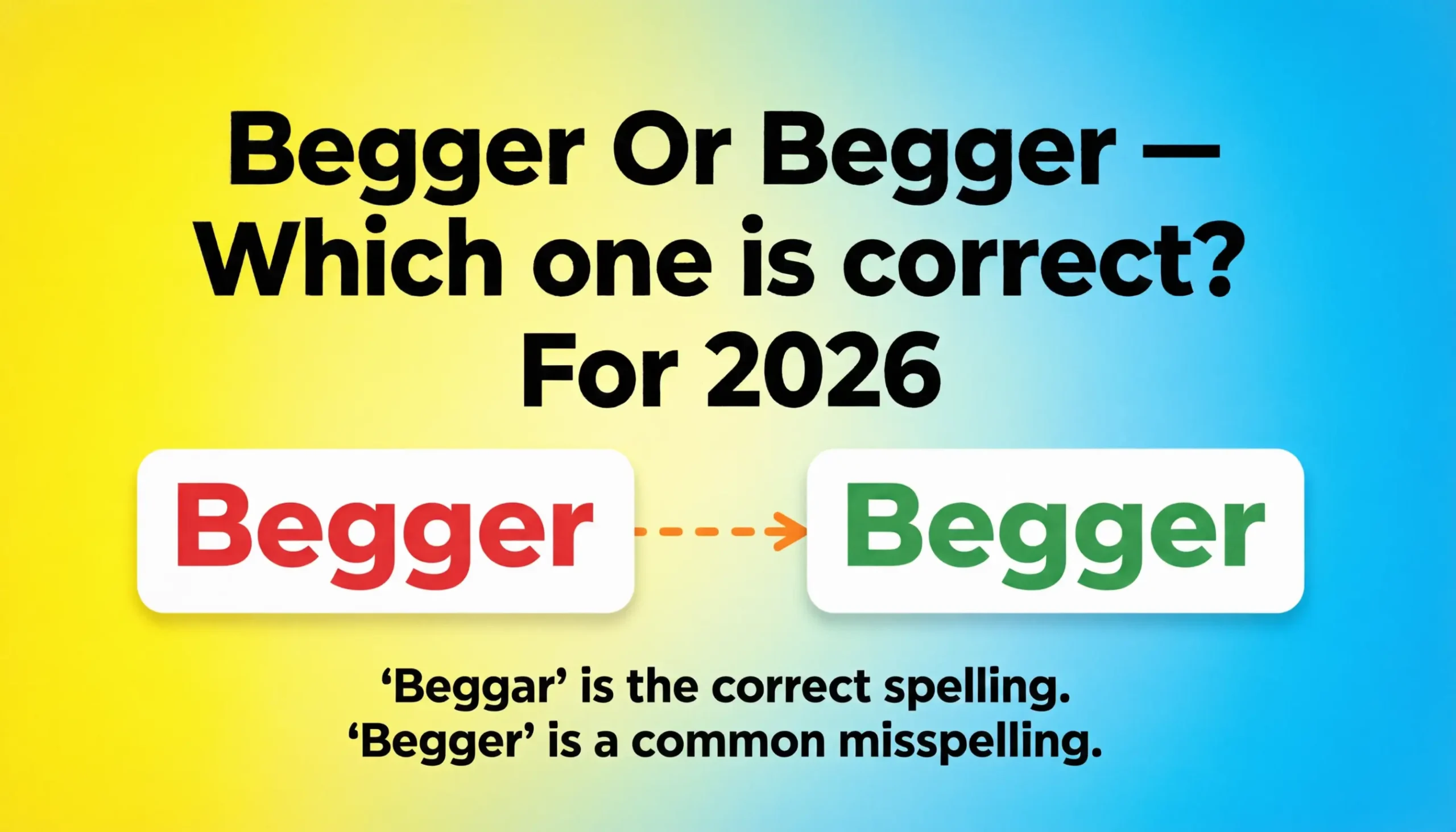
Beggar is the correct spelling.
Begger is incorrect and not a real English word.
Examples:
- ✅ The beggar asked for food near the market.
- ❌ The begger asked for food near the market.
No matter where you live or what type of English you use, beggar is always the right choice.
The Origin of Begger or Beggar
The correct word beggar comes from the verb “to beg”, meaning to ask for help, money, or food. It entered English from Old French begart, which referred to a poor person who lived by asking others for support.
In English word formation, when a verb ending in a short vowel sound is followed by -er, the final consonant is often doubled. That is why:
- beg → beggar
- run → runner
- sit → sitter
The spelling begger likely appears because people confuse this pattern or assume -er endings are standard. Over time, repeated online misuse made the wrong spelling look familiar, even though it has never been correct in standard English.
British English vs American English Spelling
This is one case where British English and American English agree completely.
Both use:
- Beggar ✅
Both reject: - Begger ❌
Comparison Table
| Feature | British English | American English |
| Correct spelling | beggar | beggar |
| Incorrect spelling | begger | begger |
| Used in formal writing | Yes | Yes |
| Used in media/news | Yes | Yes |
There is no regional spelling difference for this word.
Which Spelling Should You Use?
Always use beggar, no matter your audience.
Audience-based advice:
- US audience: Use beggar
- UK & Commonwealth: Use beggar
- Global or ESL readers: Use beggar
If your writing is for blogs, exams, emails, or professional work, beggar is the only safe and correct option.
Common Mistakes with Begger or Beggar
Here are frequent errors people make:
- ❌ Writing begger instead of beggar
✅ Correct: beggar - ❌ Thinking begger is American English
✅ Correction: It is incorrect everywhere - ❌ Mixing verb and noun forms
- Verb: to beg
- Noun: beggar
- Verb: to beg
- ❌ Trusting autocorrect without checking context
Some tools fail to flag begger as wrong.
Begger or Beggar in Everyday Examples
Emails
- ✅ Please avoid treating customers like a beggar asking for help.
News
- ✅ The city introduced new shelters to support homeless beggars.
Social Media
- ✅ Stop acting like a beggar for likes.
Formal Writing
- ✅ The novel portrays the life of a street beggar with realism.
In all cases, beggar fits naturally and correctly.
Begger or Beggar – Google Trends & Usage Data
Search data shows that “begger or beggar” is typed thousands of times each month. This usually happens because users are unsure which spelling is right.
Usage insights:
- Beggar dominates in books, news, and academic writing
- Begger appears mostly in:
- Social media
- Informal comments
- Non-native writing
- Social media
Countries where the confusion is common include:
- India
- Pakistan
- Philippines
- UK and US (among students)
The trend shows strong intent for quick clarification, not alternative meanings.
Comparison Table: Begger vs Beggar
| Word | Correct? | Meaning | Used in English |
| beggar | ✅ Yes | A person who begs | All English |
| begger | ❌ No | None | Not standard |
FAQs:
1. Is “begger” ever correct?
No. Begger is always incorrect.
2. Why do people spell beggar as begger?
Because -er endings are common, and pronunciation sounds similar.
3. Is beggar offensive?
It can be. Use carefully and respectfully, especially in formal writing.
4. Is beggar a noun or verb?
It is mainly a noun, but it can be used as a verb in phrases like “to beggar belief.”
5. Does American English use begger?
No. American English uses beggar, same as British English.
6. Can beggar be plural?
Yes. The plural form is beggars.
7. Is “to beggar belief” correct?
Yes. This phrase is standard and widely used.
8. Will spellcheck catch begger?
Not always. Manual checking is best.
Conclusion:
The confusion between begger or beggar is common, but the solution is simple. Beggar is the only correct spelling in English. Begger is a spelling mistake, not a regional or alternative form. British English and American English fully agree on this word, which makes your choice easy.
Understanding the origin of beggar helps explain why the spelling looks unusual. The double g follows a standard English pattern seen in many other words. Knowing this rule makes it easier to remember and apply in future writing.
If you are writing an email, blog post, exam answer, or professional document, using beggar will keep your English clear and correct. Avoid relying only on spellcheck, and do not copy informal usage from social media.

I hold a degree in English Literature and Linguistics and have worked extensively on educational blogs, comparison websites, and digital learning platforms. My writing focuses on simplifying complex language rules, highlighting British vs American English differences, and providing practical examples for everyday usage.