Are you unsure whether to write “aesthetic” or “esthetic”? You’re not alone. Many people wonder which spelling is correct, when to use each, and why both exist. The confusion arises because English has variations between British and American spelling, and some words simply have multiple accepted forms.
Choosing the wrong spelling can make writing look unprofessional, especially in academic papers, marketing, or online content.
Understanding the difference is simple once you know the origin, usage, and regional preferences. If you’re designing a website, writing an essay, or posting on social media, knowing which version to use will boost your credibility and clarity.
This guide explains the quick answer, explores the history of the word, compares British and American English, and provides practical advice for writers worldwide. By the end, you’ll confidently know when to use “aesthetic” and when “esthetic” might be acceptable.
Aesthetic or Esthetic – Quick Answer
Quick Answer:
- Aesthetic – Standard in British English and widely accepted globally.
- Esthetic – Primarily used in American English, often in medical or professional contexts, like dentistry or dermatology.
Examples:
- Aesthetic: “The website design has a clean, aesthetic appeal.”
- Esthetic: “The dentist focused on the esthetic improvement of the patient’s teeth.”
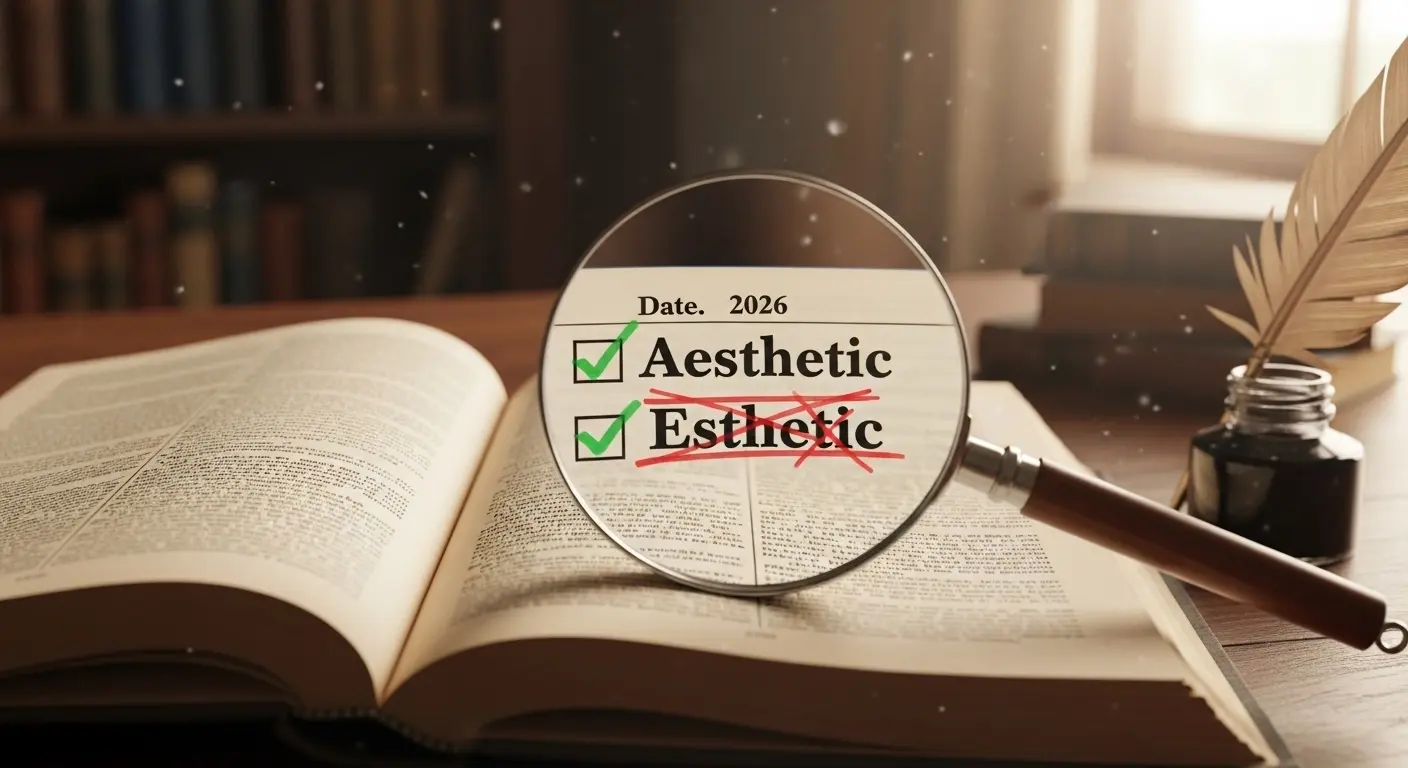
Key Tip: When in doubt, “aesthetic” is usually safe for general writing.
The Origin of Aesthetic or Esthetic
The word comes from the Greek “aisthētikos,” meaning “of or relating to perception by the senses.” Introduced into English in the 18th century, it originally spelled “aesthetic”, reflecting its Greek roots.
- Aesthetic became the standard spelling in Britain and most of the English-speaking world.
- Esthetic is an American simplification, following a trend in the U.S. to drop silent letters (like “ae” → “e”).
Both spellings are correct, but usage depends on geography and context.
British English vs American English Spelling
British and American English often differ in spelling. Aesthetic vs Esthetic is a classic example:
| Feature | British English | American English |
| Common spelling | aesthetic | esthetic (formal/professional), aesthetic (general) |
| Pronunciation | /esˈθetɪk/ | /esˈθetɪk/ |
| Usage in writing | Academic, media, general content | Medical, dentistry, cosmetic procedures, general use still allows aesthetic |
| Preference in dictionaries | Oxford, Cambridge | Merriam-Webster |
Tip: Even in the U.S., “aesthetic” is increasingly common outside professional or clinical contexts.
Which Spelling Should You Use?
- U.S. Audience: Use esthetic for clinical/professional contexts (e.g., esthetic dentistry) and aesthetic for general writing.
- U.K. / Commonwealth Audience: Use aesthetic in all cases.
- Global Audience / Online Content: Aesthetic is safest; it is widely recognized and SEO-friendly.
Practical Advice: For content, marketing, and international communication, stick with aesthetic unless writing for a specialized American medical audience.
Common Mistakes with Aesthetic or Esthetic
- Writing “esthetic” in British English ❌ Incorrect in formal UK writing.
- Using “aesthetic” in U.S. medical documents ⚠️ Acceptable but might look less formal in professional journals.
- Confusing pronunciation Both spellings sound the same; focus on spelling rules.
- Overusing in informal texts Keep context in mind; sometimes “beautiful” or “pleasing” works better.
Aesthetic or Esthetic in Everyday Examples
Emails:
- “The aesthetic of your presentation slides is excellent.”
Social Media:
- “I love the aesthetic of this Instagram feed!”
News/Articles:
- “The city council is improving the aesthetic of public spaces.”
Formal Writing / Academic Papers:
- “The aesthetic principles of Renaissance art continue to influence modern design.”
Medical / Professional Contexts (US):
- “The esthetic outcomes of the procedure were evaluated by the surgeon.”
Aesthetic or Esthetic – Google Trends & Usage Data
Search trends show “aesthetic” dominates globally, especially in design, fashion, and social media. “Esthetic” spikes in the U.S. for medical or dental content.
- Global trend: Aesthetic > Esthetic by ~10:1
- Countries favoring “aesthetic”: UK, Canada, Australia, India
- Countries using “esthetic” professionally: USA (medical, dental, cosmetic)
Key Insight: Using aesthetic maximizes reach and SEO potential worldwide.
Keyword Comparison Table
| Keyword | Region Usage | Common Context |
| Aesthetic | UK, Global | General writing, design, art |
| Esthetic | US (Professional) | Medical, dental, cosmetic |
FAQs:
1. Are “aesthetic” and “esthetic” pronounced differently?
No, both are pronounced /esˈθetɪk/.
2. Which spelling is better for social media?
Aesthetic – it’s recognized globally and more visually appealing.
3. Can I use “esthetic” in the UK?
It’s uncommon and may appear incorrect in formal UK writing.
4. Why do Americans sometimes drop the “a” in aesthetic?
American English often simplifies words by removing silent letters, e.g., “ae” → “e.”
5. Is “aesthetic” a noun or adjective?
It’s primarily an adjective (e.g., “aesthetic design”) but can be used as a noun in philosophy or art.
6. Can I interchange both spellings?
Technically yes, but follow regional and contextual conventions.
7. Is there an SEO advantage to “aesthetic”?
Yes, searches for “aesthetic” are far higher globally.
8. Which spelling do dictionaries recommend?
- Oxford / Cambridge: aesthetic
- Merriam-Webster: esthetic (professional), aesthetic (general)
9. Can “esthetic” be considered incorrect?
Not incorrect in U.S. contexts, but it’s less common internationally.
Conclusion:
Choosing between aesthetic and esthetic is simpler when you understand the context. Use aesthetic for most global, creative, and casual writing, as it’s recognized and user-friendly. Reserve esthetic for specialized American contexts like dentistry or cosmetic procedures. Remember, both spellings are correct, but regional preference matters.
For writers, marketers, and content creators, aesthetic is usually the safest, most professional choice. Consistent usage boosts clarity, audience trust, and search visibility. Next time you’re editing a blog, social post, or academic paper, think about your audience first, then pick the spelling that aligns with their expectations.

I hold a degree in English Literature and Linguistics and have worked extensively on educational blogs, comparison websites, and digital learning platforms. My writing focuses on simplifying complex language rules, highlighting British vs American English differences, and providing practical examples for everyday usage.